
Luke 8
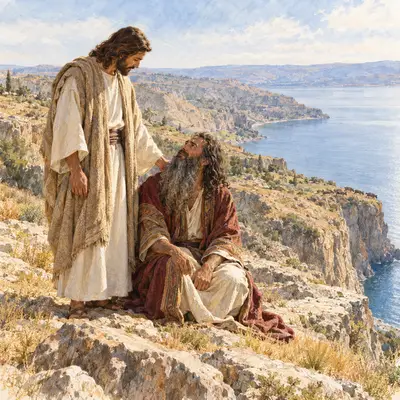
Jesus travels through the cities and villages proclaiming the kingdom of God, supported by women He has healed. He tells the parable of the sower, explaining that the seed is the word of God and warning His hearers to beware how they listen, then names as His true family those who hear the word of God and do it. He stills a storm on the lake, drives a legion of demons out of a man living among the tombs, heals a woman who touches His garment in faith, and raises the dead daughter of Jairus with a single command.
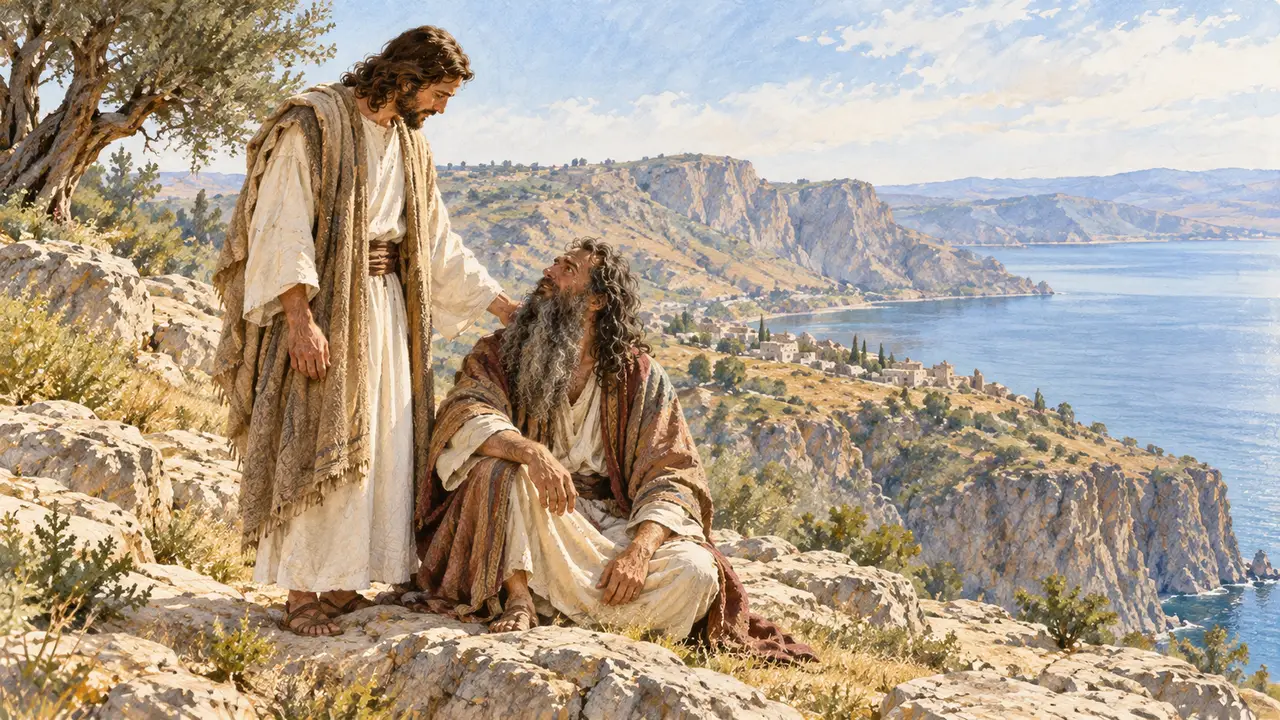
Luke 8 opens with Jesus going around from one city and village to another, “preaching and proclaiming the good news of the kingdom of God.” The Twelve are with Him, but Luke also names a group of women who have been healed of evil spirits and sicknesses and who are ministering to Jesus and His disciples from their own possessions: Mary Magdalene, “from whom seven demons had gone out,” Joanna and Susanna, along with many others.
Luke introduces these women immediately before the parable of the sower. Before Jesus explains what good soil looks like, Luke has already shown us people whose response to Jesus has produced visible fruit: they have received His mercy, believed in Him, followed Him, and are now using what they possess to support the proclamation of the kingdom. Their response also continues the pattern of chapter 7, where the centurion believed Jesus’ word, the sinful woman came to Him in faith, and the religious leaders rejected God’s purpose for themselves. Luke 8 now develops that question further: what happens when the word of God goes out?
Jesus tells the crowd about a sower scattering seed. Some falls beside the road, where it is trampled and eaten by birds. Some falls on rock, and as soon as it grows up it withers because it has no moisture. Some falls among thorns and is choked. Some falls into good soil and produces a crop one hundred times as great. Then Jesus calls out, “He who has ears to hear, let him hear.” The point of the parable is hearing, but in Scripture hearing involves much more than sound reaching the ear. It means receiving what God says and responding to it, and before this section is over Jesus will define it Himself: His true family are those “who hear the word of God and do it.”
When the disciples ask what the parable means, Jesus first tells them why He teaches this way: “To you it has been granted to know the mysteries of the kingdom of God, but to the rest it is in parables, so that seeing they may not see, and hearing they may not understand.” A mystery, in Scripture, is something God has kept hidden until He chooses to reveal it. Jesus’ words echo Isaiah chapter 6, where Yahweh sent Isaiah to tell a people who had already hardened themselves against Him, “Keep on hearing, but do not understand; Keep on seeing, but do not know.” The parables therefore reveal and judge at the same time. The same teaching that opens the kingdom to the disciples leaves those who will not receive it hearing the words without understanding them.
Then Jesus explains: “the seed is the word of God.” What is being scattered is God’s own word, and Jesus Himself is scattering it at the start of the chapter as He travels from place to place proclaiming the kingdom. The different soils describe different responses to that word.
The seed beside the road represents those who hear, but the devil comes and takes away the word from their heart, “so that they will not believe and be saved.” Luke ties hearing directly to belief and salvation, and the devil’s purpose is plain: he takes the word away so that it will not be believed. The seed on the rock represents those who receive the word with joy but have no root. Jesus says “they believe for a while, and in time of temptation fall away.” Jesus distinguishes this temporary belief from the persevering faith of the good soil. The seed among the thorns represents those who hear but are choked “with worries and riches and pleasures of life,” and do not bear ripe fruit. The word is not openly rejected. It is crowded out as other concerns grow alongside it until nothing matures.
The good soil represents those “who have heard the word in an honest and good heart, and hold it fast, and bear fruit with perseverance.” Everyone in the parable hears, so the difference is what happens afterwards. This is why Luke opened the chapter with the women: what they received from Jesus is now bearing fruit in service.
Jesus then turns to the image of a lamp: “no one after lighting a lamp covers it with a container or puts it under a bed, but he puts it on a lampstand, so that those who come in may see the light.” God’s revelation is not given to stay concealed, and Jesus adds, “For nothing is hidden that will not become evident, nor anything secret that will not be known and come to light.” Then comes the warning: “So beware how you listen, for whoever has, to him more shall be given; and whoever does not have, even what he thinks he has shall be taken away from him.” That brings us straight back to the sower. Jesus is warning His hearers to consider how they respond to what they hear. The one who receives the word and holds it fast will be given more, and the one who does not will lose even what he thinks he has, like the seed on the rock that seemed to be growing until it was gone.
Luke then gives a scene that shows what true hearing looks like. Jesus’ mother and brothers come to see Him, but the crowd prevents them from reaching Him, and when He is told that His family is outside, He answers, “My mother and My brothers are these who hear the word of God and do it.” The seed is the word of God, the good soil hears it and holds it fast, and now Jesus defines His true family by the same two things: hearing the word of God and doing it. Being related to Jesus by blood is not what makes someone His family. Belonging to Him means receiving God’s word in faith and acting on it.
Luke now moves from teaching about hearing to situations that test it. Jesus and His disciples get into a boat, and He tells them, “Let us go over to the other side of the lake.” As they sail He falls asleep, a windstorm descends on the lake, and the boat begins to be swamped. The disciples wake Him, saying, “Master, Master, we are perishing!” He rebukes the wind and the surging waves, they stop, and the lake becomes calm. Then He asks them, “Where is your faith?” They had His word that they were going to the other side, and the storm made that word appear impossible. Their panic in the storm exposes how little they still understand about the One in the boat with them.
After Jesus calms the wind and waves, Luke says they “were fearful and marveled.” This is a different kind of fear. The immediate danger has passed. Their fear now comes from awe before an authority they do not understand. They ask one another, “Who then is this, that He commands even the winds and the water, and they obey Him?” Their fear draws attention to the question of Jesus’ identity.
Throughout the Old Testament it is Yahweh who rules the sea. Psalm 89 says, “You rule the swelling of the sea; When its waves rise, You still them,” and Psalm 107 describes sailors caught in a storm who “cried to Yahweh in their trouble,” after which “He caused the storm to stand still.” Psalm 89 is also the psalm of Yahweh’s covenant with David, and later says of David’s king, “I shall also set his hand on the sea.” Luke has already identified Jesus as the promised Son of David. The immediate point of the miracle, however, is clear enough without forcing every connection: Jesus exercises the kind of authority over the waters that the Old Testament attributes to Yahweh. The disciples’ question, “Who then is this?”, runs through the rest of the chapter, and Luke keeps answering it through what Jesus does.
They sail to the region of the Gerasenes, “which is opposite Galilee.” Jesus has crossed the lake into Gentile territory, and the herd of swine feeding on the mountain confirms it, since no Israelite community would keep animals the Law declared unclean. When He comes out onto the land, a man from the city meets Him. He is possessed by demons, has not worn any clothing for a long time, and lives not in a house but among the tombs, a place associated with death and uncleanness.
Under the Law, uncleanness was not in itself sin; it was a condition, brought on by contact with death, certain diseases and bodily discharges, that barred a person from approaching Yahweh’s sanctuary until they had been cleansed. The spirit has seized him many times; he has been bound with chains and shackles and kept under guard, and still he has broken his bonds and been driven into the desolate regions. Every human attempt to control him has failed.
When he sees Jesus he cries out, “What do I have to do with You, Jesus, Son of the Most High God? I beg You, do not torment me.” The disciples have just asked who Jesus is, and the demons already know. “Son of the Most High” is the title Gabriel gave Jesus in chapter 1, and the demons confess what the angel announced. They also recognise the authority Jesus holds over them.
Jesus asks the man’s name, and he answers, “Legion,” for many demons had entered him. A legion was a large Roman military formation numbering thousands of soldiers. Luke is not necessarily giving us an exact number of demons, but the name communicates overwhelming force. This man is occupied by a multitude of evil spirits, and the whole legion is powerless before Jesus. They plead with Him not to command them to go away into the abyss, the place associated with the confinement and judgment of evil spirits. They do not resist His authority. They beg. The disciples have just asked who this is who “commands even the winds and the water”; now unclean spirits can only plead that He will not command them. Even their request to enter a herd of swine feeding on the mountain requires His permission.
Under the Law, swine are unclean animals. Leviticus chapter 11 says of the pig, “it is unclean to you.” The demons leave a man living among the tombs and enter animals already marked as unclean, and the herd rushes down the steep bank into the lake and drowns. Luke does not tell us where the demons went after that. He shows what their presence does: they drove a man to live among the dead, and when they enter the swine the whole herd is destroyed. Throughout the episode Jesus enters a place marked by death, uncleanness and spiritual oppression, and exercises complete authority over all of it.
The herdsmen run and report what has happened in the city and the countryside, and the people come out and find “the man from whom the demons had gone out, sitting down at the feet of Jesus, clothed and in his right mind.” This Gentile man had been naked, isolated and living among the tombs; now he is clothed, restored and sitting at Jesus’ feet. Those who had seen it report “how the man who was demon-possessed had been saved,” the same word Jesus used in the parable when the devil takes away the word “so that they will not believe and be saved.”
The people’s response is fear, but it is different again from the fear of the disciples after the storm. Luke says that “all the people of the country of the Gerasenes and the surrounding district asked Him to leave them, for they were gripped with great fear.” They have the evidence of the man’s salvation sitting in front of them, but their fear does not lead to wonder and deeper recognition. It drives them away from Jesus. In that sense their fear becomes a form of unbelief. They see His power and recoil from Him instead of receiving Him. They ask Him to leave, and He goes.
The restored man responds in the opposite way. He begs to accompany Jesus, but Jesus sends him home: “Return to your house and recount what great things God has done for you.” Luke then says, “So he went away, proclaiming throughout the whole city what great things Jesus had done for him.” Jesus tells him to declare what God has done, and the man declares what Jesus has done.
Luke places the two statements side by side as testimony to who Jesus is. Jesus does not take him back across the lake. He leaves him in Gentile territory, among the people who have just asked Jesus to leave, as the witness to what God has done there. Luke has been preparing for this since Simeon called Jesus “A Light for revelation to the Gentiles,” and since the centurion in chapter 7 showed a faith Jesus had not found in Israel.
Luke’s wording also ties this man back to the start of the chapter. He is “the man from whom the demons had gone out,” the same description Luke gave Mary Magdalene, “from whom seven demons had gone out.” Like her, he has received mercy and his life now bears fruit, and like Jesus in the chapter’s opening verse, he goes through the city “proclaiming.” The man no chains could hold has become part of the scattering of the word, and the fruit of the word carries the word further.
When Jesus returns across the lake, the crowd welcomes Him, “for they had all been waiting for Him.” Luke again sets different responses beside each other. One region asks Jesus to leave; another waits for Him to return.
Then Jairus comes, an official of the synagogue. He falls at Jesus’ feet and pleads with Him to come to his house, because his only daughter, about twelve years old, is dying. As at Nain, where the dead man was “the only son of his mother,” Luke makes a point of telling us this is an only child. As Jesus goes, the crowds press against Him, and among them is a woman who has had a hemorrhage for twelve years and “could not be healed by anyone.” A girl whose whole life has lasted twelve years is dying, and a woman who has suffered for those same twelve years is beyond every human remedy. Both are past human help, as the Gerasene man was, and both will be saved through Jesus.
Leviticus chapter 15 says that a woman with a continuing discharge of blood “is unclean,” and that those who come into contact with what her uncleanness has affected also become unclean. For twelve years her illness has affected her body, her place within the ceremonial life of Israel and her contact with others. She comes up behind Jesus and touches the fringe of His garment, and immediately her hemorrhage stops.
By the normal direction of ceremonial uncleanness, contact should communicate defilement. Instead, she is made clean.
Luke has shown this pattern before. Jesus touched the leper in chapter 5, and cleansing moved outward from Him. He touched the coffin carrying the widow’s son in chapter 7, and life overcame death. Now an unclean woman touches Jesus, and healing moves outward from Him. Uncleanness does not overcome Jesus; His holiness overcomes uncleanness.
Jesus stops and asks, “Who is the one who touched Me?” While they all deny it, Peter points out that the crowds are surrounding and pressing in on Him, but Jesus answers, “Someone did touch Me, for I knew that power had gone out of Me.” When the woman sees that she has not escaped notice, she comes trembling, falls down before Him, and declares in the presence of all the people why she touched Him and how she was immediately healed. Luke keeps bringing people down before Jesus in this half of the chapter: the Gerasene man fell before Him and was later found sitting at His feet, Jairus fell at His feet to plead for his daughter, and now the woman falls down before Him. Whether in terror, desperation or faith, each one comes down before the One who holds authority over what they cannot control.
Her trembling is not unbelief. She has already acted in faith. Her fear comes as she realises that she stands exposed before the One whose power has just healed her. Earlier Jesus said that nothing hidden would remain hidden. The woman tried to remain unnoticed in the crowd, and Jesus brings what has happened into the light so that her healing and faith become public testimony.
Jesus says to her, “Daughter, your faith has saved you; go in peace.” Her healing is real, but Jesus speaks in the language of salvation, the same word He used in the parable and Luke used of the Gerasene man. She came to Jesus with faith, and she leaves with His word to hold fast. Jesus has already said that His mother and brothers are those who hear the word of God and do it, and now He calls a woman who came to Him in faith “Daughter.” For twelve years her uncleanness had kept her at a distance; Jesus addresses her as family, on His way to the house of a man whose own daughter is dying.
While He is still speaking, someone arrives from the synagogue official’s house: “Your daughter has died; do not trouble the Teacher anymore.” The situation has moved beyond sickness. Jesus says to Jairus, “Do not be afraid any longer; only believe, and she will be saved.”
Here Jesus explicitly sets fear against faith.
Jairus now has a word from Jesus when everything he can see tells him that hope has ended. The whole chapter has been asking what people do with the word when circumstances press against it. Jairus is now told to hold fast and believe.
At the house Jesus allows no one to enter with Him except Peter, John and James, and the girl’s father and mother. This is the first time Luke singles out these three from among the Twelve; they will be with Jesus again on the mountain in chapter 9. The mourners are crying and lamenting, and He tells them, “Stop crying, for she has not died, but is asleep.” They laugh at Him, knowing that she has died. Luke does not deny the reality of her death; he has already stated it plainly. Jesus calls it sleep because death is not final before His authority.
Then He takes her by the hand. Numbers chapter 19 says, “The one who touches the corpse of any person shall be unclean for seven days,” but once again the direction is reversed. Jesus is not defiled by death. Life goes out from Him.
He says, “Child, arise!”
Her spirit returns and she stands up immediately. The command is simple because His authority is absolute. Jesus orders that she be given something to eat, a plain sign that she has been restored to ordinary bodily life. Her parents are astounded, but He directs them to tell no one what has happened. Luke gives no reason, and the contrast with the Gerasene man stands in the text: one witness is sent to proclaim in a Gentile region that has asked Jesus to leave, while this family is told to keep silent where the crowds are already pressing in on Him. Jesus governs how the report of His works goes out.
The chapter began with Jesus scattering the word of God, and it ends with His word calling the dead back to life. Everyone in Luke 8 hears, and what each one does with what they hear reveals what kind of soil they are. The women serve from what they have. The disciples struggle to trust His word in the storm. The Gerasenes hear what He has done and send Him away. The restored man proclaims throughout the city what Jesus has done for him. The bleeding woman comes in faith and leaves with Jesus’ word of salvation. Jairus is told to believe when death appears to make Jesus’ promise impossible.
All the while Luke keeps answering the disciples’ question, “Who then is this?” The wind and water obey Him. A legion of demons pleads with Him. Uncleanness is reversed by contact with Him. Disease yields to His power. Death itself obeys His command.
Luke is showing us why Jesus can be trusted. The word of God goes out through Him with authority because He is the Son of the Most High, the promised Son of David and the One in whom God’s kingdom has come near. The warning stands beside the promise: whoever holds fast to that word will be given more, and whoever does not will lose even what he thinks he has. The proper response is to hear, believe, hold fast, do what He says and bear fruit with perseverance.