
John 3
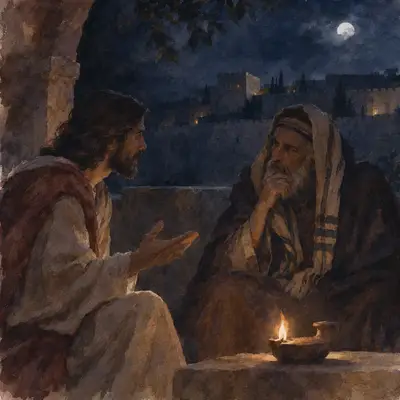
John 3 sets two testimonies about Jesus side by side. Nicodemus, a Pharisee and ruler of the Jews, comes by night and says that Jesus has come from God as a teacher, and Jesus tells him that unless one is born again he cannot see the kingdom of God. The new birth is the work of the Spirit, promised through the prophets, and eternal life comes through the Son of Man, who must be lifted up as Moses lifted up the serpent in the wilderness. John the Baptist then declares that Jesus must increase, that He comes from heaven and is above all, and that the wrath of God abides on the one who does not obey the Son. The chapter teaches that eternal life is given from above, and that it is received by believing in the Son whom the Father has sent.
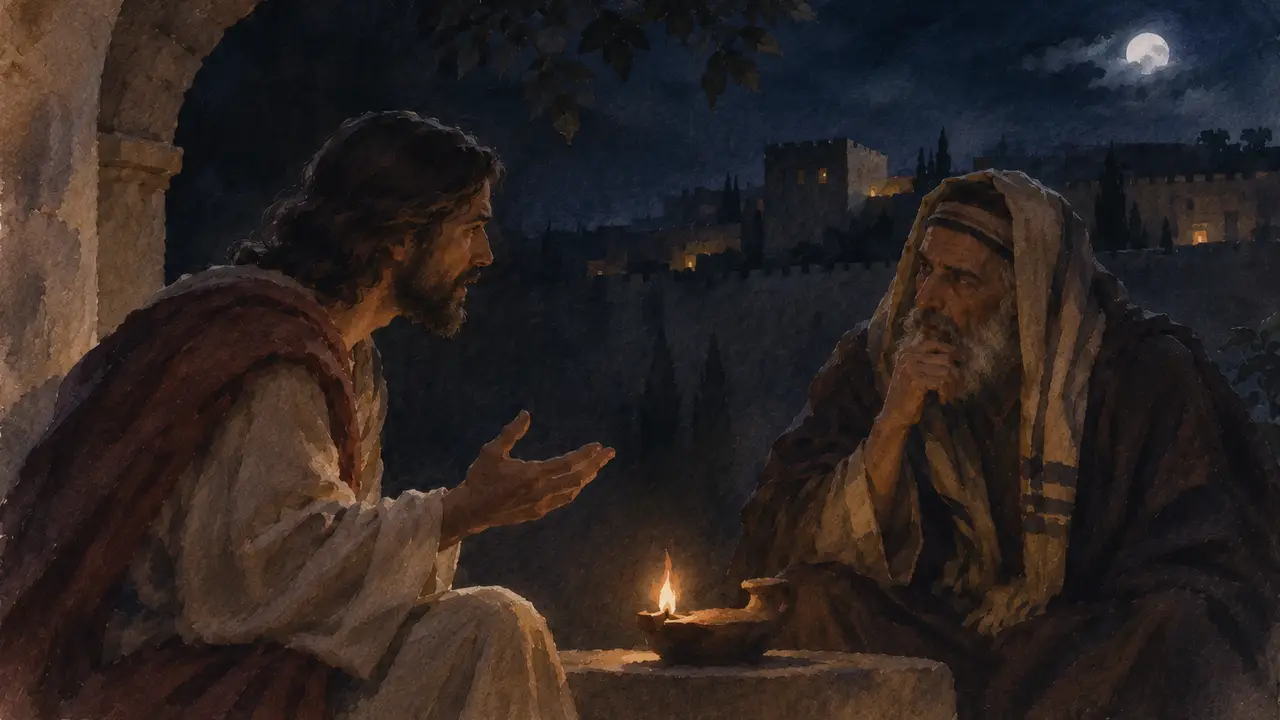
John chapter 2 ended with many in Jerusalem believing in Jesus’ name “when they saw His signs which He was doing,” while Jesus was not entrusting Himself to them, “for He Himself knew what was in man.” Chapter 3 begins, “Now there was a man of the Pharisees, named Nicodemus, a ruler of the Jews,” and John intends us to read the two statements together. Nicodemus is the first of those who believed because of the signs whom we meet by name. He comes to Jesus saying, “no one can do these signs that You do unless God is with him,” and Jesus, who knows what is in man, answers with what this man needs: “unless one is born again he cannot see the kingdom of God.” In chapter 1 John told us that those who receive the Word and believe in His name are born “not of blood nor of the will of the flesh nor of the will of man, but of God.” Chapter 3 now explains that birth, and shows that it is the work of God, something no one can achieve by seeing signs, possessing learning or holding office in Israel.
The chapter is built around two testimonies about Jesus. It opens with Nicodemus, who says, “Rabbi, we know that You have come from God as a teacher,” and it closes with John the Baptist, who says, “He who comes from above is above all.” Both men say something true about Jesus, but they differ in where their knowledge came from and in how far it reaches. Nicodemus has reasoned from the signs to the conclusion that God is with Jesus. The Baptist said twice in chapter 1, “I did not know Him,” until the One who sent him to baptise told him that the Spirit descending and abiding on Jesus would identify Him. Nicodemus therefore knows Jesus as a teacher who has come from God, while the Baptist has been told by God that Jesus is the One who comes from heaven, who speaks the words of God and into whose hand the Father has given all things. Between the two testimonies Jesus explains why He has come: the Son of Man must be lifted up, so that whoever believes will in Him have eternal life.
Nicodemus’ admission is a substantial one from a Pharisee and ruler of the Jews, coming soon after Jesus drove the traders out of the temple, and his “we” tells us he was not the only one among the leaders who had reached this conclusion. That Jesus has come from God “as a teacher” is true as far as it goes, but it falls well short of what John has already told us, that Jesus is the Word who was with God and was God. Nicodemus “came to Jesus by night,” and John does not tell us why. It may have been caution, given his position, but we should not build on a motive John has not given us. What John does do is return to light and darkness later in this chapter, where Jesus says that “the Light has come into the world, and men loved the darkness rather than the Light.” Nicodemus is not one of those who hate the Light, because he has come to Jesus of his own accord, speaks to Him with respect and, as the conversation shows, keeps asking how these things can be. He comes seeking understanding, and Jesus gives him far more than he came for.
“Jesus answered and said to him, ‘Truly, truly, I say to you, unless one is born again he cannot see the kingdom of God.’” Nicodemus has not asked a question, and Jesus answers him all the same, because His answer goes to the heart of what Nicodemus has said. Jesus tells him that seeing the signs is not the same as seeing the kingdom of God, the reign of God over His people that Israel had been waiting for, and that no one sees it without being born again.
The word translated “again” also means “from above,” and John uses it in that sense later in this chapter, when the Baptist says, “He who comes from above is above all.” The Baptist then restates the same line as “He who comes from heaven is above all,” so John himself shows us what “from above” means. The new birth is a second birth, and it is also a birth from heaven, a birth that begins with God.
Nicodemus took the words in their earthly sense: “How can a man be born when he is old? Can he enter a second time into his mother’s womb and be born?” This is the second of the misunderstandings in John’s Gospel that we noted in chapter 2, where the authorities heard Jesus speak of the sanctuary of His body and thought He meant the building in front of them. Nicodemus is thinking of natural birth, and on those terms the thing is impossible, which is exactly why Jesus says this birth must come from above.
Jesus then repeated the statement with a change: “unless one is born of water and the Spirit he cannot enter into the kingdom of God.” Jesus is speaking to a teacher of Israel who should already understand what He means, and the clearest background to His words is Ezekiel chapter 36. Israel had been scattered among the nations because they had defiled the land with their ways and their deeds, and Yahweh promised to act for the sake of His holy name: “Then I will sprinkle clean water on you, and you will be clean; I will cleanse you from all your uncleanness and from all your idols. Moreover, I will give you a new heart and put a new spirit within you… I will put My Spirit within you and cause you to walk in My statutes.” In Ezekiel the water is cleansing from uncleanness and idolatry, and the Spirit is the inward renewal that gives a new heart and causes God’s people to walk in His ways. The promise ends with the words of the covenant, “so you will be My people, and I will be your God.” Israel had broken the covenant made at Sinai, and Yahweh promised to renew His people Himself.
This is why the passage does not support the common reading of “water” as Christian baptism, as though baptism were the means by which a person is born again. Christian baptism, as the church practised it after the resurrection, had not been instituted, and Jesus expects Nicodemus to have understood Him from the Scriptures he already taught. Even John the Baptist’s baptism with water pointed beyond itself. In chapter 1 he said, “I baptize with water,” and he was told that Jesus is “the One who baptizes with the Holy Spirit.”
Jesus then gave the reason the new birth is necessary: “That which has been born of the flesh is flesh, and that which has been born of the Spirit is spirit.” Natural birth produces natural life, and nothing more. This includes the birth that made Nicodemus a son of Abraham and a member of Israel, which is why John said in chapter 1 that God’s children are born “not of blood.” Descent from Abraham, the Law and the office of a teacher could not produce the life of the kingdom, because flesh can only give birth to flesh. Spiritual life must come from the Spirit, and so Jesus says, “Do not marvel that I said to you, ‘You must be born again.’”
Jesus explained the Spirit’s work with an illustration: “The wind blows where it wishes and you hear its sound, but do not know where it comes from and where it is going; so is everyone who has been born of the Spirit.” The word for wind is the same word as Spirit, and Jesus is using both meanings. The wind blows “where it wishes,” and the Spirit gives new birth according to His own will, which is what John meant in chapter 1 when he said that God’s children are born not “of the will of man.” We hear the sound of the wind, though we cannot see where it comes from, and we see the effects of the Spirit’s work in those He has given new birth, though we cannot control it or explain it in natural terms.
The Hebrew word for spirit also means both wind and breath, and Ezekiel’s vision in chapter 37 uses all three meanings. Israel is a valley of dry bones, and Ezekiel is told to prophesy: “Come from the four winds, O breath, and breathe on these who were killed, that they may come to life.” Yahweh then explains the vision: “I will put My Spirit within you, and you will come to life.” The dead could contribute nothing to their own life, and the Spirit gave it to them.
Nicodemus’ last words in the chapter are a question, “How can these things be?” and Jesus answered, “Are you the teacher of Israel and do not understand these things?” Jesus calls him “the teacher,” a recognised master of the Scriptures, and the promises of cleansing, a new heart and the Spirit were written in the prophets he taught.
Jesus continued, “Truly, truly, I say to you, we speak of what we know and bear witness of what we have seen, and you do not accept our witness.” Nicodemus began the conversation with “we know,” and Jesus answers with His own “we know,” but His knowledge rests on what He has seen. In chapter 1 the Baptist “came as a witness, to bear witness about the Light,” and now Jesus Himself bears witness, and His witness is not received. He then asks, “If I told you earthly things and you do not believe, how will you believe if I tell you heavenly things?” and explains why He can speak of heavenly things: “And no one has ascended into heaven, but He who descended from heaven, the Son of Man.” This is the answer to the question Jesus has just asked. Heavenly things can be told only by someone who has been in heaven, and no man has gone up there and come back to tell them, but the Son of Man has come down from there. This is what lies behind His “we know,” and the Baptist says the same at the end of the chapter: the One who comes from heaven bears witness to what He has seen and heard, while the one who is of the earth speaks of the earth. In chapter 1 John said the same of the Word: “No one has seen God at any time; the only begotten God who is in the bosom of the Father, He has explained Him.”
Jesus then turned to the only Old Testament event He names in the conversation: “And as Moses lifted up the serpent in the wilderness, even so must the Son of Man be lifted up; so that whoever believes will in Him have eternal life.” The event is recorded in Numbers chapter 21. On the way around the land of Edom, Israel became impatient and “spoke against God and against Moses,” complaining that they had been brought out of Egypt to die in the wilderness and that they loathed the food God gave them. “So Yahweh sent fiery serpents among the people, and they bit the people so that many people of Israel died.” The people came to Moses and confessed, “We have sinned,” and Moses prayed for them. Yahweh said, “Make a fiery serpent and set it on a standard; and it will be that everyone who is bitten and looks at it, will live.” Moses made a bronze serpent and set it on the standard, “and it happened, that if a serpent bit any man, when he looked to the bronze serpent, he lived.”
The judgment and the remedy both came from Yahweh. The serpents were His covenant judgment on the people He had brought out of Egypt and bound to Himself, who were now speaking against the very deliverance He had given them, and the bronze serpent was His provision for those same people. Jesus applies this to Himself: the serpent was lifted up on a standard before Israel, and the Son of Man must be lifted up. John tells us what that lifting up means in chapter 12, where Jesus says, “if I am lifted up from the earth,” and John explains, “He was saying this to indicate the kind of death by which He was about to die.” The lifting up of the Son of Man is His crucifixion, and it is the same event Jesus spoke of in chapter 2, when He told the authorities, “Destroy this sanctuary, and in three days I will raise it up.” Jesus does not draw anything from the appearance of the serpent itself, and we need not either. The comparison is that God provided life for those already dying under His judgment through what He commanded to be lifted up, and as the bitten Israelite looked and lived, the one who believes in the Son of Man has eternal life.
This is the first time John’s Gospel speaks of “eternal life,” though life has been in view from the beginning. In the prologue, the opening eighteen verses of his Gospel, John wrote, “In Him was life, and the life was the Light of men.” The life that was in the Word from the beginning is now offered to whoever believes in Him, and the rest of this chapter keeps returning to it.
Verse 16 explains why the Son of Man must be lifted up: “For God so loved the world, that He gave His only begotten Son, that whoever believes in Him shall not perish, but have eternal life.” In English we usually hear “so loved” as “loved so much,” but here “so” means “in this way.” It is the same word Jesus used two verses earlier, “even so must the Son of Man be lifted up,” and verse 16 tells us the way God loved the world: He gave His only begotten Son, and the greatness of that love is seen in what He gave. “Only begotten” is the word John used in chapter 1 to describe the Son’s unique relationship with the Father, the glory “as of the only begotten from the Father.” “The world” is the world John described in chapter 1, which “was made through Him, and the world did not know Him.” God gave His Son for a world in rebellion against its Maker, and the promise is held out to whoever believes in Him.
Jesus continued, “For God did not send the Son into the world to judge the world, but that the world might be saved through Him.” Judgment had not been set aside, however, as the next verse makes plain: “He who believes in Him is not judged; he who does not believe has been judged already, because he has not believed in the name of the only begotten Son of God.” The Son did not come into a world of innocent people waiting to be assessed. Mankind was already guilty and already under judgment, and the Son came so that those already condemned might live. The one who does not believe remains where he was, under judgment, and his refusal to believe in the name of the Son confirms it. “Believe in His name” is the phrase John used in chapter 1 for those who received the Word and became children of God, and in chapter 2 for those who believed because of His signs. To believe in His name is to trust in who the Son is.
“And this is the judgment, that the Light has come into the world, and men loved the darkness rather than the Light, for their deeds were evil.” This is the language of John’s prologue. There John called Jesus “the true Light which, coming into the world, enlightens everyone,” and said that “the Light shines in the darkness.” Now Jesus says that the Light has come into the world, and He explains why the world did not know Him. Men loved the darkness, and they loved it because their deeds were evil. “For everyone who does evil hates the Light, and does not come to the Light lest his deeds be exposed.” The Light reveals sin, and those who love their sin hate the One who exposes it. That is the moral reason for unbelief.
Verse 21 gives the other side: “But he who practices the truth comes to the Light, so that his deeds may be manifested as having been done by God.” Those who come to the Light do not avoid its exposure, because what they have done is God’s work in them. The one born from above comes to the Light, and the life he lives bears witness to the God who gave it.
“After these things Jesus and His disciples came into the land of Judea, and there He was spending time with them and baptizing.” John tells us in chapter 4 that “Jesus Himself was not baptizing, but His disciples were.” John the Baptist was also baptising at Aenon near Salim, “because there was much water there,” and John adds, “for John had not yet been thrown into prison.” The other Gospels tell us little about this period, and John shows us a time when the ministries of Jesus and John the Baptist ran side by side.
Verse 25 tells us that “there arose a debate between John’s disciples and a Jew about purification.” Purification has run through these opening chapters. In chapter 1 the Pharisees’ messengers asked the Baptist, “Why then are you baptizing, if you are not the Christ, nor Elijah, nor the Prophet?” and in chapter 2 Jesus performed His first sign with six stone water jars set there “for the Jewish custom of purification.” John does not tell us what was said in this debate.
The Baptist’s disciples then came to him and said, “Rabbi, He who was with you beyond the Jordan, to whom you have borne witness, behold, He is baptizing and all are coming to Him.” This second half of the chapter opens the same way the first half did. Nicodemus came to Jesus and said, “Rabbi, we know… no one can do these signs that You do,” and the Baptist’s disciples come to their teacher and say, “Rabbi… He is baptizing and all are coming to Him.” In both cases someone addresses a teacher and describes what can be seen of Jesus: the signs He does, and the crowds going to Him. The disciples even describe Jesus by their teacher’s own testimony, “to whom you have borne witness,” and that testimony has now become a reason for concern, because the One John pointed to was drawing more people than John.
The Baptist’s reply is introduced the way Jesus’ reply to Nicodemus was, with “answered and said,” and like that reply, it turns from what can be seen to what comes from above: “A man can receive nothing unless it has been given him from heaven.” Jesus told Nicodemus that he must be born from above, and John tells his disciples that a man receives nothing unless it has been given him from heaven. The Baptist is speaking about his ministry and about the crowds. His work, his place and his followers were all given to him by God, and so is everything that Jesus has received. The growth of Jesus’ ministry is God’s doing, and no one who serves God has any reason to resent what God gives to another. He reminded them, “You yourselves are my witnesses that I said, ‘I am not the Christ,’ but, ‘I have been sent ahead of Him,’” which is what he had confessed in chapter 1.
The Baptist explains his joy with the picture of a wedding: “He who has the bride is the bridegroom; but the friend of the bridegroom, who stands and hears him, rejoices greatly because of the bridegroom’s voice. So this joy of mine has been made full.” The bride belongs to the bridegroom, and the Baptist is the bridegroom’s friend, who stood beside him at the wedding and whose joy was to hear the bridegroom’s voice. His joy is made full by the very thing his disciples resent, because the One he was sent to announce has arrived and His people are coming to Him.
His conclusion follows: “He must increase, but I must decrease.” The word “must” tells us that this is God’s purpose, and the Baptist recognises that his own decrease belongs to that purpose as much as Jesus’ increase. His ministry was always preparatory, and he rejoices to step aside as the One who comes from heaven takes His place.
The verses that follow give the reason Jesus must increase. “He who comes from above is above all, he who is of the earth is from the earth and speaks of the earth. He who comes from heaven is above all.” The Baptist is the one “of the earth” in this statement. He was a true prophet sent from God, and his testimony was true, but he was an earthly man speaking as an earthly man. The One who comes from above is above all, including John. This is where the two testimonies of the chapter meet. Nicodemus knew that Jesus had come from God as a teacher, and the Baptist declares that He comes from heaven, as Jesus told Nicodemus in verse 13, and is above all.
“What He has seen and heard, of that He bears witness; and no one receives His witness.” These are almost the words Jesus used to Nicodemus in verse 11, and both halves of the chapter describe the Son bearing witness from what He has seen in heaven and mankind refusing to receive it. The next verse qualifies the general refusal: “He who has received His witness has set his seal to this, that God is true.” John’s prologue followed the same pattern. “Those who were His own did not receive Him. But as many as received Him, to them He gave the right to become children of God.” To set one’s seal to something is to confirm it as true, and the one who receives the Son’s witness confirms that God is true, because the witness of the Son is God’s own witness.
The Baptist adds, “For He whom God has sent speaks the words of God; for He gives the Spirit without measure.” John does not tell us whether the “He” who gives the Spirit is God, giving the Spirit to the Son without measure, or the Son, giving the Spirit to others, and the Baptist has already testified to both. In chapter 1 he saw the Spirit descending and abiding on Jesus, and he was told that Jesus is the One who baptises with the Holy Spirit.
The fullest reason the Baptist gives for why Jesus must increase comes in verse 35: “The Father loves the Son and has given all things into His hand.” The Baptist could prepare the way and bear witness, but the Father has placed everything in the Son’s hand, including the giving of eternal life and the judgment of those who refuse it.
“He who believes in the Son has eternal life; but he who does not obey the Son will not see life, but the wrath of God abides on him.” The one who believes “has” eternal life, as a present possession. The second half of the verse changes the verb, so that the opposite of believing in the Son is disobeying Him. John is not speaking of sinless obedience, as though eternal life belonged only to those who obey every command without failure. In this context, to obey the Son is to receive His testimony and submit to Him as the One sent by the Father; to disobey Him is to refuse that testimony and reject His authority. Belief and obedience are not the same action, but they cannot be separated. Those who believe still fall into sin, but their failures do not constitute the settled refusal of the Son described here. Their obedience is real but incomplete, and it is the fruit of eternal life, not its price. The one who does not obey “will not see life,” and “the wrath of God abides on him.” The wrath of God is His holy and settled opposition to sin, and the judgment that sin deserves. This is the condition Jesus described in verse 18, “judged already.” The unbeliever is not waiting to learn whether he is under God’s wrath. He is under it now, and it remains on him as long as he refuses the Son.
Jesus knew what was in man, and He told a ruler of Israel that nothing in him could bring him into the kingdom of God, because that requires a birth from above that only God can give. The chapter began with Nicodemus testifying that Jesus had come from God as a teacher, and it ends with John the Baptist testifying that He comes from heaven, is above all and holds all things in His hand. Nicodemus knew something true about Jesus, but knowing that truth was not itself eternal life. The one who receives the Son’s testimony and believes in Him has eternal life already; the one who refuses His testimony and will not obey Him remains under the wrath of God. God loved the world by giving His only begotten Son, and life is found in Him alone.