
Hebrews 10
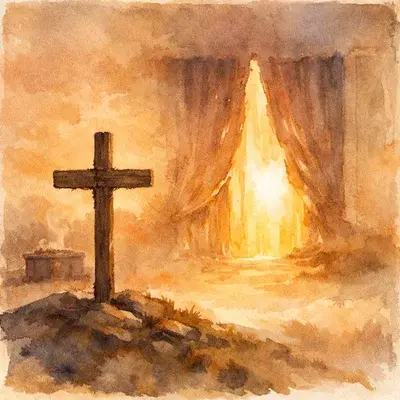
Hebrews 10 teaches that the repeated sacrifices of the Law could never remove sins or perfect the conscience, but Christ offered Himself once for all in obedience to the Father’s will and by that single sacrifice has perfected for all time those who are being sanctified.
Hebrews 10 Explained: Christ’s Once-for-All Sacrifice and the Call to Persevere
Hebrews chapter 9 ended with Christ entering heaven itself with His own blood and obtaining eternal redemption. That theme did not begin in chapter 9. In chapter 1, Hebrews already said that the Son made purification of sins and then sat down at the right hand of the Majesty on high. Chapter 10 returns to that finished work and explains why it cannot be repeated.
The Law carried only a shadow of the good things to come. Hebrews has already used that language in chapter 8, where the priests served a copy and shadow of the heavenly things. The tabernacle was not the ultimate dwelling place of God. Chapter ten now applies the same truth to the sacrifices themselves. They pointed forward to something greater. They could never perfect those who drew near.
The repetition of the sacrifices proves it. Year after year Israel returned to sacrifice. If those offerings had cleansed the conscience, they would have ceased. Instead, they functioned as a reminder of sins. Chapter nine has already distinguished between outward cleansing and the cleansing of the conscience. Bulls and goats could not take away sin.
Hebrews then turns to Psalm 40. As in chapter 1, Scripture speaks in a way that reaches beyond its first setting. The psalm speaks of a body prepared and of doing the will of God. God did not ultimately desire endless animal sacrifices. He desired obedience. When the Son came into the world, He came in a body prepared for that obedience. He came to accomplish the will of God in history.
Hebrews states the conclusion plainly. God takes away the first in order to establish the second. That language echoes chapter 7, where the former commandment was set aside because of its weakness. The Law made nothing perfect. Now Hebrews explains how the change took place. Through the will of God accomplished in the body of Jesus Christ, believers have been sanctified once for all. Christ does not need to sacrifice himself over and over again. His one and only sacrifice is sufficient and perfect.
The contrast between standing priests and the seated Son reaches back again to chapter 1. There the Son sat down after making purification for sins. Under the old covenant, priests stand daily because their work never ends. Christ offered one sacrifice for sins for all time and sat down at the right hand of God. Psalm 110 has shaped the entire letter from the beginning. The priest-king sits and reigns until His enemies are subdued.
Hebrews then says that by one offering He has perfected for all time those who are being sanctified. In chapter 7, Christ was said to save forever those who draw near to God through Him. In chapter 9, His work secured eternal redemption. Chapter 10 brings those statements together. The sacrifice secures a perfected standing before God that does not fade, even while believers continue in sanctification in their daily lives.
Hebrews quotes Jeremiah 31 again, as it did in chapter 8. The promise of the new covenant included the writing of God’s law on the heart and the full forgiveness of sins. When God says He will remember sins no more, He declares that He will not bring them back in judgment against His people. Where there is forgiveness, no further offering is necessary. To seek another sacrifice would deny the sufficiency of Christ.
Because Christ has opened a new and living way through His flesh, believers now draw near with confidence. Chapter 4 already called them to draw near to the throne of grace because they have a great High Priest. Chapter 10 builds on that same foundation. The sacrifice has been offered. The priest is seated. The way stands open. Therefore they hold fast their confession, stir one another up to love and good deeds, and refuse to abandon the assembly. Perseverance expresses itself in gathered faith.
When the warning appears in verse 26, it must be read in light of everything Hebrews has already said. The text has just affirmed that Christ has perfected for all time those who are being sanctified and that God remembers their sins no more. Earlier, in chapter 6, Hebrews spoke of those who fall away and distinguished them from those who inherit the promises through faith and patience. There it also expressed confidence that the readers possessed things that accompany salvation. That pattern continues here.
The warning addresses those who receive knowledge of the truth and yet turn from Christ in deliberate unbelief. It does not describe the loss of salvation by those who truly trust in Him. If someone rejects Him after knowing the truth, no other sacrifice remains. Under Moses, those who set aside the Law died without mercy. Hebrews has already used that lesser-to-greater reasoning in chapter 2: if the word spoken through angels proved firm, how will we escape if we neglect so great a salvation. Chapter 10 follows the same reasoning. Rejection of the Son brings a greater judgment.
The reminder that the Lord will judge His people recalls the wilderness generation discussed in chapters 3 and 4. They belonged outwardly to the covenant community, but they hardened their hearts and fell in unbelief. Being part of the visible covenant community didn’t save them. The living God judged them. That same reality is true here. Rejecting Christ results in judgment, and it is a terrifying thing to fall into the hands of the living God.
Hebrews then returns to encouragement. The readers had endured suffering, public reproach, and the seizure of their property because they knew they possessed a better and lasting possession. In chapter 6, Hebrews urged them to imitate those who through faith and patience inherit the promises. The same call appears here. They must not throw away their confidence. They need endurance so that, having done the will of God, they may receive what He has promised.
Finally, Hebrews quotes Habakkuk. The righteous live by faith. The one who shrinks back does not please God. That theme of perseverance has run through the entire letter, from the warning in chapter 3 to the assurance in chapter 6. Hebrews closes the chapter by identifying the readers with those who have faith to the preserving of the soul. It does not leave them wondering whether they are truly saved. The warnings address those who reject the Son, not those who continue trusting Him.
Hebrews 10 teaches that the repeated sacrifices of the Law could never remove sins or perfect the conscience, but Christ offered Himself once for all in obedience to the Father’s will and by that single sacrifice has perfected for all time those who are being sanctified. Because His work is finished and He has sat down at the right hand of God, believers have complete assurance that their sins are forgiven. To reject His sacrifice leaves only the certainty of judgment, while the righteous live by faith.