
Hebrews 6
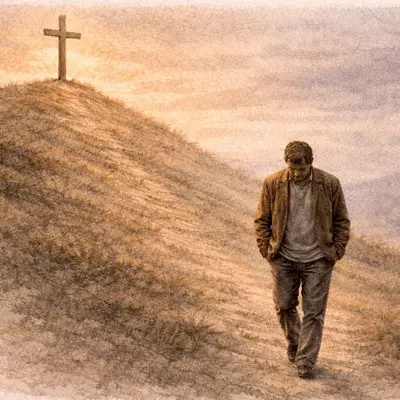
Hebrews 6 begins with a call to move beyond the basic teachings about Christ and grow toward maturity. The writer warns about people who have been deeply exposed to the truth, who have shared in the life of the covenant community and experienced the power of God’s word, yet ultimately do not believe and fall away. This is not a believer losing salvation. It is someone who has seen the reality of Christ up close and still rejects Him. The picture of two fields receiving the same rain shows that the real difference lies in the soil. The fruit that grows reveals what is truly in the heart. The chapter then turns to encouragement. God confirmed His promise to Abraham with an oath, showing that His purpose does not change. Because it is impossible for God to lie, believers have strong assurance. Our hope is like an anchor fixed within the veil, in the presence of God, where Jesus has gone ahead of us as our eternal High Priest.
Hebrews 6 Explained: Can Someone Who Knows Christ Fall Away?
Hebrews 6 picks up right where chapter 5 left off. The readers are dull of hearing. They should be teachers by now, but they are spiritual infants who still need milk.
So the writer says this:
“Therefore leaving the elementary teaching about the Christ, let us press on to maturity…”
He’s not telling them to leave Christ behind. He’s telling them to move past the basics and grow in understanding who Christ is and what He has done. The basics are already there: repentance from dead works, faith toward God, teaching about washings, laying on of hands, resurrection of the dead, eternal judgment. These are starting points. They’re true and foundational. But they’re just the beginning. They point forward to something greater.
“Repentance from dead works” means turning away from anything that can’t give life. Under the old covenant the sacrifices kept being offered because they never really cleansed the conscience. Any effort to earn God’s acceptance apart from Christ is dead. True repentance stops leaning on that and rests in what the Son has finished.
“Teaching about washings” refers to the ceremonial cleansings in the Law. They were real and important, but they were outward and repeated. They pointed ahead to the real cleansing that Christ gives once for all.
“Laying on of hands” comes straight from the Old Testament sacrificial system. The person laid hands on the animal to show it was bearing their sin. On the Day of Atonement the high priest did it over the scapegoat, confessing the sins of the people. All of it taught substitution—someone else taking the penalty. It prepared them to see Christ’s one sacrifice.
Resurrection of the dead and eternal judgment are also part of the foundation, but the book of Hebrews wants to build on these and go deeper into what Christ’s priesthood according to Melchizedek really means.
“And this we will do, if God permits.”
Even growing in understanding happens only if God allows it. Maturity isn’t automatic.
Then comes a passage that many people struggle to understand.
“For in the case of those once having been enlightened and having tasted of the heavenly gift and having become partakers of the Holy Spirit, and having tasted the good word of God and the powers of the age to come, and having fallen away, it is impossible to renew them again to repentance, since they again crucify to themselves the Son of God and put Him to open shame.”
At first glance, this appears to describe a genuine believer who loses salvation, however that cannot be the case when read in the context of chapters 1 through 5. We have already been shown that Christ is the source of eternal salvation. He has made purification of sins and sat down, and those who believe enter his rest. His priesthood is perfect and complete.
The language here describes deep involvement in the covenant community. These people were enlightened. They tasted the heavenly gift. They became partakers of the Holy Spirit. They tasted the good word of God and the powers of the age to come.
However, Hebrews has already shown that outward participation does not equal inward faith. The wilderness generation experienced redemption from Egypt, saw miracles, heard the voice of God, and shared in covenant privileges. But despite all this, they did not believe and they failed to enter because of unbelief.
Earlier, true participation was defined this way: “We have become partakers of Christ, if we hold fast the beginning of our assurance firm until the end.” Perseverance reveals reality. The people described here share in covenant realities and the Spirit’s activity in the community, and then fall away. This is apostasy. It is decisive rejection of the Son after full exposure. They again crucify to themselves the Son of God and put Him to open shame. The impossibility of renewal is tied to that hardened rejection.
This is a real warning, but it is not directed toward the genuinely saved. It addresses those who are near to the things of God and share in the life of the covenant community, yet do not truly believe. Exposure to grace is not the same as possessing grace. The fruit that follows reveals what is in the heart.
The illustration in the verses that follow explain:
“For ground that drinks the rain which often falls on it and brings forth vegetation useful… receives a blessing from God; but if it yields thorns and thistles, it is unfit and close to being cursed, and its end is to be burned.”
The same rain falls on both fields. The difference is the soil. One produces useful vegetation. The other produces thorns. The outcome reveals the nature of the ground.
Verse 9 then makes the distinction clear.
“But we are convinced about you, beloved, of things that are better and that belong to salvation, though we are speaking in this way.”
He distinguishes what he has just described from what belongs to salvation. He does not place them in the category of those who fall away. He speaks this way to encourage them to hold fast to Jesus.
“For God is not unrighteous so as to forget your work and the love which you have shown toward His name, in having ministered and continuing to minister to the saints.”
Their works do not earn salvation. They demonstrate it. Their ministry to the saints is fruit of genuine faith. God sees that fruit.
He still calls them to perseverance.
“We desire that each one of you show the same diligence so as to realize the full assurance of hope until the end…”
Full assurance is confident hope sustained through diligence. They must not become dull. They must imitate those who through faith and patience inherit the promises.
To ground that hope, the writer turns to Abraham.
When God made the promise to Abraham, He swore by Himself. There was no one greater. God added an oath to His promise to show the unchangeableness of His purpose.
“So that by two unchangeable things in which it is impossible for God to lie, we who have taken refuge would have strong encouragement…”
The two unchangeable things are God’s promise and God’s oath. Both rest on His character. It is impossible for God to lie. Therefore, the certainty of our salvation rests on His unchangeable purpose.
Finally, we read:
This hope we have as an anchor of the soul, a hope both sure and confirmed and one which enters within the veil, where a forerunner has entered for us—Jesus, having become a high priest forever according to the order of Melchizedek.
An anchor holds a ship steady when it could be carried away by the current or when the waters are rough. The anchor in Hebrews 6 is fixed within the veil, before the mercy seat, in the very presence of God.
Under the old covenant, the high priest entered that space alone and only once a year, and never without blood. Jesus has entered there as forerunner. He has not gone in temporarily. He remains there as high priest forever, and He has sat down because His work is complete.
Our hope as believers is not tied to shifting circumstances or personal strength. It is anchored within the veil, in the place of atonement.
Hebrews 6 therefore does not undo the assurance grounded in Christ’s finished work. It warns against hardened unbelief after full exposure to the truth. It shows that outward participation is not the same as inward faith.
It directs our confidence away from ourselves and toward God’s unchangeable promise and oath, secured by the eternal priesthood of Christ.
The chapter begins with a call to press on to maturity and ends by showing where true stability lies: inside the veil, before the mercy seat, where our great High Priest is seated, Jesus Christ.