
1 John 1
1 John opens with no greeting, launching straight into apostolic testimony: the Word of Life whom the apostles heard, saw with their eyes, and touched with their hands. That testimony grounds the fellowship believers have with the Father and the Son. John then turns to God's own character, declaring that God is Light and there is no darkness in Him at all, before confronting three claims that deny what that Light requires: that fellowship with God can coexist with walking in darkness, that we have no sin, and that we have not sinned. Against each claim, John points to confession and to the blood of Jesus, which cleanses from all sin.
1 John 1 Explained: The Word of Life and the God Who Is Light
1 John begins with no greeting or identification of the writer. Instead, John immediately launches into one long sentence which runs through the first three verses, and its structure can make the opening difficult to follow. Put simply, John is saying, “What we have seen and heard we proclaim to you also, so that you may also have fellowship with us.” Everything surrounding that statement explains what the apostles witnessed, whom they witnessed, and why their testimony matters.
John begins, “What was from the beginning, what we have heard, what we have seen with our eyes, what we beheld and touched with our hands, concerning the Word of Life.” The language immediately recalls the opening of John’s Gospel: “In the beginning was the Word, and the Word was with God, and the Word was God.” John is speaking about Jesus Christ as He was revealed to the apostles, the eternal Son who entered history and was heard, seen and touched by them.
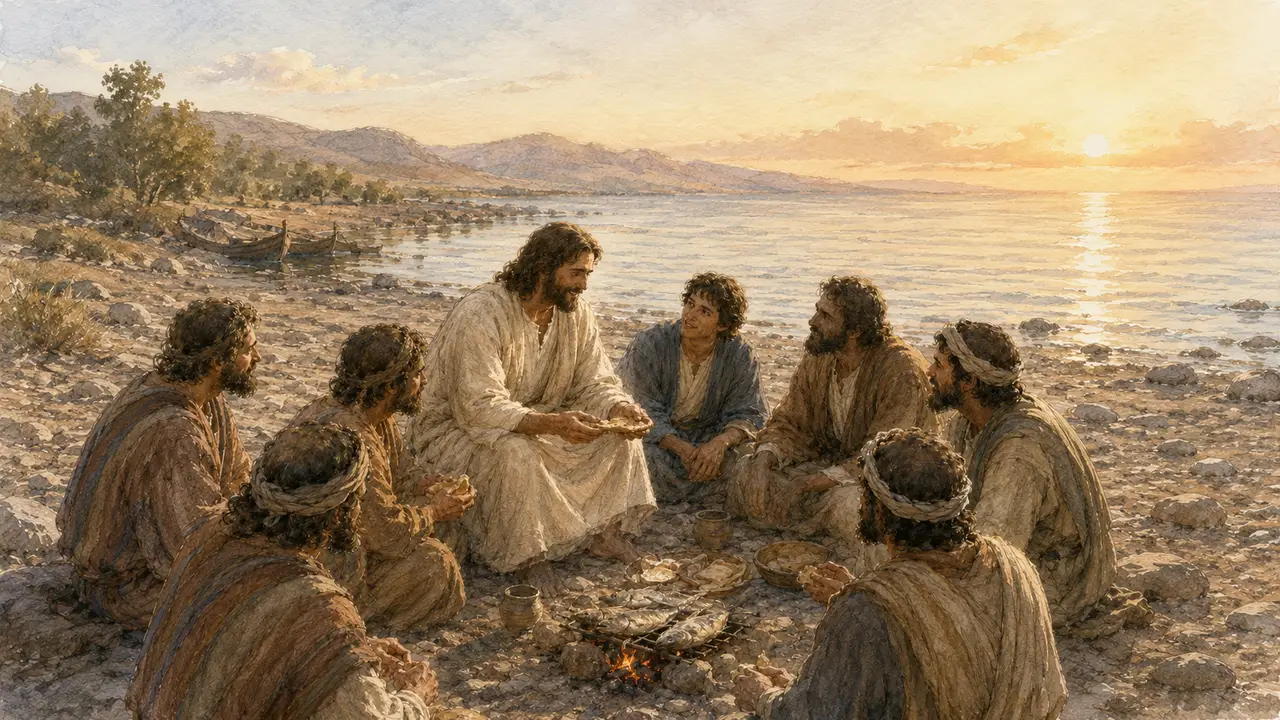
John piles up physical language on purpose. John does not simply say that the apostles knew about Jesus. They heard Him. They saw Him: “with our eyes”. They beheld Him, meaning they looked upon Him and observed Him. They even touched Him: “with our hands”. Christianity rests upon events that happened in the physical world and were witnessed by men who were there.
John’s language about touching Jesus has particular force in light of the bodily resurrection. The apostles certainly saw and touched Jesus throughout His earthly ministry, but after His resurrection Jesus specifically invited His disciples to verify that the man standing before them was physically alive.
“See My hands and My feet, that it is I Myself; touch Me and see, for a spirit does not have flesh and bones as you see that I have” (Luke 24:39).
John himself was among those disciples. When he says that they heard, saw and touched the Word of Life, he speaks as an eyewitness of the incarnate Christ and of the risen Christ.
The Word of Life is John’s title for Him here. As in the Gospel of John, the Word identifies the Son as the One through whom God makes Himself known, while Life identifies something even more fundamental about Him. Eternal life does not simply come from Jesus as though it were something external which He distributes. John says in verse 2 that “the life was manifested”, and then identifies Him as “the eternal life, which was with the Father and was manifested to us”. The eternal life John proclaims is personal. It is found in the Son.
Verse 2 interrupts the larger sentence to explain this further: “And the life was manifested, and we have seen and bear witness and proclaim to you the eternal life, which was with the Father and was manifested to us.” To be manifested is to be made visible or openly revealed. The Son existed before He was manifested. He was already “with the Father”. His incarnation did not begin His existence. The One whom the apostles saw walking among them was the eternal Son who had always been with the Father.
This closely parallels the opening of John’s Gospel. “And the Word became flesh, and dwelt among us, and we beheld His glory” (John 1:14). The movement is from eternal existence with God, to manifestation in the flesh, to eyewitness testimony. The eternal Son was manifested to the apostles; the apostles saw Him; having seen Him, they now “bear witness and proclaim” Him to others.
Verse 3 finally reaches the main statement: “What we have seen and heard we proclaim to you also.” John does not present Christianity as secret knowledge discovered by spiritually enlightened men. The apostles proclaim what Christ revealed to them and what they personally witnessed. Their testimony stands between what Christ actually did in history and every later generation of Christians. We did not stand beside the empty tomb or touch the risen Jesus, but we receive the testimony of the men who did.
John continues, “so that you may also have fellowship with us; and indeed our fellowship is with the Father, and with His Son Jesus Christ.” Fellowship means sharing or participating together in something. John means that believers share, together, in the life that comes from knowing God through His Son. Those who receive the apostolic testimony enter into fellowship with the apostles, because the apostles themselves have fellowship “with the Father, and with His Son Jesus Christ”.
This establishes one of the great dividing lines that will run through the letter. Fellowship with God cannot be separated from the apostolic testimony concerning His Son. A teacher cannot reject the Jesus proclaimed by the apostles and then claim a deeper fellowship with God. God appointed these men as witnesses of His Son, and the message they delivered is the means through which subsequent generations hear and believe.
Verse 4 adds, “And these things we are writing, so that our joy may be made complete.” Their fellowship produces joy because the apostolic proclamation continues to accomplish its purpose. Those who hear and believe are brought into the same fellowship with the Father and the Son. John therefore begins the letter with Christ manifested, Christ witnessed, Christ proclaimed, and believers brought through that proclamation into fellowship with God.
From that foundation John turns immediately to the character of the God with whom Christians have fellowship: “And this is the message we have heard from Him and declare to you, that God is Light, and in Him there is no darkness at all.” Once again John stresses that this is a received message. He is declaring what the apostles heard from Christ.
“God is Light” describes His absolute holiness, purity and truth. John immediately strengthens the statement: “in Him there is no darkness at all.” Darkness cannot be mixed into God’s character in even the smallest degree. There is no evil in Him, no unrighteousness in Him, no deception in Him and no moral corruption which He tolerates within Himself. God is entirely and perfectly holy.
What follows targets people who were making claims about their relationship with God while denying what that relationship necessarily means for sin. John repeats the same construction three times: “If we say that we have fellowship with Him”; “If we say that we have no sin”; “If we say that we have not sinned”.
“If we say that we have fellowship with Him and yet walk in the darkness, we lie and do not do the truth.” To walk in darkness describes the direction and settled pattern of a person’s life. John is not saying that a Christian never sins, because within two verses he will say that anyone who claims to have no sin deceives himself. His concern is with someone who walks in darkness while continuing to claim fellowship with the God who is Light.
The false teaching John confronts is an early form of what later became a distinct movement called Gnosticism. Gnosticism took clear shape in the second century, after John’s lifetime, and it was never one single system: different teachers taught different versions of it. What they shared was the claim to possess special, secret spiritual knowledge that ordinary believers did not have. That claim gives the movement its name: the Greek word for knowledge is gnōsis. Many Gnostic systems sharply divided the spiritual and material realms, treating the spiritual as good and higher, and the material world, including the body, as inferior or corrupt. That split later distorted mainstream Christian teaching on creation, on Jesus becoming a real man, on how believers should live in their bodies, and on salvation itself.
John, however, was writing before Gnosticism reached that later, fully developed form. What he confronts is its early stage: the same instincts, present but not organised into a system. This is why the teaching is called proto-Gnostic. The prefix proto- means “first” or “before”, so proto-Gnostic means Gnosticism in its earliest form, before it hardened into the developed systems of the second century. The false teachers John opposes claimed a kind of superior spiritual standing while separating that claim from the bodily reality of Christ and from what they actually did in their own bodies.
That background explains why John places such emphasis on what the apostles physically saw and touched, and then immediately turns to people who claimed fellowship with God while walking in darkness. John will later make the opposition explicit: “Jesus Christ has come in the flesh” becomes the very confession that distinguishes true testimony from false (1 John 4:2). The false teachers separated the spiritual person from what happened in the body, so they could treat bodily sin as irrelevant to their supposed spiritual fellowship with God.
John attacks that idea by beginning with God Himself. “God is Light, and in Him there is no darkness at all.” There is no category of darkness which becomes acceptable because it happens in the body. There are no sins which cease to matter because someone claims spiritual knowledge. God does not regard bodily sin as irrelevant to spiritual fellowship. The God who created the body is holy, and fellowship with Him necessarily brings a person’s entire life under His Light.
That also exposes the more ordinary form of the same error: the idea that God does not mind certain small sins. Scripture never gives us a category of sin which God regards as morally harmless. Scripture recognises that some sins carry greater consequences and greater guilt than others, but every sin is darkness because every sin contradicts the holy character and command of God. The blood of Christ was required to cleanse us from all sin.
Verse 7 therefore describes the opposite way of life: “but if we walk in the Light as He Himself is in the Light, we have fellowship with one another, and the blood of Jesus His Son cleanses us from all sin.” Walking in the Light does not mean reaching a state of sinless perfection. John immediately rules that interpretation out. Walking in the Light means living before God according to the truth about who He is and the truth about what we are. Sin is exposed rather than excused; it is confessed rather than denied; and cleansing is sought where God has provided it, in the blood of His Son. John also returns here to the fellowship with which the chapter began: “we have fellowship with one another.” The same gospel that brings believers into fellowship with the Father and the Son also brings them into fellowship with one another, because they stand together under the same Light and depend on the same cleansing blood.
The reference to “the blood of Jesus His Son” also prevents Christianity from becoming a religion of moral self-improvement. We cannot enter the Light by cleaning ourselves sufficiently to deserve fellowship with God. Sin requires cleansing, and that cleansing comes through the sacrificial death of Jesus. This is the blood of the new covenant. Under the old covenant, sacrifices were offered again and again because the blood of bulls and goats could never finally take away sin. Christ offered Himself once for all, and His sacrifice does not need repeating. The cleansing secured by His blood continues to apply to His people, which fits John’s present-tense statement that His blood “cleanses us from all sin”. The same Christ whom John saw and touched is the Christ who shed His blood, and His bodily death lies at the centre of the forgiveness John proclaims.
Verse 8 then confronts another claim: “If we say that we have no sin, we deceive ourselves and the truth is not in us.” This is broader than the denial of particular sinful acts. It is a denial of sin as a present reality in us. A person claims to have no sin requiring exposure, confession or cleansing. John says that such a person is deceiving himself. He has misunderstood his own moral condition before God.
This fits the teaching John is opposing. Someone who claimed superior spiritual knowledge could see himself as above ordinary guilt and defilement: sin belonged to the material realm, while his supposed spiritual self remained untouched by it. John refuses that distinction. A person cannot divide himself into a spiritual part which is pure and a bodily part whose conduct is spiritually irrelevant. “If we say that we have no sin, we deceive ourselves and the truth is not in us.”
Verse 9 then gives the proper response: “If we confess our sins, He is faithful and righteous to forgive us our sins and to cleanse us from all unrighteousness.” Confession means agreeing with God about our sin. We stop defending it, renaming it or treating it as irrelevant. We acknowledge that what God calls sin is sin.
God responds with forgiveness and cleansing because He is faithful and righteous. He is faithful because He keeps His promise to forgive and cleanse those who confess, remaining true to His covenant word. He is righteous because that forgiveness does not require Him to set aside His justice. Christ has dealt with the guilt of His people through His blood, so God can forgive sinners without compromising what is right. The cross stands behind the promise of verse 9. The God who is Light can cleanse sinners because Jesus has borne their sin.
Verse 10 presses the argument further: “If we say that we have not sinned, we make Him a liar and His word is not in us.” Verse 8 says, “we have no sin”; verse 10 says, “we have not sinned”. The difference matters. Verse 8 denies sin as a present reality within us. Verse 10 denies actual sinful acts and the guilt attached to them. John now appears to answer the claim in its most concrete form: “What I have done does not count as sin before God.”
This fits a proto-Gnostic separation between the spiritual and the bodily. The false teachers treated the body as belonging to a lower material realm: they could acknowledge that certain bodily acts occurred while denying that those acts stained the spiritual person or placed him under guilt before God. In practical terms, a man could commit what Scripture calls sin and still say, “I have not sinned,” because he had redefined sin in a way which excluded bodily conduct from his spiritual standing.
John allows no such escape. To say “we have not sinned” is to “make Him a liar”. That is stronger than the self-deception of verse 8. God has already spoken about sin. He has defined it in His word, exposed it by His law, condemned it throughout Scripture, and sent His Son because sinners required forgiveness and cleansing. If a man denies that his conduct is truly sin, he is not simply mistaken about himself. He contradicts God’s own verdict.
The claim also attacks the necessity of Christ’s death. If we have not sinned, we do not need forgiveness. If we do not need forgiveness, we do not need cleansing. If we do not need cleansing, then “the blood of Jesus His Son” is unnecessary. The denial of sin therefore reaches directly into the gospel. John has just declared that Christ’s blood “cleanses us from all sin”. A teacher who says, in effect, “I have not sinned,” removes the very guilt for which Christ shed His blood.
That is why John concludes, “His word is not in us.” God’s word cannot dwell in someone who rejects God’s judgment concerning sin. The word exposes sin, calls it sin, and directs sinners to the cleansing provided through Jesus Christ. The person who denies that he has sinned stands against that word.
The progression through verses 6 to 10 is therefore deliberate. First comes the claim of fellowship while walking in darkness. Then comes the denial that sin exists in us. Finally comes the denial that our actual conduct is sin at all. John answers each claim by bringing it into the Light of God’s character and the cleansing blood of Christ.
At the same time, John does not leave sinners without hope. The answer to darkness is found in the same Jesus whom the apostles proclaimed. “The blood of Jesus His Son cleanses us from all sin.” The Christian life is lived in the Light by believing the apostolic testimony about Christ, confessing sin truthfully before God, and resting in the cleansing God has provided through the blood of His Son. God remains completely holy, sin remains truly sin, and the sinner who comes through Christ receives real forgiveness and cleansing.