
Jude 1
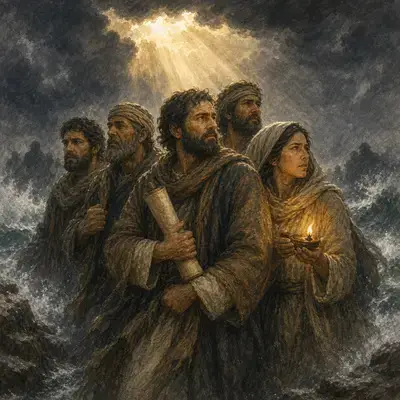
Jude meant to write about our common salvation, but men who twisted grace into licence to sin had slipped into the church. He calls believers to contend for the faith once delivered, and points them to the God who is able to keep them from stumbling.
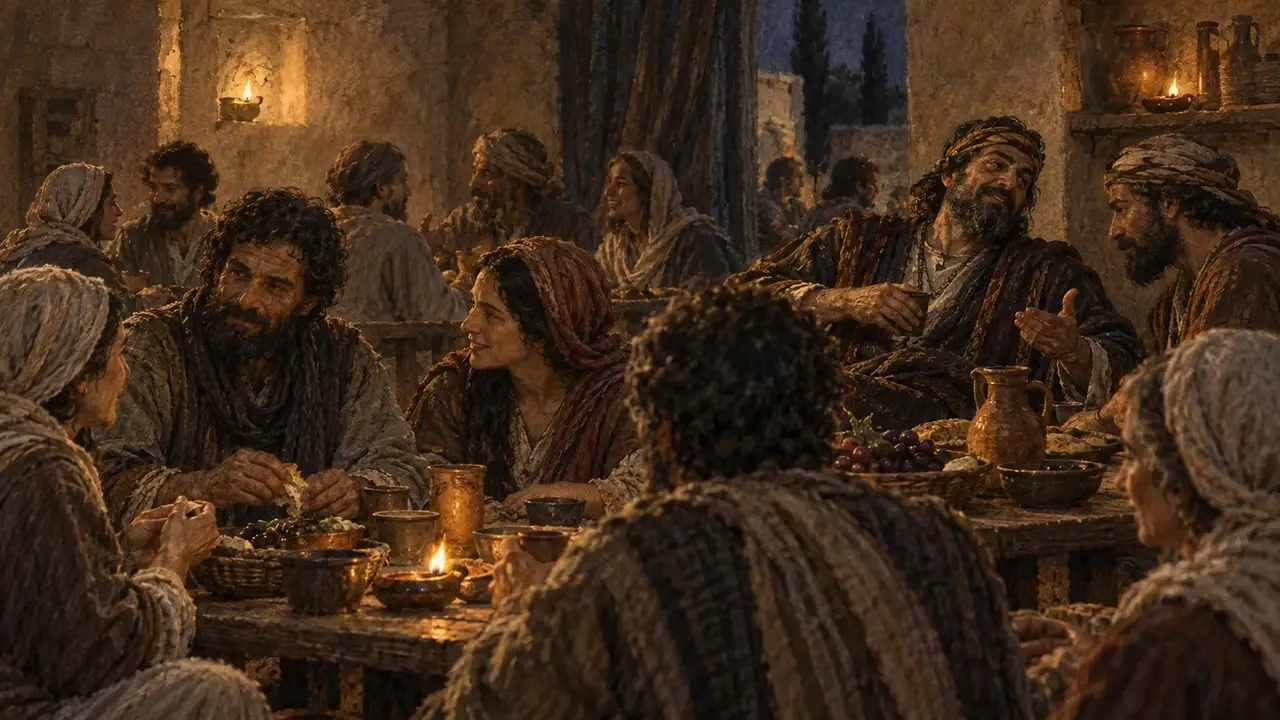
Jude 1 Explained: Counterfeit Grace and the God Who Keeps
Jude 1–4: Called, Beloved and Kept
Jude introduces himself as “a slave of Jesus Christ, and brother of James”. If this James is the brother of the Lord who became prominent in the Jerusalem church, Jude is likewise one of Jesus’ earthly brothers. He does not appeal to that relationship for authority. He identifies himself first as one who belongs to Jesus Christ and serves Him.
He writes “to those who are the called, beloved in God the Father, and kept for Jesus Christ”. Their salvation begins with God’s call, rests in the Father’s love, and is preserved for Jesus Christ. His greeting is threefold: “May mercy and peace and love be multiplied to you.”
Jude had intended to write about “our common salvation”, but a more immediate danger required his attention. He appeals to his readers to “contend earnestly for the faith which was once for all handed down to the saints”. “The faith” here is not the act of trusting, but the truth Christians believe: the teaching of the apostles, entrusted to the church. It has been handed down “once for all”. The church receives, guards and proclaims that faith.
The urgency arises because “certain persons have crept in unnoticed”. Jude is not describing an accidental development or an unfortunate occurrence. These false teachers crept in deliberately and hid what they really taught and how they really lived. Their arrival is grievous, but not unexpected. In Matthew chapter 7 Jesus had already warned that false prophets would come among His people appearing as sheep while inwardly being ravenous wolves. Jude says these men were “long beforehand marked out for this condemnation”. Their presence does not catch God by surprise, and neither will their judgment.
He describes them as “ungodly persons who turn the grace of our God into sensuality and deny our only Master and Lord, Jesus Christ”. Their doctrine and conduct belong together. They appeal to grace while using it to excuse sexual immorality. Whatever they still say about Christ, their teaching rejects His authority. Grace is never permission to disobey the Lord who gives it.
Jude 5–7: Rebellion Brings Judgment
Jude reminds his readers of things they already know. The truth already given to the church is enough to expose the false teachers.
The Greek texts differ on who is named in verse 5. Many read “the Lord”, but some of the earliest and most reliable manuscripts read “Jesus”, and recent work on the Greek text has judged that to be what Jude originally wrote. That is why the LSB translates:
“Now I want to remind you, though you know all things, that Jesus, having once saved a people out of the land of Egypt, subsequently destroyed those who did not believe.”
If “Jesus” is the original reading, and it likely is, Jude makes an extraordinary statement about Christ. Jesus saved Israel from Egypt and subsequently destroyed those who refused to believe. The Jesus denied by the false teachers is identified with the divine Lord who acted in the Exodus. Christ did not begin His existence at Bethlehem. Jude identifies Him with the saving and judging work of Yahweh.
Israel provides Jude’s first warning. These were the covenant people whom God had redeemed from slavery, but their privileged position did not mean God would tolerate unbelief afterward. In Numbers chapter 14 the generation delivered from Egypt refused to believe Yahweh and came under His judgment in the wilderness. Redemption from Egypt did not give them licence to reject the God who redeemed them.
Jude next refers to “angels who did not keep their own domain, but abandoned their proper abode”. Jude’s language of keeping now reverses verse 1. Believers are “kept for Jesus Christ”. These angels “did not keep” their own domain, so God “has kept” them in eternal bonds for judgment.
Jude’s description closely resembles the story of the Watchers in 1 Enoch, a collection of Jewish writings which is not Scripture but was widely known in the first century. The Book of the Watchers, one of its oldest parts, was written well before Christ. It begins the story in chapter 6 and tells how heavenly beings abandon their appointed place, descend to earth to take the beautiful daughters of men as wives, and are eventually bound awaiting judgment. Jude later quotes 1 Enoch chapter 1 directly, so there is no doubt that he knew this Jewish tradition.
Jude’s use of 1 Enoch as an illustration does not mean it is divinely inspired Scripture. Genesis speaks of the “sons of God”. Some people believe these are heavenly beings, since the same expression refers to heavenly beings in Job chapters 1, 2 and 38. As we saw in Genesis chapter 6, that reading is difficult: in Matthew chapter 22 Jesus says heavenly angels do not marry, and Genesis chapter 1 has plants and animals reproducing according to their kinds. It is better to understand the sons of God as rulers, men who claimed divine status as ancient kings often did.
However, some Jews in the ancient world were intensely interested in angels. 1 Enoch takes their angelic reading of Genesis chapter 6 and develops it into a much larger story. Jude is not interpreting Genesis chapter 6 here. What he does affirm is that angels rebelled against the place God assigned to them and are being kept for judgment.
Sodom and Gomorrah provide the third example:
“just as Sodom and Gomorrah and the cities around them, having indulged in the same way as these in gross sexual immorality and having gone after strange flesh, are exhibited as an example in undergoing the punishment of eternal fire.”
At the broadest level, Sodom represents gross sexual rebellion against God’s created order. Genesis chapters 1 and 2 establish sexual union between male and female, and Romans chapter 1 likewise describes same-sex intercourse as contrary to that order. Rejecting God’s boundaries does not make the desire legitimate.
Jude may also intend something more specific by “strange flesh”, literally “different flesh”. Genesis chapter 19 records the men of Sodom attempting to sexually abuse visitors who were actually angels. If that is in view, the pairing with the angels in verse 6 is especially fitting. Heavenly beings crossed a boundary God had established, and the men of Sodom attempted to cross another.
Jude also widens the picture. The same chapter records a judgment in history: “Yahweh rained on Sodom and Gomorrah brimstone and fire from Yahweh out of heaven”. Brimstone is burning sulphur. That fire fell on the cities long ago, but Jude calls it “eternal fire” and presents the cities as an “example”. Sodom’s destruction is a preview of the final judgment.
Jesus draws the same connection in Luke chapter 17, where he says that on the day Lot left Sodom “it rained fire and brimstone from heaven and destroyed them all”, and that it “will be just the same on the day that the Son of Man is revealed”. The same point appears in 2 Peter chapter 2, where God made Sodom “an example to those who would live ungodly lives thereafter”. The fire that fell on Sodom ended those cities. The fire Jude has in view is eternal, and it awaits the false teachers and all who persist in rebellion against God.
Jude 8–16: False Spirituality and Certain Judgment
Jude applies these warnings directly to the false teachers:
“Yet in the same way these men, also by dreaming, defile the flesh, and reject authority, and blaspheme glorious ones.”
Their “dreaming” refers to dreams or visions they claimed came from God. Their visions were apparently the authority they claimed for their conduct, and angels were central to what they claimed. That is why Jude answers with rebellious angels.
They appealed to supposed angelic revelations to justify behaviour God had forbidden, and Jude’s use of rebellious angels carries extra force against them. Jude takes 1 Enoch, a story familiar to people interested in heavenly things, and turns it against their presumption. Even a supposed angelic revelation cannot overturn what God has already established.
The word “blaspheme”, which means to speak abusively, links verses 8–10. The false teachers “blaspheme glorious ones”. Michael provides the contrast:
“But Michael the archangel, when he, disputing with the devil, was arguing about the body of Moses, did not dare pronounce against him a blasphemous judgment, but said, ‘The Lord rebuke you!’”
The dispute over the body of Moses is not recorded in the Old Testament. Jude is again referring to ancient Jewish tradition known to his readers. His point is clear even though we do not know all the details of the story. Michael is a genuine archangel, but he does not presume to speak against the devil as these men speak about heavenly beings. He leaves judgment with the Lord.
Verse 10 exposes the contradiction:
“But these men blaspheme the things which they do not understand; and the things which they know by instinct, like unreasoning animals, by these things they are destroyed.”
Their claimed spirituality has produced sensuality rather than holiness.
Jude pronounces “Woe to them!” and gives three biblical examples. They “have gone the way of Cain”. Genesis chapter 4 records Cain refusing Yahweh’s warning that sin was crouching at the door and then murdering his righteous brother. Like Cain, these teachers refuse God’s correction and allow sin to rule them.
They have “poured themselves into the error of Balaam” for pay. Balaam’s story runs through Numbers chapters 22 to 25. At Baal Peor, Israel joined in sexual immorality and idol worship, and Numbers chapter 31 explicitly connects Balaam’s counsel with that fall. Balaam combined religious influence, greed and the corruption of God’s covenant people. Jude’s reference to doing this “for pay” makes the comparison especially appropriate.
They have “perished in the rebellion of Korah”. Numbers chapter 16 records Korah rejecting the authority Yahweh had established through Moses and Aaron and drawing others into his rebellion. Jude has already accused these men of rejecting authority. Like Korah, they also endanger others through their rebellion.
Jude describes what they are doing within the church. They are “hidden reefs in your love feasts”, the shared meals of Christian fellowship. A hidden reef destroys because the danger cannot initially be seen. These men participate in the life of the church while endangering those around them.
They are shepherds “caring for themselves”, feeding themselves instead of the flock. They are “clouds without water”, promising refreshment and giving none. They are “autumn trees without fruit, doubly dead, uprooted”. They are “wild waves of the sea, casting up their own shame like foam”. They are “wandering stars, for whom the black darkness has been reserved forever”. The word translated “reserved” is the same verb Jude has already used for being “kept”.
Jude now quotes 1 Enoch chapter 1:
“Behold, the Lord came with many thousands of His holy ones, to execute judgment upon all.”
Jude says Enoch “also prophesied about these men”, and he applies the words directly to the false teachers. In Acts chapter 17 and Titus chapter 1 Paul likewise quotes non-biblical writers when their words express something true. Jude, writing under inspiration, affirms the truth of the words he quotes and applies them authoritatively.
To see who “the Lord” is here, look at what Jude says about Jesus throughout the letter. Jesus is “our only Master and Lord” in verse 4. In verse 5 Jesus saved Israel and subsequently judged the unbelieving. In verse 21 believers wait for “the mercy of our Lord Jesus Christ to eternal life”. The Lord who comes in verses 14–15 is the Lord Jesus Christ.
Verse 15 repeats “ungodly” four times. The Lord comes “to convict all the ungodly of all their ungodly deeds which they have done in an ungodly way, and of all the harsh things which ungodly sinners have spoken against Him.” These men may describe themselves in spiritual terms. Jude calls them ungodly.
They are grumblers and fault-finders, “following after their own lusts”. Their mouths speak arrogantly, and they flatter people when doing so brings them advantage. Their claims conceal lust, pride, discontent and self-interest.
Jude 17–25: Remember, Persevere and Show Mercy
The believers must remember what the apostles of Jesus Christ had already warned:
“In the last time there will be mockers, following after their own ungodly lusts.”
In Acts chapter 20 Paul warned the Ephesian elders that savage wolves would enter among them and that men would arise from within the church speaking perverse things to draw disciples after themselves. In 2 Peter chapter 2 the same warning appears: “there will also be false teachers among you”.
Jude says these are the ones who create divisions, “worldly-minded, not having the Spirit”. Whatever spiritual authority they claim, they do not have the Holy Spirit.
The believers must follow another course:
“building yourselves up on your most holy faith, praying in the Holy Spirit, keep yourselves in the love of God, waiting for the mercy of our Lord Jesus Christ to eternal life.”
The false teachers depart from the faith once delivered. Christians build themselves up in it. The false teachers lack the Spirit. Christians pray in Him.
They must also “keep yourselves in the love of God”. Jude began by describing them as “beloved in God the Father” and “kept for Jesus Christ”. Their responsibility to keep themselves in God’s love does not compete with God keeping them. God keeps His people, and He commands His people to continue in His love.
They wait for “the mercy of our Lord Jesus Christ to eternal life”. Mercy appeared in Jude’s opening blessing, and now it appears as the believer’s hope at Christ’s return.
Those who have received mercy must show mercy. Some affected by the false teachers are doubting and need mercy. Others must be rescued urgently, “snatching them out of the fire”. Others require mercy accompanied by fear, “hating even the tunic polluted by the flesh”. A tunic was the undergarment worn against the skin, so the picture is of keeping clear of anything stained by their sin. Jude distinguishes between the false teachers themselves and those endangered by their teaching. The church must contend earnestly for the faith while seeking to rescue those being led astray.
Jude closes:
“Now to Him who is able to keep you from stumbling, and to make you stand in the presence of His glory blameless with great joy…”
Believers are “kept for Jesus Christ”. The angels “did not keep” their domain and are therefore “kept” for judgment. Darkness is “reserved” for the false teachers. Christians are commanded to “keep yourselves in the love of God”. Finally, God Himself is able to keep them from stumbling.
Jude gives glory “to the only God our Savior, through Jesus Christ our Lord”. The men who infiltrated the church deny “our only Master and Lord, Jesus Christ”, but Jude ends by confessing Jesus as Lord. The church must contend for the faith once delivered, while its final confidence rests in the God who is able to keep His people and make them stand before His glory.