
Hebrews 2
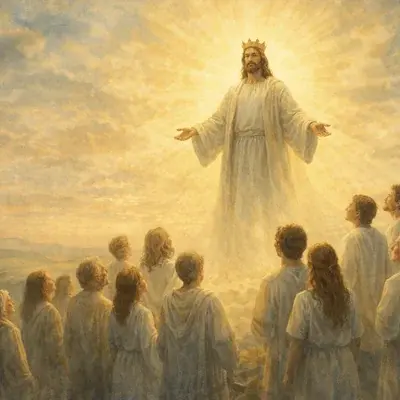
Hebrews 2 draws out the necessary conclusion of chapter 1. God has spoken finally in His Son. The Son is the radiance of His glory, the exact representation of His nature, the Creator, the heir of all things, and the one seated at the right hand of the Majesty on high. Because this is true, we must pay much closer attention to what we have heard, lest we drift away. This chapter warns against drifting from the Son’s word.
The Son Who Became Lower to Bring Many Sons to Glory
Hebrews chapter 2 draws out the logical conclusion from what was explained in chapter 1.
God has spoken in His Son. The Son is the radiance of His glory, the exact representation of His nature, the Creator, the heir of all things, and the one seated at the right hand of the Majesty on high.
Angels worship Him. Angels serve Him, and the Son reigns in glory.
“For this reason we must pay much closer attention to what we have heard, lest we drift away.”
Drifting is not open rejection. It is slow movement away from what was once held firmly. Drifting happens when something is no longer anchored. A boat does not need to be pushed far from shore. It only needs its anchor lifted.
When we stop paying attention to the Son, we are in real danger of drifting away. God has spoken finally in His Son. There is no further revelation beyond Him. To drift from this word is to move away from God’s final revelation.
Hebrews then makes a comparison. “For if the word spoken through angels proved unalterable, and every trespass and disobedience received a just penalty, how will we escape if we neglect so great a salvation?”
Scripture tells us the Law was given with angelic involvement. Deuteronomy 33 points to this, and Acts 7 and Galatians 3 confirm it. That word was binding. God enforced it. When Israel disobeyed, judgment followed.
This salvation is greater because it comes through the Son Himself. The Law carried penalties, but this salvation carries eternal weight. To neglect it is not a minor oversight. It is to disregard the ultimate word by which God now addresses mankind.
Hebrews describes how this salvation was made known.
The Son proclaimed it and the eyewitnesses confirmed it. God bore witness. The Holy Spirit distributed gifts. Here we see the Father, the Son, and the Holy Spirit all testifying together.
The chapter then turns to the world to come. “For He did not subject to angels the world to come, concerning which we are speaking.” To subject is to place under rule.
The world to come refers to the final and perfected kingdom, the full establishment of God’s reign when every enemy is subdued. That order is not placed under angels.
To show this, Hebrews quotes Psalm 8. “What is man, that You remember him? Or the son of man, that You are concerned about him? You have made him for a little while lower than the angels; You have crowned him with glory and honor, and have appointed him over the works of Your hands; You have put all things in subjection under his feet.” Psalm 8 reflects on Genesis 1.
God created man in His image and entrusted him with dominion over the works of His hands. Though small in comparison to the heavens, man was crowned with honour and appointed to rule.
The psalm speaks universally. All things were placed under his feet. Nothing was left outside of his dominion. However, when we look at the present condition of mankind, that dominion is not always visible.
Because of sin, creation is under a curse and death remains a present reality. Man does not rule in righteousness. The authority given in Genesis has been damaged by disobedience.
Hebrews then points to the one Man in whom Psalm 8 is fulfilled. “But we do see Him who was made for a little while lower than the angels—Jesus.” He entered the low place described in the psalm. He became truly man.
Jesus experienced weakness and suffering. “Because of the suffering of death” He is now “crowned with glory and honor.” The path to dominion ran through obedience unto death, and the crown followed the cross.
“So that by the grace of God He might taste death for everyone.” He truly died. He entered death fully. He did not die for His own sin. He died as a substitute, bearing the deserved death of sinners upon Himself.
The next verse speaks of “bringing many sons to glory.”
His death reaches as far as God intends it to reach, for every one of the sons He brings to glory.
Hebrews then explains why suffering was necessary. “For it was fitting for Him, for whom are all things, and through whom are all things, in bringing many sons to glory, to perfect the author of their salvation through sufferings.”
God is the source and goal of all things. It was fitting that salvation would come through a suffering Saviour. “Perfect” does not mean Jesus needed moral improvement. He was without sin.
It means He was brought to full qualification as the pioneer of salvation. He walked the path of suffering without failure and reached the goal of glory. He now leads His people there.
The chapter then speaks of the unity between Christ and His people. “For both He who sanctifies and those who are being sanctified are all of One; for which reason He is not ashamed to call them brothers.” Christ sanctifies. He sets apart His people for God. They belong to Him. Because He truly became man and truly suffered, He openly calls them brothers.
Hebrews supports this with Scripture. From Psalm 22: “I will recount Your name to My brothers, in the midst of the assembly I will sing Your praise.” The sufferer in Psalm 22 moves from anguish to deliverance and declares God’s name among his brothers.
Hebrews applies this to Christ, the crucified and risen One, who now stands among His people and declares the Father’s name.
From Isaiah: “I will put My trust in Him.” The Son trusted the Father as a true man. His obedience was lived out in dependence.
Again from Isaiah: “Behold, I and the children whom God has given Me.” God gives a people to the Son. The Son stands with them and owns them as His own.
The chapter then turns to the incarnation. “Therefore, since the children share in flesh and blood, He Himself likewise also” took the same. The children share in mortal human life.
Jesus did not merely appear human. He became a flesh-and-blood man. He became a living, breathing person, able to hunger, grow weary, bleed, and die.
He did this “that through death He might render powerless him who had the power of death, that is, the devil.” The devil’s power lies in accusation. Because sin brings death and judgment, he uses death as a weapon, holding sinners under guilt and fear.
Hebrews also says Christ came to free those “who through fear of death were subject to slavery all their lives.” This slavery is lifelong bondage under the shadow of judgment.
The Law exposed sin and pronounced guilt, but it could not remove condemnation. Christ entered death, bore sin’s penalty, and satisfied God’s justice. Believers still die physically. However, death no longer condemns them.
“For assuredly He does not give help to angels, but He gives help to the seed of Abraham.” The Son did not take the nature of angels. He took the nature of Abraham’s offspring. The promise given to Abraham finds its fulfilment here. Salvation is directed toward those who belong to the covenant promise.
“Therefore, He had to be made like His brothers in all things, so that He might become a merciful and faithful high priest in things pertaining to God, to make propitiation for the sins of the people.” He had to become like them in order to represent them. As High Priest, He stands between God and His people.
He is merciful because He knows their weakness from experience. He is faithful because He accomplishes the priestly work completely. He makes propitiation.
Propitiation means that by His sacrifice He turns away God’s righteous wrath against sin. God’s wrath is His holy opposition to evil. Because God is righteous, He must judge sin.
By sacrificing Himself on the cross, Jesus bore that judgment. He satisfies divine justice. God’s wrath is turned away from those who trust in the Son, not because God ignores sin, but because Christ has dealt with it fully.
The chapter closes with present help grounded in Christ’s experience. “For since He Himself was tempted in that which He has suffered, He is able to come to help those who are tempted.”
His temptations were real. His suffering was real, but He remained faithful. He now helps His people in their struggle because He has endured and overcome.
Hebrews 2 explains why the Son who reigns above angels entered suffering and death. He became truly man. He fulfilled the dominion spoken of in Psalm 8. He bore the deserved penalty of sinners.
The exalted Son became lower than the angels so that He might lift many sons to glory. Jesus reigns and intercedes. And He helps those who are tempted. Therefore, let us pay much closer attention to what we have heard and hold fast to Him.