Faith
What does the Bible say about Faith?
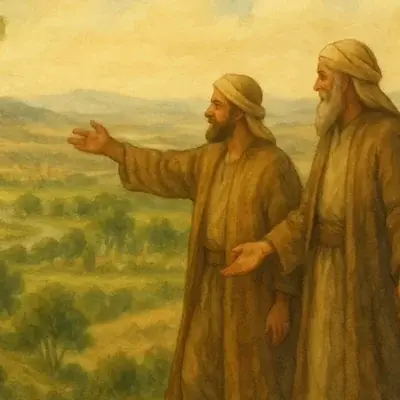
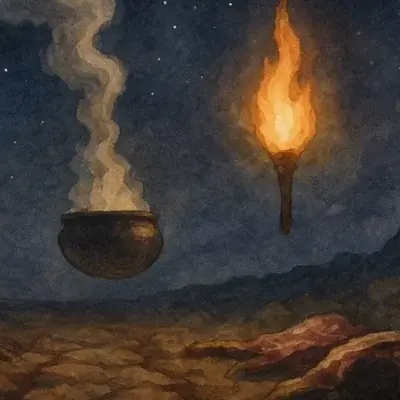
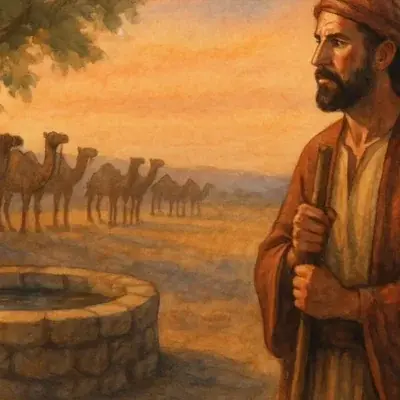
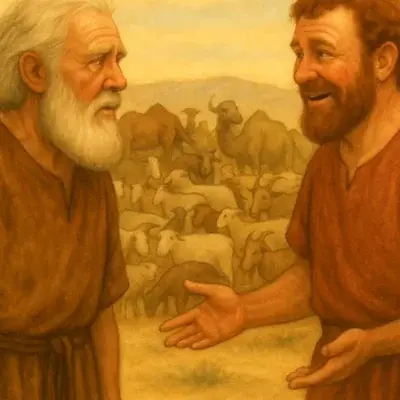
Faith in Scripture is not religious feeling or vague spiritual openness. It is trust: a specific trust in a specific God based on what he has said and done. Abraham is the defining example. When God calls him to leave his homeland and promises to make him into a great nation, “Abraham believed God, and it was credited to him as righteousness.” He had no temple, no law, no written Scripture. He had the word of Yahweh, and he trusted it. That trust was counted as righteousness.
Paul’s argument in Romans and Galatians builds on this foundation. Abraham was justified by faith before circumcision, before the Law, before any system of religious observance. This proves that justification has always been by faith, not by works. The Law came after Abraham and could not alter the principle already established. The promise to Abraham was received through faith, and that is how it is received still: not by earning it but by trusting the one who made it.
Faith is not a meritorious act that earns something from God. It is the empty hand that receives what Christ has accomplished. The Reformers were insistent on faith alone (sola fide): not faith plus works, not faith plus sacrament, but faith alone in Christ alone.
What is the definition of faith in Hebrews 11?
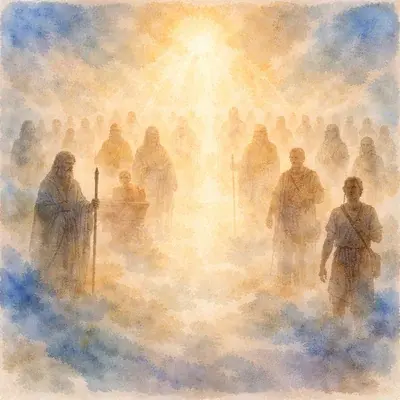
Hebrews gives Scripture’s clearest working definition of faith before spending the rest of its chapter illustrating it: “Now faith is the assurance of things hoped for, the conviction of things not seen” (Hebrews 11:1). Faith is not wishful thinking or a leap into the unknown. It treats what God has promised as certain even before it is seen, because the promise rests on the character of the one who made it, not on visible evidence in hand.
How does faith grow?
Faith is not generated from within a person by sheer effort. Paul traces it back to its source: “faith comes from hearing, and hearing by the word of Christ” (Romans 10:17). Faith grows the same way it began, by continued exposure to what God has said. It is not a resource believers are left to manufacture on their own.
Does the Bible Say Faith Without Works Is Dead?
James states it as plainly as Scripture ever states anything: “just as the body without the spirit is dead, so also faith without works is dead” (James 2:26). This is not James contradicting Paul’s teaching that justification is by faith alone. James is answering a different question, not how a sinner is declared righteous before God, but what genuine faith looks like once it exists. A body separated from its spirit is a corpse, no matter how much it resembles a living person. In the same way, a claimed faith that produces no obedience and no change of life is not weak faith. It is a corpse wearing faith’s clothing. Works do not justify a person before God. They are the evidence that justifying faith is actually present.
Follow how this theme develops through the Bible.