
James 1
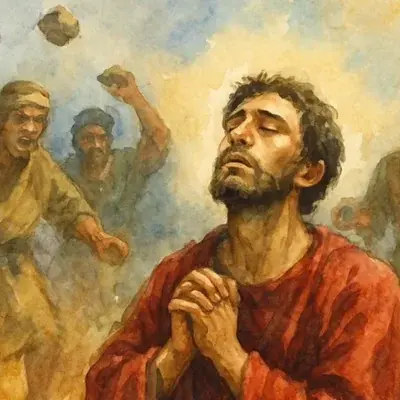
What do we do when the joy of salvation meets the crucible of trials? James 1, likely the very first book of the New Testament written only twenty years after Jesus rose from the dead, speaks God’s wisdom to the heart of the Christian life.
James 1 Explained: Trials, Wisdom, and Living Faith
As Christians, what are we to do when the joy of salvation meets the crucible of trials? James Chapter 1 answers this question.
James was very likely the first New Testament book ever written, just twenty years after Jesus rose from the dead. In it, God speaks wisdom to the very heart of the Christian life.
When we first come to faith in Christ, God’s love, grace, and mercy flood our hearts with overwhelming joy.
Yet, within weeks, days, or even hours, persecution or hardship can strike, turning that joy into a battle.
If unprepared, the new believer can be left shellshocked, wondering what just happened and why joy has turned into trial.
Where is this conquering the Bible promised us?
Romans 8 tells us, “In all these things we are more than conquerors through Him who loved us.”
But James shows us what that conquering looks like—it’s not escape from trials but endurance as we go through them.
The book of James teaches us that this should not come as a surprise.
In fact, trials are the defining Christian experience, shaping faith into maturity.
By the time James wrote this letter, the church had grown much larger than a small group of Jesus-followers based in Jerusalem.
It had spread to Judea, Samaria, and beyond, with Gentiles now receiving the gospel with joy and being added to the number of believers, as Acts chapters 10 and 11 tell us.
But persecution, sparked by Stephen’s martyrdom in Acts 7, scattered the believers among the nations.
They faced rejection from their Jewish relatives who did not believe, and pressure from the pagan world around them.
In verse 1, James calls them “the twelve tribes in the dispersion.”
This means more than simply those who were Jewish by birth.
It is the church, God’s true Israel, defined by faith in Christ, living as exiles, as First Peter chapter 2 describes.
Like Israel scattered in exile, they are God’s covenant people, bound together by the gospel and waiting for their true home.
Rooted in the wisdom of Proverbs and echoing Jesus’ Sermon on the Mount, James gives us a practical faith—tested in trials, proven in obedience, and marked by mercy.
This letter comes from James, the half-brother of Jesus, who grew up with Him but only believed after Jesus’ resurrection.
In Acts chapter 15 we see him leading the church in Jerusalem with wisdom and prayer.
He could have appealed to his family ties, yet in verse 1 he calls himself, “a slave of God and of the Lord Jesus Christ.”
The word “slave” means complete devotion—his life surrendered to his Master, ready to do His will.
His name in Greek is Jacob, the same as the father of Israel’s twelve tribes.
And it may be that James is allowing his own name to serve as a subtle reminder: just as the original sons of Jacob lived in exile outside the promised land, so now the church, God’s true Israel, is scattered among the nations, waiting for its home.
Immediately after his greeting, James plunges into the reality of trials, writing in verse 2, ‘Consider it all joy when you encounter various trials.’
The joy of salvation—God’s love filling the heart—can meet rejection, as Jesus warned in Matthew 10, or hostility, as John 15 describes.
Trials come in many forms: persecution, loss, delay, or temptation.
They hurt. They’re a pressure cooker. And they’re very unsettling.
By the time James wrote this letter, Stephen had already been martyred, stoned to death for his testimony about Jesus.
Yet James calls us to count trials as joy, not because they feel good, but because God uses them.
When James tells us to count trials as joy, he is echoing Jesus’ words in Matthew 5: “Blessed are you when others revile you and persecute you… rejoice and be glad, for your reward is great in heaven.”
In verses 3 and 4 he tells us why: trials produce steadfastness—a faith that grows stronger, not just surviving but thriving.
This steadfastness makes us “mature and complete, lacking nothing,” a faith whole and strong, reflecting Christ, who endured the cross for joy, as Hebrews 12 tells us.
We see this in Joseph’s life in Genesis.
Betrayed by his brothers in Genesis 37, sold as a slave, and imprisoned unjustly in Genesis 39, he served faithfully in every trial.
His trust in God shone through when he declared in Genesis 50, “You meant evil against me, but God meant it for good.”
His joy wasn’t in chains but in God’s purpose.
So, when trials come—whether conflict, grief, or uncertainty—do we trust that God is working out His good purpose, to mature our faith and grow us as believers?
To see our trials rightly, we need wisdom, and James now turns to this need.
In verse 5 he writes, “If any of you lacks wisdom, let him ask God, who gives generously and without reproach.”
This wisdom isn’t worldly cleverness, but the God-given ability to see trials rightly and to walk through them with faith.
King Solomon asked God for wisdom, and God was pleased to give it.
In the same way, God delights to give us wisdom, freely and without reproach. But in verse 6, James warns, “Ask in faith, with no doubting.”
A doubting heart treats God as unreliable, like waves driven and tossed by the wind, as verse 7 says.
In verse 8, such a person is “double-minded,” unstable in all his ways.
Faith is single-minded trust.
Joseph shows this in Genesis 40: forgotten in prison, yet still trusting God’s word.
When trials overwhelm—whether a health crisis, a broken relationship, or a spiritual battle—God invites us to ask for wisdom, trusting He provides.
James now shows how trials reveal true status.
In verses 9 through 11, the poor believer rejoices as God’s heir.
As Romans 8 declares, we are co-heirs with Christ.
But the rich see wealth fade, like grass burned by the sun, as Psalm 103 says.
Riches wither, but faith endures.
Trials strip away illusions—poverty’s shame, wealth’s pride—showing our identity is in Christ.
As Psalm 49 warns, wealth cannot redeem a soul.
In a world obsessed with status, this is a searching question: where do we seek security?
Do we lean on worldly wealth, or do we trust the promises of Christ?
Having called us to steadfastness, James now explains where temptation comes from.
In verse 12 he writes, “Blessed is the man who remains steadfast under trial, for when he has stood the test he will receive the crown of life, which God has promised to those who love Him.”
This crown is the fullness of eternal life, not a separate reward but the culmination of faith that endures, as Revelation 2 echoes.
But in verses 13 to 15, James warns, “Let no one say, ‘I am tempted by God.’”
God cannot be tempted by evil, nor does He tempt anyone.
Temptation comes from our own desires, luring us like a fish to a hook.
Desire conceives sin, and sin, when fully grown, brings death.
James isn’t teaching that salvation can be lost. Rather, he is showing the deadly path of sin.
Similarly, the Apostle Paul writes in Romans 6, “the wages of sin is death.”
Joseph faced this test in Genesis 39, when Potiphar’s wife tempted him.
But he refused. Saying, “How could I do this great evil and sin against God?”
His trust in God was proven in obedience.
When temptations come our way—whether anger, lust, or pride—James calls us to turn to the God who gives life.
Through the Spirit at work in us, we can say no to sin out of love for God, leaning on Him in prayer.
James now warns in verse 16, “Do not be deceived.”
Temptation never comes from God; every good gift does. In verse 17 he writes, “Every good thing given and every perfect gift is from above, coming down from the Father of lights, with whom there is no variation or shifting shadow.”
God is unchanging, always giving wisdom, steadfastness, and life.
The trials we face may feel painful in the moment, but they are God’s good gifts to refine us.
Through them He grows us into mature followers of Jesus.
And in verse 18 His word makes us “a kind of first fruits of His creatures,” the beginning of His new creation.
In Israel’s worship, the first fruits were the first portion of the harvest, offered to God as holy and as a sign of the full harvest still to come.
By calling believers the first fruits, James is saying that those brought to life by the word of truth are the beginning of God’s great harvest, His new creation in Christ.
As Paul writes in Second Corinthians 5, we are new creations in Christ.
Our new birth by God’s word points forward to the day when He will renew all things.
On the other hand, if we doubt God’s goodness, we become like Israel in Numbers 11, grumbling even when God provides.
This new life now shapes our walk, as James explains.
In verse 19 he says, “Be quick to hear, slow to speak, slow to anger.”
Human anger does not produce the righteousness of God, as verse 20 warns.
Instead, in verse 21 James calls us to lay aside all filthiness and receive the implanted word, which is able to save our souls.
As promised in Jeremiah chapter 31, God Himself writes His word on our hearts.
But James gives us a warning. In verse 22 he writes, “Be doers of the word, not hearers only, deceiving yourselves.”
Hearing without doing is like glancing at your reflection in a mirror and then immediately forgetting what you look like.
We must never forget our identity. We too are slaves of God and of the Lord Jesus Christ.
If we are God’s people, then what does that look like in practice?
James explains in verse 25: We should be obeying the perfect law, the law of liberty, which brings blessing.
This law, fulfilled in Christ, is a law that frees us to obey God from the heart.
As Jesus taught in Matthew 7, the wise man builds his house on the rock by doing His words.
This does not contradict Paul in Romans 3, where he declares that we are justified by faith.
James is showing that the faith which justifies is never empty—it always acts.
James ends this chapter by exposing worthless religion and pointing us to the kind that pleases God.
James says, “Pure and undefiled religion before God the Father is this: to visit orphans and widows in their affliction, and to keep oneself unstained from the world.”
This is mercy and holiness, reflecting God’s care, as Psalm 68 declares.
Today, trials—rejection, financial strain, or temptation—test us.
Pure religion means showing mercy—forgiving a wrong, serving those in need, and standing firm against worldly compromise.
In a world driven by self-interest, James calls us to live God’s love.
This is how faith is tested, and this is how God makes His people whole.
The church—God’s true Israel—lives as exiles, awaiting the crown of life.
So, when the joy of salvation meets the pain of trials, James chapter 1 calls us to endure, to seek wisdom, and to show God’s mercy to others.
And notice, mercy is often shown right in the midst of someone else’s trial. The widow and the orphan know suffering of their own. God sends us out to meet them in their affliction, to bear their burdens, and to reflect His care.
This is how faith is tested and proven to be genuine, and this is how God makes His people whole.
So we press on as God’s people, tested in trials, shaped by His word, and strengthened by His Spirit.
And as we wait, we go out to love and serve others, visiting orphans and widows in their affliction, encouraging and strengthening them in their own trials—until the day we share in the crown of glory when our Lord Jesus Christ appears.