
Hebrews 8
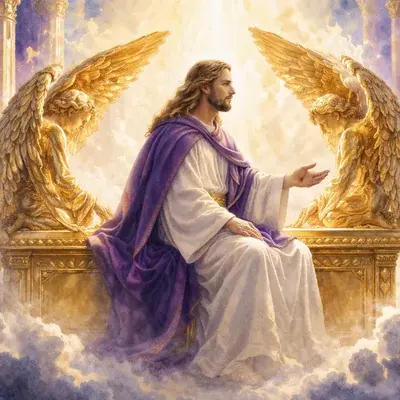
Hebrews chapter 8 draws the covenantal conclusion from what was established in chapter 7. Jesus has been shown to be a high priest forever according to the order of Melchizedek, and now the chapter explains what that priesthood means: He is not serving in an earthly sanctuary, but in heaven itself, at the right hand of the Majesty. From that position He mediates a new covenant, not like the covenant made at Sinai, but one established on better promises. The Law is written on the heart, all who belong to this covenant know the Lord, and sins are remembered no more. By calling this covenant new, God declared the first obsolete, and the entire earthly system of priests, sacrifices, and temple belonged to what was already growing old and passing away.
Hebrews 8 Explained: Jesus Mediates the New Covenant and Makes the Old Obsolete
Hebrews chapter 8 continues directly from chapter 7. There, Christ was shown to be a priest forever according to the order of Melchizedek. His priesthood does not pass from one man to another. It is grounded in God’s oath and in His resurrection. Chapter 8 now draws the covenantal conclusion.
Jesus is a better priest, and He does not operate within the old covenant framework at all. He mediates a new covenant.
“Now the main point in what is being said is this: we have such a high priest, who sat down at the right hand of the throne of the Majesty in the heavens.”
This recalls chapter 1, where the Son made purification of sins and sat down at God’s right hand. The priest who intercedes is the reigning Son.
He is “a minister in the holy places and in the true tabernacle, which the Lord pitched, not man.” In the book of Exodus, the tabernacle was constructed by men according to the pattern shown to Moses.
The true tabernacle is established by God Himself. Christ’s ministry is not located in an earthly sanctuary. It is heavenly. The earthly structure was never the ultimate reality.
“For every high priest is appointed to offer both gifts and sacrifices; so it is necessary that this high priest also have something to offer.”
Priesthood requires sacrifice. Chapter 7 has already shown what Christ offered. He offered Himself once for all. His priesthood is established in His completed, never to be repeated, sacrifice.
“Now if He were on earth, He would not be a priest at all, since there are those who offer the gifts according to the Law.”
Under the Mosaic Law, priesthood belonged to Levi. Jesus came from Judah. If the Levitical system were final, He would not qualify. However, Hebrews 7 already explained that His priesthood belongs to a different order.
The earthly priests “serve a copy and shadow of the heavenly things.” When Moses was about to erect the tabernacle, he was commanded, “See that you make all things according to the pattern which was shown you on the mountain.”
The tabernacle was a copy. It reflected a heavenly reality. It was never the ultimate dwelling place of God. The entire Levitical system functioned as a shadow pointing forward.
“But now He has obtained a more excellent ministry, by as much as He is also the mediator of a better covenant, which has been enacted on better promises.”
Christ’s ministry is more excellent because He mediates a better covenant. Chapter 7 stated that a change of priesthood brings a change of law. Chapter 8 explains that change. It is not a minor adjustment or amendment to the covenant made at Mount Sinai. It is a completely new covenant enacted on better promises.
“For if that first covenant had been faultless, there would have been no occasion sought for a second.”
The existence of a promised second covenant proves the first was not final. The fault was not in God’s righteousness but in the people. Verse 8 explains: “For finding fault with them, He says.” They did not continue in the covenant. The Law exposed sin; however, it could not transform the heart.
The writer then quotes Jeremiah 31 at length:
“Behold, days are coming, says the Lord, When I will complete a new covenant. With the house of Israel and with the house of Judah.”
This promise was spoken centuries after Sinai. The Lord Himself declared that a new covenant would come. It would be “not like the covenant” made when He brought them out of Egypt. That covenant was broken. “They did not continue in My covenant, and I did not care for them, says the Lord.” Covenant breaking brought judgment.
The new covenant, prophesied in Jeremiah, is defined by three promises.
First, internal transformation: “I will put My laws into their minds, and upon their hearts I will write them.” Under Sinai, the Law was written on stone tablets and stood outside the people. The problem exposed in earlier chapters was a hardened heart.
The wilderness generation heard God’s voice and hardened themselves in unbelief. The new covenant addresses that. God will write His Law on their hearts. Obedience flows from inward “change of heart” rather than anything external.
Second, covenant knowledge: “I will be their God, and they shall be My people.” This covenant formula is followed by, “They shall not teach everyone his fellow citizen, and everyone his brother, saying, ‘Know the Lord,’ for all will know Me, from the least to the greatest of them.”
This does not eliminate teaching. Hebrews itself instructs. It means that covenant membership is no longer defined by outward inclusion alone. All who belong to this covenant know the Lord. Knowledge of God marks the entire covenant people.
Third, definitive forgiveness: “For I will be merciful to their iniquities, and I will remember their sins no more.” This is the centre of the new covenant. Under the old covenant, sacrifices were repeated and sin was remembered year after year.
Under the new covenant, forgiveness is complete. Sins are remembered no more. This promise rests on the once-for-all offering of Christ described in chapter 7.
The writer then draws the conclusion: “When He said, ‘A new covenant,’ He has made the first obsolete. But whatever is becoming obsolete and growing old is ready to disappear.”
To call the covenant new is to declare the first old. What is old is obsolete. It has fulfilled its role in God’s redemptive plan. In the historical context of Hebrews, the temple still stood and sacrifices were still being offered.
Within a few years, Jerusalem and the temple would be destroyed. The covenant that established that system came to an end and will not be restored. The first covenant had been rendered obsolete when the new covenant was established.
From God’s standpoint those sacrifices no longer defined the covenant relationship between Him and His people. The new covenant had been established. The old was passing away.
Hebrews 8 therefore expands on what chapter 7 introduced. The priesthood has changed, the covenant has changed, and the law has changed. The promises are better, the Law is written on the heart, and sins are forgiven. The first covenant has fulfilled its purpose and come to an end.