
Psalm 23
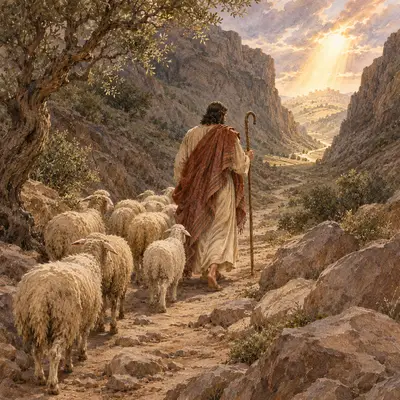
Psalm 23 begins and ends with Yahweh, the covenant God whom David, once a shepherd himself, confesses as his own shepherd. David describes Yahweh making him lie down in green pastures, restoring his life, and guiding him in paths of righteousness for His name's sake. In the valley of the shadow of death David turns to address Yahweh directly, confident that He is with him, and he closes certain that goodness and lovingkindness will pursue him until he dwells in Yahweh's house forever. The psalm finds its fulfilment in Jesus Christ, the Good Shepherd who lays down His life for the sheep and gives them eternal life.
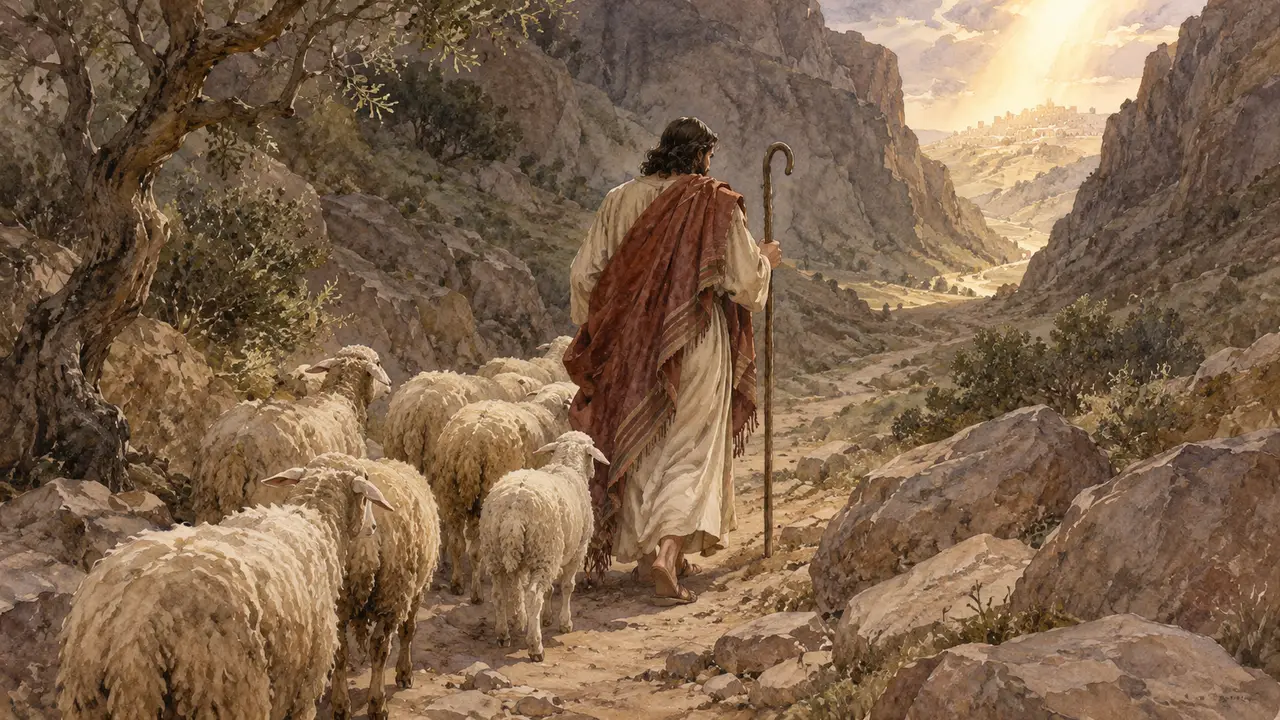
Psalm 23 Explained: Yahweh Is My Shepherd
Psalm 23 is one of the best-known passages of Scripture, and its familiar language describes the extraordinary confidence David places in Yahweh, the covenant God of Israel. David knows what it means to face danger, hunger, hostility, uncertainty, and death. He had spent his youth caring for sheep, had been pursued by Saul, had fought Israel’s enemies, and had experienced both the deliverance and discipline of God. Throughout this psalm, David expresses his confidence that Yahweh will provide everything he needs, guide his steps, preserve his life, and bring him into His presence.
The psalm begins and ends with the covenant name of God, Yahweh. This is the name God revealed to Moses at the burning bush in Exodus 3, the name by which He made Himself known as the God of Abraham, Isaac, and Jacob, and the name associated with His covenant faithfulness throughout Israel’s history. David begins, “Yahweh is my shepherd,” and concludes, “I will dwell in the house of Yahweh forever.” Everything between these declarations describes the care and faithfulness of the God to whom David belongs.
The opening statement is intensely personal: “Yahweh is my shepherd, I shall not want.” David confesses that Yahweh is his shepherd, just as He is the shepherd of Israel. The God who governs Israel, rules over the nations, and sustains all creation is personally concerned with the life of His servant.
The image was close to David’s own experience, because he had himself been a shepherd. Before Samuel anointed him king, David was tending his father’s sheep. In 1 Samuel 17:34–37, he recounts how he pursued lions and bears that threatened the flock, struck them down, and rescued sheep from their mouths. David understood that a faithful shepherd must provide for his sheep, lead them, and defend them against those who would destroy them. He now places himself in the position of a sheep and acknowledges Yahweh as the shepherd upon whom his life depends.
The image also has deeper roots in Israel’s history. When Jacob blessed Joseph in Genesis 48:15, he spoke of “the God who has been my shepherd throughout my life to this day.” Jacob had endured exile, danger, deception, famine, and loss, but could look back over his life and recognise the faithful care of God. David makes the same confession, and from one generation to another Yahweh remains the shepherd of His people.
“I shall not want” expresses the consequence of belonging to this shepherd. David trusts that Yahweh will supply what he needs. This does not mean he will never experience hardship, hunger, or deprivation, and David certainly experienced all three. His confidence rests in the sufficiency of Yahweh’s care. His life is in the hands of the God who knows his needs and is able to provide for them.
David’s confidence has its roots in Yahweh’s provision for Israel during the wilderness journey. Deuteronomy 2:7 declares, “These forty years Yahweh your God has been with you; you have not lacked a thing.” Israel had wandered through a barren wilderness, dependent upon God’s provision of food, water, guidance, and protection. Although they possessed no natural means of sustaining themselves, Yahweh preserved them.
“He makes me lie down in green pastures; He leads me beside quiet waters.” The shepherd provides both nourishment and rest. Green pastures are places where sheep can feed, while quiet waters provide refreshment. The picture is one of security under the shepherd’s care. David can lie down because Yahweh watches over him. He can drink because Yahweh leads him to the water.
The same language looks back to Israel’s deliverance from Egypt and journey towards the Promised Land. Yahweh brought His people out of slavery, led them through the wilderness, gave them water from the rock, and fed them with manna from heaven. Exodus 15:13 describes Yahweh guiding His redeemed people in His lovingkindness (the Hebrew hesed, which returns in verse 6) towards His holy dwelling. David understands that the God who shepherded Israel through the wilderness continues to shepherd His people.
This picture of Yahweh providing green pastures for His sheep finds a close parallel in Mark’s account of Jesus feeding the five thousand. In Mark 6:34, Jesus sees the multitude and has compassion on them because they are “like sheep without a shepherd.” He begins teaching them, and when the hour grows late, He provides food for them. Mark records that Jesus commanded the people to recline in groups “on the green grass” (Mark 6:39), and He then feeds them until they are satisfied. The provision is so abundant that twelve baskets of broken pieces remain. The shepherd provides everything His sheep need.
The imagery is also present in Ezekiel 34, where Yahweh condemns Israel’s unfaithful shepherds and promises that He Himself will seek His sheep, care for them, and feed them in good pasture. Mark presents Jesus fulfilling this promise. The Son of David is the shepherd of Israel, providing the instruction and nourishment His people need. Jesus first feeds the multitude through His teaching before providing them with bread.
“He restores my soul; He guides me in the paths of righteousness for His name’s sake.” The Hebrew word translated “soul” is nephesh, which frequently refers to life itself. David is speaking of Yahweh restoring and reviving his life. The shepherd who provides nourishment and water also restores the strength of the sheep. When David is exhausted, endangered, or brought low, Yahweh sustains him and restores his life.
This restoration finds its fullest expression in Jesus Christ, the Good Shepherd who gives life to His sheep. In John 10:10, Jesus declares, “I came that they may have life, and have it abundantly.” He then explains in verse 11 that “the good shepherd lays down His life for the sheep.” The shepherd gives up His own life so that His sheep might live. The Greek word translated “life” in verse 11 is psychē, which corresponds closely to the Hebrew nephesh in its range of meaning. Jesus takes upon Himself the death that His sheep deserve and, through His resurrection, secures their eternal life.
Jesus makes this promise explicit in John 10:27–28: “My sheep hear My voice, and I know them, and they follow Me; and I give eternal life to them, and they will never perish.” David declares that Yahweh restores his life, while Jesus declares that He Himself gives eternal life to His sheep. Psalm 23 speaks of the restoration and preservation of David’s life, and it does not predict the resurrection. But the shepherd who restores the weary and preserves them from danger is also the One who raises the dead and grants everlasting life. The words of Psalm 23 therefore find their ultimate fulfilment in Christ, who restores His people to life and ensures that they will never perish.
The same God also guides David in the paths of righteousness. In the shepherding picture, these are the right paths, the ways that lead safely to the intended destination. The word righteousness also carries its moral significance. Yahweh leads His people in the way that is right before Him. His guidance is concerned with where they walk and how they live. The righteous path is the way Yahweh has appointed, and His people are called to follow Him.
Deuteronomy 5:33 shows what that way is. Israel is commanded to walk “in all the way which Yahweh your God has commanded you,” so that they may live and that it may be well with them. The path of righteousness is the way of life, and David’s confidence is that the shepherd who restores his life also guides him along it.
David gives the reason for this guidance: “For His name’s sake.” Yahweh acts for the sake of His own name. God’s name is inseparably connected with His character, faithfulness, holiness, and glory. When Yahweh revealed His name to Moses, He also revealed His character. Exodus 34:6–7 describes Him as compassionate and gracious, slow to anger, abounding in lovingkindness and truth, forgiving iniquity while refusing to leave the guilty unpunished.
Throughout the Old Testament, Yahweh acts for the sake of His name because His name is bound to His glory and covenant faithfulness. In Ezekiel 36:22–23, God declares that He will act for His holy name, which Israel had profaned among the nations. His faithfulness to His promises demonstrates His character and vindicates His name. David therefore knows that his security rests upon something greater than his own strength or worthiness. Yahweh’s own name is the reason He faithfully shepherds His servant.
“Even though I walk through the valley of the shadow of death, I fear no evil, for You are with me.” The picture now changes from green pastures and quiet waters to a dark and dangerous valley. The shepherd’s care does not mean that the sheep will never pass through danger. The same shepherd who leads David into places of rest also leads him through places where death threatens.
The expression “shadow of death” may describe the deepest darkness and danger, including the threat of death itself. David had experienced circumstances in which his life was repeatedly threatened. Saul pursued him through the wilderness, seeking to kill him. David had hidden in caves, fled from enemies, and lived with the knowledge that his life could be taken at any moment. He nevertheless says, “I fear no evil.” The valley remains dark, and the possibility of death remains real, but David does not fear, because Yahweh is with him.
The language of the psalm also changes at this point. In verses 1–3, David speaks about Yahweh: “He makes me lie down,” “He leads me,” and “He restores my soul.” But when he enters the valley of the shadow of death, he begins addressing Yahweh directly: “You are with me.” The shepherd has been present throughout, but in the darkest part of the journey David speaks personally to the God who accompanies him.
The words “You are with me” also carry the central promise of God’s presence throughout Israel’s history. When Yahweh called Moses to deliver Israel from Egypt, He promised, “I will be with you” (Exodus 3:12). When Joshua assumed leadership after Moses, Yahweh promised that He would not fail or forsake him (Joshua 1:5). When David faces the valley of the shadow of death, he relies upon the same covenant faithfulness.
“Your rod and Your staff, they comfort me.” The shepherd carries instruments that serve the needs of his flock. The rod provides protection against threats, while the staff assists in guiding and caring for the sheep. Both belong to the shepherd’s responsibility to preserve his flock.
The comfort comes from the shepherd’s presence and power. David knows that he cannot defend himself against every enemy, foresee every danger, or preserve his own life indefinitely. But Yahweh can protect him, guide him, and bring him safely through the valley.
Verse 5 introduces another picture: “You prepare a table before me in the presence of my enemies; You have anointed my head with oil; My cup overflows.” Yahweh is now portrayed as a generous host who welcomes, honours, and provides for His guest. The language of provision continues, but the picture has moved from the pasture to the table.
David’s enemies are still present. Yahweh has not necessarily removed them or ended their hostility, and they may surround him, threaten him, and seek his destruction, but they cannot prevent Yahweh from providing for His servant. A man surrounded by enemies would ordinarily be occupied with defending himself or preparing to flee. David instead describes a man who can sit and eat at a table prepared by God Himself, because his security rests in Yahweh.
The prepared table also echoes the wilderness provision of Yahweh. In Psalm 78:19, Israel’s unbelief is exposed through the question, “Can God prepare a table in the wilderness?” The answer demonstrated throughout Israel’s history is that He certainly can. Yahweh fed His people where there was no ordinary means of obtaining food. David knows that the same God can provide for him in the presence of his enemies.
“You have anointed my head with oil” naturally brings to mind David’s own anointing by Samuel. In 1 Samuel 16, Yahweh rejected Saul as king and directed Samuel to anoint David in his place. From that day forward, the Spirit of Yahweh came mightily upon David. His kingship rested upon the decision and promise of God, even when Saul continued to occupy the throne and sought David’s life. Saul could pursue him, but Saul could not overturn the purpose of Yahweh.
The immediate picture in Psalm 23, however, is also that of hospitality. Anointing a guest with oil was an expression of welcome, refreshment, and honour. Together with the prepared table and overflowing cup, the oil describes the generosity of Yahweh towards the one He receives into His care.
“My cup overflows” completes the picture of Yahweh’s abundant provision. The host does not simply provide the minimum necessary to sustain his guest. His generosity is so great that the cup overflows. David has already declared that he will not lack what he needs, and he now describes the abundance of blessing he receives from Yahweh, blessing he could never have secured for himself.
Verse 6 brings the psalm to its conclusion: “Surely goodness and lovingkindness will pursue me all the days of my life, and I will dwell in the house of Yahweh forever.” The word translated “lovingkindness” is the Hebrew hesed, one of the most significant words used to describe Yahweh’s covenant character. It speaks of His steadfast love and faithfulness towards those to whom He has bound Himself. When Yahweh proclaimed His name to Moses in Exodus 34:6, He declared Himself to be abounding in lovingkindness and truth. David now confesses that this same lovingkindness will accompany him throughout his life.
“Pursue” is a strong verb, frequently used to describe the pursuit of enemies. David knew what it meant to be pursued. Saul had hunted him through the wilderness, repeatedly attempting to take his life. Other enemies had risen against him, and he had experienced the danger of men determined to destroy him.
But David now declares that goodness and lovingkindness will pursue him all the days of his life. The enemies who pursued him could never determine his ultimate destiny. Yahweh’s goodness and covenant love would follow him with a certainty that no earthly enemy could overcome. The word “surely” expresses that certainty, which rests on the covenant character of the God who shepherds him.
“And I will dwell in the house of Yahweh forever.” David expresses the same longing in Psalm 27:4, where he declares his desire to dwell in the house of Yahweh all the days of his life, to behold His beauty and inquire in His temple. The house of Yahweh represents the place where God dwells among His people, where His name is honoured, and where His people approach Him in worship.
During David’s lifetime, the permanent temple in Jerusalem had not yet been built. The tabernacle and the sanctuary nevertheless represented Yahweh’s dwelling among Israel. David’s longing to dwell in Yahweh’s house is therefore a longing to remain in His presence and enjoy the fellowship of the covenant God.
The Hebrew expression at the end of Psalm 23 can also be understood as “for length of days”, while the final verb may carry the sense of returning to Yahweh’s house. The emphasis is upon David’s continuing enjoyment of God’s presence throughout his life. The wider testimony of Scripture also establishes the hope that fellowship with Yahweh extends beyond death. David’s assurance rests in the God who preserves his life and will not abandon His faithful servant.
The shepherd imagery finds its fullest expression in Jesus Christ. Ezekiel 34 goes on to promise that Yahweh will establish one shepherd over His people, “My servant David” (Ezekiel 34:23). This promise looks forward to the coming Son of David, the Messiah who will shepherd God’s people, and Jesus identifies Himself as that shepherd in John 10.
The final destination of the shepherd’s care is described in Revelation 7:17, where the Lamb Himself shepherds His people and guides them to springs of the water of life. God wipes away every tear from their eyes. The green pastures, quiet waters, protection through death, and dwelling in the house of Yahweh find their fulfilment before the throne of God, where His people dwell in His presence and the Lamb is their shepherd.
Psalm 23 begins with Yahweh and ends with Yahweh, and David’s confidence rests entirely upon the character and faithfulness of his covenant God. The psalm teaches God’s people to place that same confidence in the Lord Jesus Christ, the Good Shepherd who laid down His life for His sheep. Those who belong to Him can trust His provision, follow His guidance, endure danger without fearing death, and look forward to dwelling in the presence of God forever.