
Genesis 5
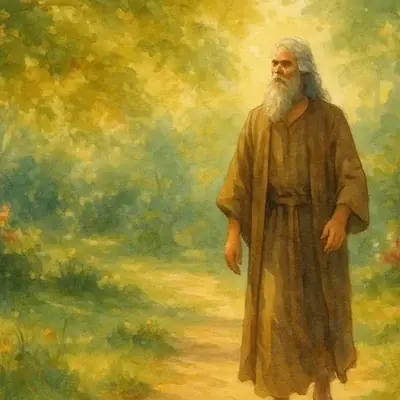
Genesis 5 is far more than a list of names. It traces the covenant line from Adam to Noah in a world overshadowed by death—and at its centre is the remarkable account of Enoch, the man who walked with God and did not die.
The Story of Enoch and the Line of Promise
In Genesis 4, the effects of the fall unfold as Cain murders his brother, and mankind begins to build a world apart from God. Yet, even in judgment, God preserves a line of promise through Seth. Genesis 5 picks up the narrative by marking a clear transition. “This is the book of the generations of Adam.” It is the first formal genealogy in Scripture, and it signals a new phase in the covenant story.
But this is not just a list of names. It deliberately echoes the language of Genesis 1 and 2. “In the day when God created man, He made him in the likeness of God. He created them male and female, and He blessed them and named them man in the day they were created.” The dignity of mankind is reaffirmed. Men and women are made in God’s likeness, created to reflect His character and rule under His authority.
But this reminder of creation now stands in contrast to the world as it is, no longer defined by life, but by death. The language of Eden opens a chapter shaped by the curse. Adam fathers a son in his own likeness according to his image and names him Seth. The image of God is still present, but now passed through a man already under judgment. Seth is born not in innocence, but in a world already corrupted by sin. The image is not lost, but it is marred.
Most of Genesis 5 follows a strict pattern. A man is named. He fathers children. He lives a certain number of years, and then he dies. The refrain, “And he died,” echoes like a tolling bell. And this is a major point of the chapter. The consequence of sin is in full effect. What began in Eden now runs through every generation. As Paul would later write, “Through one man sin entered into the world, and death through sin, and so death spread to all men” (Romans 5:12).
What often surprises modern readers is the length of these lives. Several men live for more than 900 years. But this should not seem strange if we read Genesis carefully. Adam was not created to die at all. In a world God called very good, death was entirely absent. If we accept that Adam was meant to live forever, then the long lifespans of his early descendants should not be surprising at all. They are not exaggerated or symbolic. They are early echoes of a creation still fresh, yet already groaning under the weight of sin. The text offers no explanation for these long lives and does not need to. The focus remains clear. No matter how long a man lives, he dies. The curse of sin is relentless, and no one escapes it.
The genealogy flows with regular rhythm until it reaches a man named Enoch, and here the pattern breaks. While others are said to have lived and died, Enoch is described differently. “Enoch walked with God.” Walking with God means fellowship, trust, and obedience, a life shaped by communion with Yahweh. The language should remind us of Eden, where God walked with Adam before the fall.
Enoch’s name means dedicated or consecrated, and his life reflects it. In a world where death marks the end of every man’s life, Enoch stands apart as a man who walks with God. What happens to Enoch is unique. The text does not say, “And he died.” It says, “And he was not, for God took him.” He does not die like the others. He is taken not by sickness, violence, or age, but by Yahweh Himself. His life becomes a quiet but powerful witness that death is not the only possible end.
This testifies to the existence of another realm, not one subject to sin and death, but one of eternal life in the presence of God. Enoch’s faith is later remembered by the author of Hebrews, where he writes, “By faith Enoch was taken up so that he would not see death… for he obtained the witness that before his being taken up, he was pleasing to God.” In a world where every life ends with death, Enoch shows that those who walk with God are not forgotten, and that life with Him does not end at the grave.
From Enoch, the genealogy continues to Methuselah, Enoch’s son, who holds the record for the longest lifespan in Scripture, 969 years. According to the numbers given, Methuselah dies in the same year the flood begins. His life stretches across centuries, spanning generations. But even the man who lived the longest cannot outrun death. His story follows the same pattern: long life, then death. Only fellowship with God breaks that cycle.
Another striking feature of Genesis 5 is how few generations stand between Adam and Noah in terms of overlapping spans. When we map the ages given, we find that Adam lived long enough to see the birth of Lamech, Noah’s father. That means only two degrees of separation: Adam to Lamech, then Lamech to Noah. In other words, the memory of creation, the garden, and the fall could have been preserved through firsthand testimony passed from Adam to those living just before the flood.
This is not the stuff of distant myth. It is a tightly connected chain of witnesses. The early history of the world was not entrusted to vague oral tradition, but to those who lived through it or received it directly from those who did. The brevity of that chain reminds us that these events are near, not remote, personal, not abstract, carefully preserved by God through the covenant line.
This Lamech is not the violent man from Cain’s line in chapter 4, but a descendant of Seth. His words over his son Noah are the only recorded speech in the chapter, and they are deeply theological. “This one will give us rest from our work and from the pain of our hands, arising from the ground which Yahweh has cursed.” Lamech remembers the curse, but more than that, he calls upon the name of Yahweh, the covenant God.
This name had reappeared at the end of chapter 4 when people began to call on Yahweh again. Lamech sees in Noah a sign of hope and names him accordingly, Noah meaning rest. He believes Yahweh will bring relief through this child. He does not yet see the full promise of Genesis 3:15, but he trusts in the mercy of God and in the unfolding of His plan.
The chapter concludes by telling us that Noah was 500 years old when he fathered Shem, Ham, and Japheth. With that, the line of promise is firmly established. The story is ready to turn toward judgment and redemption. The world will soon be filled with violence, but the covenant line is still intact.
Genesis 5 is more than a list of names. It is a record of life after Eden, of long lives lived under the shadow of death, except where Yahweh intervenes. It traces a faithful line through Seth, preserves hope through Noah, and gives a glimpse through Enoch of what it means to walk with God in a fallen world. Death reigns, but God is not absent. This chapter reminds us that eternal life in the presence of God is possible for those who walk with Him. And the promise of a coming seed, the one who will crush the serpent’s head, still stands.
This video explains: