
Luke 12
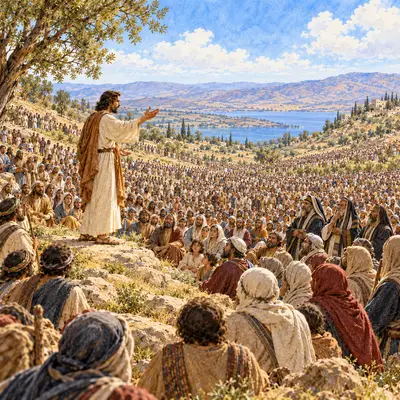
With the Pharisees' hostility fresh from the previous chapter, Jesus warns His disciples against their hypocrisy and tells them to fear God rather than men. A man asks Jesus to settle an inheritance, and Jesus answers with the parable of the rich fool. He tells His disciples not to worry, to seek the Father's kingdom, and to stay ready for their Master's return. He speaks of the fire He has come to cast and the division He brings, then turns to the crowds and calls them hypocrites for failing to read the present time before they stand before the judge.
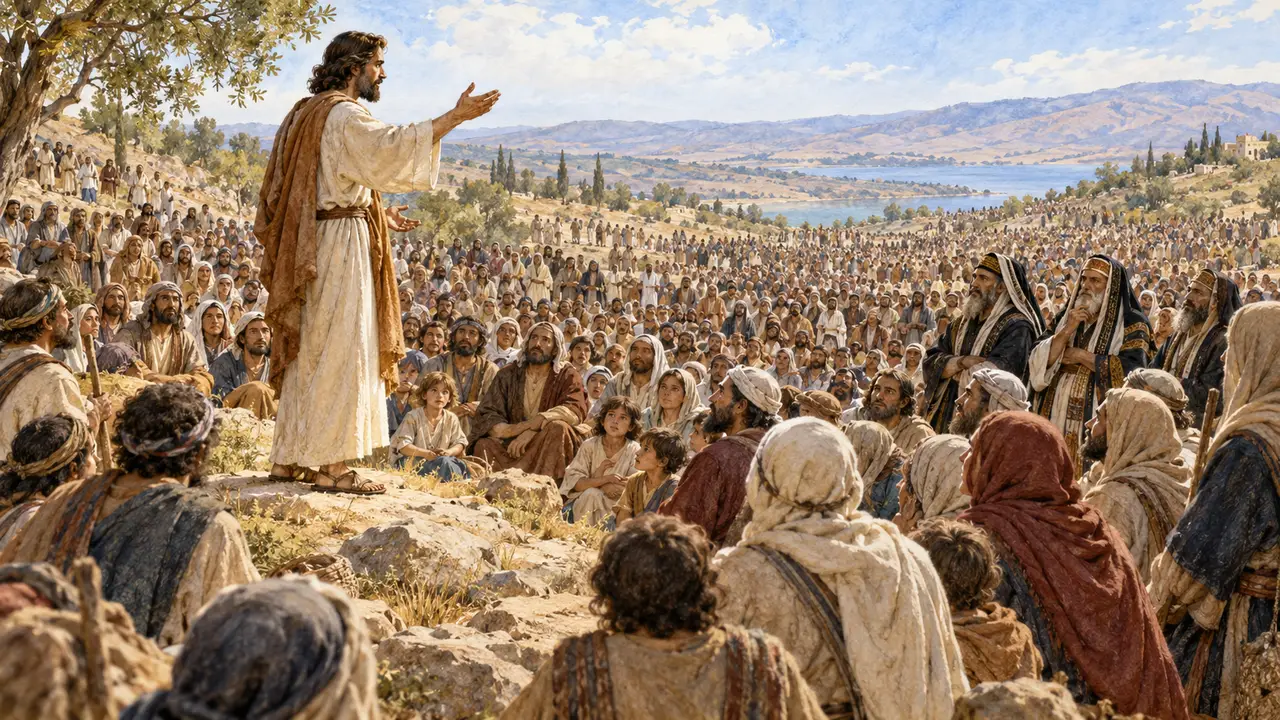
In Luke 11 we saw the Pharisees and scholars of the Law exposed by Jesus and “plotting to catch Him in something He might say.” The Father had said of His Son, “listen to Him!” and they would not. Luke 12 shows what listening to Him requires. It opens with a warning against the hypocrisy of the Pharisees and closes with Jesus calling the crowds hypocrites, and in between He teaches His disciples to live before the God who sees everything, provides everything and will judge everyone.
With thousands crowding so close that they are trampling one another, Jesus speaks “to His disciples first”: “Be on your guard for the leaven of the Pharisees, which is hypocrisy.” The word “hypocrisy” comes from the stage. A hypocrite was an actor, a man who played a part that was not his own, and the Pharisees play the part of righteous men. In Luke chapter 11 Jesus said they clean the outside of the cup while “inside of you, you are full of robbery and wickedness,” and He compared them to “concealed tombs” that people walk over unaware.
A cup is made to hold what is drunk from it, so the inside is the part that has to be clean. The Pharisee who invited Jesus was shocked that He had not ceremonially washed before the meal, while the Pharisees’ own hearts, the part God looks into, went unwashed. Jesus calls this hypocrisy leaven. Leaven is small and hidden, and once it is in the dough it works through the whole lump. That is why the warning goes to the disciples first: hypocrisy spreads, and they are as capable of it as anyone.
Jesus says there is “nothing covered up that will not be revealed.” The concealed tombs will be uncovered. Whatever a man hides beneath his outward religion, God sees it now and will bring it into the open. Then Jesus applies the principle to the disciples: what they have “whispered in the inner rooms will be proclaimed upon the housetops,” the flat roofs where public announcements were made. This is a warning, and it also prepares for confessing Christ openly: the disciple has no secret life to protect, so he has no reason to hide his allegiance.
Why does a man become a hypocrite? Luke chapter 11 has already given the answer. Jesus said the Pharisees “love the best seat in the synagogues and the respectful greetings in the marketplaces.” They live before the eyes of men. Hypocrisy is the fear of men dressed up as devotion to God. So Jesus goes to the root, and He calls His disciples “My friends” as He does it: “do not fear those who kill the body and after that have no more that they can do.” Jesus had told the scholars of the Law that their fathers killed the prophets, and that God would send them “prophets and apostles, and some of them they will kill.” The sons of the men who killed the prophets are now plotting against Jesus, and His disciples face the same power.
Against that power Jesus sets a greater one: “fear the One who, after He has killed, has authority to cast into hell; yes, I tell you, fear Him!” The word translated “hell” is Gehenna, the valley of Hinnom outside Jerusalem where Israel’s kings once burned their children in sacrifice to false gods. By the time of Jesus it had become the name for the place of final judgment. Jesus repeats the command so that it cannot be missed. The fear of God is the settled awareness that He is the Judge with final authority over body and soul, and that His verdict is the only one that lasts.
Then Jesus immediately speaks of sparrows. An assarion was a small copper coin, and sparrows were among the cheapest things in the market. Matthew records two sparrows sold for one coin; Luke has five for two, so the fifth appears to be thrown in for nothing. Jesus says “not one of them is forgotten before God.” The God who has authority to cast into hell knows the number of hairs on His disciples’ heads. Jesus says “fear Him” and “Do not fear” in the same breath, and the two commands belong together. The one who fears God has nothing left to fear from men, because the God he fears is the Father who knows him completely and does not forget him.
The fear of God must show itself in public: whoever confesses Jesus “before men,” the Son of Man will confess “before the angels of God,” and whoever denies Him will be denied. Then Jesus says that “everyone who speaks a word against the Son of Man” will be forgiven, but “he who blasphemes against the Holy Spirit” will not. To blaspheme is to speak against God with contempt, and Luke chapter 11 has already shown what blasphemy against the Spirit looks like. Jesus cast out a demon “by the finger of God,” and while the crowds marvelled, “some of them said, ‘He casts out demons by Beelzebul, the ruler of the demons.’” Matthew tells us the Pharisees said it, and Mark says it was the scribes who came down from Jerusalem, adding that Jesus warned of this sin “because they were saying, ‘He has an unclean spirit.’” Luke alone records that the accusation came from within the crowd. The leaven of the Pharisees was already working through the lump before Jesus warned His disciples about it.
Luke places the warning inside Jesus’ teaching on the leaven of the Pharisees, soon after the woes, because it shows where their hypocrisy leads. The hypocrite calls evil good, polishing the outside of the cup. The end of that road is to call good evil, to look at the work of God’s Spirit and name it the work of Satan. The prophet Isaiah pronounced woe on “those who call evil good and good evil.”
Jesus does not say every Pharisee has already committed this sin. Paul was a Pharisee who calls himself “formerly a blasphemer and a persecutor,” and he says he was shown mercy because he “acted ignorantly in unbelief.” Paul spoke against the Son of Man and was forgiven, and Peter, who is listening, will deny Jesus three times on the night of His arrest and be restored. The sin that cannot be forgiven is the settled refusal of the Spirit’s testimony to Christ. The Spirit is the One who brings men to repentance, so the man who calls His work evil has rejected the only means by which he could be forgiven. Luke shows the warning coming true in his second volume. When Stephen stands before the Council, he tells them they “are always resisting the Holy Spirit. As your fathers did, so do you.” The fathers killed the prophets, and the sons resist the Spirit speaking through the apostles.
The same Spirit stands with the disciples. They will be brought before synagogues, rulers and “the authorities,” and they have just been told who has real “authority”: the One who can cast into hell. They are not to worry about their defence, “for the Holy Spirit will teach you in that very hour what you ought to say.” The scribes and Pharisees are at that moment trying to catch Jesus in what He says, and they will try the same with His disciples. Jesus promised in the previous chapter that the Father will “give the Holy Spirit to those who ask Him,” and here the Spirit is given for this very purpose. Luke records the fulfilment in Acts chapter 4, when Peter, “filled with the Holy Spirit,” stands before the rulers and elders of Jerusalem and confesses Christ.
A man in the crowd interrupts: “Teacher, tell my brother to divide the family inheritance with me.” Jesus has been speaking of persecution, hell and the judgment of heaven, and this man is thinking about his share of an estate. Jesus answers, “Man, who appointed Me a judge or arbitrator over you?” The word translated “arbitrator” means one who divides. The man wants a divider, and Jesus refuses to be one. Many people picture Jesus as a teacher of fairness, and few things sound fairer than an equal share of an inheritance. If that were who He is, this would be His moment, and He turns it down. He rebuked the Pharisees for neglecting justice, so He does not despise it, but a fair division of the estate would leave both brothers exactly as they were, treasuring what they own and poor toward God. Jesus goes past the property to the man’s heart.
Then Jesus speaks to the whole crowd: “be on your guard against every form of greed, for not even when one has an abundance does his life consist of his possessions.” The man came with a complaint about his brother, and he probably thought his brother was the greedy one. Jesus warns him about himself. In Luke chapter 6 Jesus warned against looking at “the speck that is in your brother’s eye” while missing the log in your own, and He called the man who does it a hypocrite. This is the leaven of the Pharisees again, and for the second time in the chapter Jesus tells His hearers to be on their guard. Greed can hide inside a fair claim to one’s share. The Pharisees were full of robbery inside, and Luke will later say plainly that they “were lovers of money.”
Jesus then tells a parable. A rich man’s land is very productive, and the harvest is a gift; he did not make the land productive. He reasons “to himself” about where to store his crops, decides to tear down his barns and build larger ones, and says to his soul, “Soul, you have many goods laid up for many years to come; take your ease, eat, drink and be merry.” There is no neighbour in the conversation, no poor man, and no God. Every possession is his: my crops, my barns, my grain, my goods, my soul. He makes careful plans for many years and none for the one appointment he cannot avoid.
Then God speaks: “You fool! This very night your soul is required of you; and now who will own what you prepared?” The soul the man spoke to is now required, a word used for demanding back a loan. His life was lent, and it is being called in tonight.
The Psalm says, “The wicked fool says in his heart, ‘There is no God,’” and the Greek translation of that Psalm, the one the early church read, uses the same word for fool that Luke uses here. This man would never have said there is no God, but he lived as though there were none. It is also the word Jesus used for the Pharisees in the previous chapter: “You foolish ones, did not He who made the outside make the inside also?”
The Pharisees attended to the outside of the cup and neglected the inside. The rich man attended to his barns and neglected his soul. Both forgot the God who made them and to whom they must answer. God’s question carries an irony too: a man came to Jesus wanting his inheritance, and Jesus tells him of a man whose entire estate is about to become someone else’s inheritance. Jesus sums it up: so is the one who “stores up treasure for himself, and is not rich toward God.”
To His disciples He says, “For this reason I say to you, do not worry about your life.” “For this reason” ties the teaching on worry directly to the rich fool, and “do not worry” is the same command Jesus gave about the courtroom in verse 11. The word translated “life” here is the same word translated “soul” in the parable. God required the fool’s soul, and Jesus tells His disciples not to worry about theirs, because “life is more than food.”
Greed and worry might look like opposites. We might think one is a sin of the rich and the other a sin of the poor, but they rest on the same belief: that life is held together by possessions. The rich fool trusted his barns; the anxious disciple frets because he has none. Both have forgotten that life comes from God and is held by God.
Jesus tells them to consider the ravens, which “have no storeroom nor barn, and yet God feeds them.” The rich fool’s answer was a bigger barn; the ravens have none. Ravens were unclean birds under the Law of Moses, and Leviticus chapter 11 lists “every raven in its kind” among the birds Israel must not eat. God feeds even the birds His own Law calls unclean, and His disciples are worth far more. Worry cannot add “a single cubit” to a man’s life span. A cubit was only the length of a man’s forearm.
Jesus then uses the example of the lilies: “not even Solomon in all his glory clothed himself like one of these.” In the previous chapter Jesus said, “behold, something greater than Solomon is here,” and now the One greater than Solomon says Solomon’s glory cannot match a wildflower’s. God clothes grass that is “alive today and tomorrow is thrown into the furnace,” and He will clothe His disciples. “You of little faith!”
The disciples are not to seek food and drink as “the nations of the world” do, for “your Father knows that you need these things.” The nations are the Gentile peoples who do not know God, and they organise their lives around food and clothing because they have no Father to trust. Jesus calls them needs, and the Father knows them. What He rebukes is worrying over them as the nations do, and He has already named that worry little faith. “But seek His kingdom, and these things will be added to you.”
Worry could not add a single cubit; the Father adds everything they need. This is the order Jesus taught His disciples in the prayer of Luke chapter 11: “Your kingdom come,” and only then, “Give us each day our daily bread.” The order of the prayer is the order of the disciple’s life. He seeks the kingdom first and receives bread from the Father as he goes.
“Do not fear, little flock, for your Father is well pleased to give you the kingdom.” For the third time in the chapter Jesus says “do not fear.” The disciples are a little flock, few in number among thousands, sheep in the care of a shepherd. The Father’s being “well pleased” echoes Jesus’ birth, when the angels announced “peace among men with whom He is pleased,” and His baptism, when the Father said, “You are My beloved Son, in You I am well-pleased.” The Father who delights in His Son also delights to give the kingdom to those who belong to His Son. The kingdom is a gift, not a wage. The man in the crowd wanted his share of an earthly estate; the Father gives His little flock the kingdom itself.
Then Jesus says, “Sell your possessions and give it as charity,” storing up “an unfailing treasure in heaven,” because “where your treasure is, there your heart will be also.” Here is what it means to be rich toward God. The word “charity” is the same word Jesus used to the Pharisees in the previous chapter: “give that which is within as charity, and then all things are clean for you.” Exactly what Jesus meant by “that which is within” is debated, but the command to give is the same to both: the Pharisees were told to give as charity, and so are the disciples.
Luke does not present this as a rule that every believer must sell everything he owns. Zaccheus will give half his possessions to the poor, and Jesus will declare that salvation has come to his house. The command is real, and its point is the direction of the heart. A man’s treasure shows where his heart lives. The rich fool’s heart was in his barns. The Pharisees’ hearts were in the marketplace greetings. The disciple’s heart is to be in heaven, where the Father is.
Jesus then turns from where the heart is to what the heart is waiting for: “Gird up your loins, and keep your lamps lit.” Men wore long robes, and to gird up the loins was to tuck the robe into the belt so a man could work or move quickly. Israel ate the first Passover “with your loins girded, your sandals on your feet, and your staff in your hand,” ready to leave Egypt the moment Yahweh brought them out. The disciples are to live in the same readiness.
The lamps recall Jesus’ words in the previous chapter about the lamp set on the lampstand and the warning, “watch out that the light in you is not darkness.” They are to be like servants waiting for their master to come home from a wedding feast, ready to open the door the moment he knocks. A wedding feast could run late into the night, so the servants could not know the hour of his return.
The servants the master finds awake are blessed, and the master “will gird himself to serve, and have them recline at the table, and will come up and wait on them.” The servants were told to gird themselves for their master’s return, and now the master girds himself for them, taking the servant’s posture and doing the servant’s work. No ordinary master would do this.
In Luke chapter 17 Jesus asks which master would say to his slave, “Come immediately and sit down to eat,” and expects the answer that none would. Even if the master comes in the second or third watch, the deep hours of the night when servants were most tempted to sleep, those he finds ready are blessed.
Jesus is describing what He Himself will do. At the Last Supper the disciples argue over which of them is the greatest, and Jesus asks, “who is greater, the one who reclines at the table or the one who serves?” Then He answers, “I am among you as the one who serves.” The Master is already serving at the table on the night He gives His body and blood for His servants. In the same breath He tells the Twelve, “I grant you a kingdom,” so “that you may eat and drink at My table in My kingdom.” The little flock the Father was pleased to give the kingdom, the disciples told not to worry about what they would eat and drink, will recline at the Master’s table and be served by Him.
If the head of a house had known when the thief was coming, he would not have let his house be broken into. “You too, be ready, for the Son of Man is coming at an hour that you do not expect.” A few verses earlier, treasure in heaven was safe “where no thief comes near.” An earthly house is not. The point of the thief is the timing: no one is told in advance when he will come. The rich fool “prepared” his goods and was not ready for God, and “ready” comes from the same word.
Peter asks whether the parable is for the disciples or for everyone, and Luke writes, “the Lord said,” using the same word as the parable’s “master.” The Master in the parable is the One telling it. He answers with another question: “Who then is the faithful and prudent steward, whom his master will put in charge of his servants, to give them their rations at the proper time?”
A steward was a slave placed over his master’s household, managing his master’s goods and feeding his fellow servants. Jesus does not answer Peter directly. His question puts the weight on those placed in charge of others, and by the end of the parable the principle reaches everyone who has been given much. The apostles will be given the care of Christ’s household, and so will every elder and teacher after them.
The man freed from anxiety about his own food is put to work feeding the household. This is the opposite of the scholars of the Law in Luke chapter 11, who weighed men down with burdens and took away the key of knowledge. The steward the master finds doing his work will be put “in charge of all his possessions.” The word “possessions” has now come three times: what a man’s life does not consist of, what the disciple sells and gives away, and what the master entrusts to his faithful servant.
But the slave who “says in his heart, ‘My master will be a long time in coming,’” beats the other servants and begins “to eat and drink and get drunk.” His master will come when he does not expect, “cut him in pieces, and assign him a place with the unbelievers.” Like the fool of the Psalm, this slave speaks in his heart. He does not deny that his master will return. He assumes there is time, the rich fool’s “many years to come.” He was in the household, and he will share the end of those who never belonged to it.
Notice the words “eat and drink.” The rich fool stored up his goods so that he could “eat, drink and be merry.” The disciples were told not to seek “what you will eat and what you will drink.” The faithful steward hands out food, while the wicked steward eats and drinks and gets drunk as the servants he should feed are beaten.
The slave who knew his master’s will and “did not get ready” will receive “many beatings,” and the one who did not know, and still did what deserved a beating, “will receive but a few.” “From everyone who has been given much, much will be required.” “Required” is the same verb as “seek” in verses 29 to 31.
The disciples were told to seek the kingdom, and in the end the Master will seek from them a return on what He gave. There are degrees of punishment. Ignorance does not excuse, and knowledge increases accountability. The scholars of the Law held the key of knowledge. The disciples have heard the teaching of Jesus Himself. Anyone today who has the Scriptures open in front of him has been given much, and much will be required of him.
Now Jesus turns from what His servants must do to what He Himself has come to do: “I have come to cast fire upon the earth, and how I wish it were already kindled!” John the Baptist promised this in Luke chapter 3, when he said the Coming One would “baptize you with the Holy Spirit and fire,” gathering “the wheat into His barn” and burning the chaff “with unquenchable fire.” The fire is judgment, and judgment separates wheat from chaff. That is the separation Jesus is about to describe running through households.
“But I have a baptism to undergo, and how distressed I am until it is finished!” John said the Coming One would baptise others with fire, and here He speaks of a baptism of His own. It is His death. The word carries the picture of being plunged under, and Jesus is about to be overwhelmed by suffering. The One who warns of judgment is walking towards the cross, where He will bear the judgment due to His people in their place. That is why, as Luke chapter 9 put it, He “set His face to go to Jerusalem.”
Jesus asks whether they think He came “to grant peace on earth,” and answers, “no, but rather division.” The division is over Him. Every man must confess Him or deny Him, and that choice runs straight through families: father against son, mother against daughter, mother-in-law against daughter-in-law, five in one household divided “three against two and two against three.” The angels at His birth praised God for “peace among men with whom He is pleased,” and that peace is real, but it belongs to those on whom God’s favour rests, the little flock.
“Division” and “divided” come from the same word the man in the crowd used when he asked Jesus to divide his inheritance. He wanted his family divided over property, and Jesus refused. The division Christ brings is over Himself.
Jesus is drawing on the prophet Micah, who described a land where “the prince asks, also the judge, for a payment,” and where “a man’s enemies are the men of his own household.” In the next verse Micah says, “But as for me, I will watch expectantly for Yahweh; I will wait for the God of my salvation.” Surrounded by corruption and betrayal even in his own house, Micah waited for Yahweh, the covenant God who keeps His promises to save, and the servants waiting for their master in the night stand where Micah stood. The earlier command not to fear men now reaches into the home. Confessing Christ before men may mean confessing Him before one’s own father or mother.
Then Jesus speaks to the crowds. When they see a cloud rising in the west they say a shower is coming, and when the south wind blows they expect a hot day, and they are right. In Israel, cloud from the west came in off the Mediterranean and brought rain; wind from the south came off the desert and brought heat. Every farmer could read those signs. Then Jesus says, “You hypocrites! You know how to examine the appearance of the earth and the sky, but why do you not examine this present time?”
The chapter that opened with the leaven of the Pharisees now names it in the crowd. In Luke chapter 11 some of them were “seeking from Him a sign from heaven,” and the word translated “sky” here is the same word, heaven. They can read the heavens well enough to plan a harvest, and they cannot read the time in which the Son of Man stands in front of them.
Jesus asks, “why do you not even judge for yourselves what is right?” and describes a man on his way to the magistrate with his opponent. He should settle on the way, before he is dragged “before the judge,” handed to the officer and thrown into prison, where he will stay until he has “paid the last lepton,” the smallest coin in circulation. A man on the road to court with a case he cannot win settles before he arrives, because once the verdict is given the debt will be collected to the last cent. Jesus’ hearers are on that road, and the time to be reconciled to God is now.
The word “judge” again takes us back to the man who asked Jesus to divide his inheritance and was told, “Man, who appointed Me a judge or arbitrator over you?” He wanted a fair ruling on an estate. After Jesus had undergone His baptism and risen, Peter would preach that He “is the One who has been designated by God as Judge of the living and the dead.” Jesus would not judge between two brothers over property, but He will judge them both.
Over all of Luke 12 stands the Father’s command from the mountain: “listen to Him!” Through the whole chapter Jesus speaks as the One with authority over every hearer. He knows what is whispered in the inner rooms and will bring it into the light. He will confess or deny men before the angels of God. He gives the Spirit who teaches His disciples what to say. He refuses to be made a judge over an inheritance, and He is the Judge before whom every man will stand. He reveals the Father who feeds the ravens, clothes the lilies and is pleased to give His little flock the kingdom. He is the Master who will come at an hour no one expects and gird Himself to serve His servants at His table. He has come to cast fire on the earth, and He walks towards Jerusalem to undergo the baptism of His death.
The Pharisees lived before the eyes of men, the rich fool before his barns, and the wicked steward as though his master would never come. Luke 12 challenges us to live before Him: fearing God rather than men, trusting the Father rather than possessions, and ready for the Son of Man when He comes.