Death
What does the Bible say about Death?
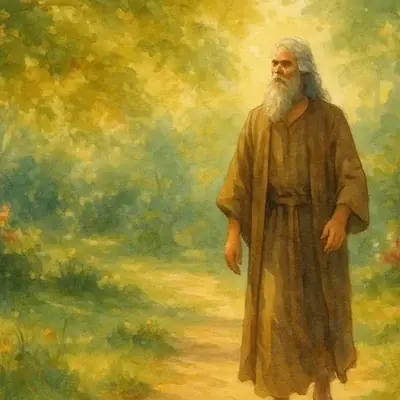
Death in Scripture is not a natural feature of existence. It enters the world as the consequence of sin: “for in the day that you eat from it you will surely die.” The Genesis account treats death as an intrusion, not a design. Mankind was not created to die; death is the sentence that falls on the creature who has broken the covenant with the Creator.
How does the Old Testament confront the reality of death?
The Old Testament sits with the reality of death without fully resolving it. Death is the great leveller, the end of every plan and every hope apart from God. The Psalms lament it, Job confronts it, Ecclesiastes refuses to look away from it. The suffering servant of Isaiah 53 bears it as part of the full weight of human sin. Scripture does not treat death as a spiritual problem to be quickly resolved; it takes it seriously as the final enemy.
How has Christ defeated death?
The New Testament declares that the last enemy has been defeated. Christ has abolished death and brought life and immortality to light through the gospel (2 Timothy 1:10). The resurrection of Christ is not a resuscitation; it is the conquest of death itself, the first fruits of a resurrection that will come to all who belong to him. “Death is swallowed up in victory. Where, O death, is your victory? Where, O death, is your sting?”
What Is the Biblical View on the Death Penalty?
Scripture grounds the death penalty in the value it places on human life, not a disregard for it. After the flood, Yahweh tells Noah, “whoever sheds man’s blood, by man his blood shall be shed, for in the image of God He made man” (Genesis 9:6). Because man bears God’s image, taking a life unlawfully carries a weight no other crime does, and the penalty Yahweh institutes reflects that weight rather than cheapening it. In the New Testament, Paul assigns this authority to civil government, describing it as “a minister of God, an avenger who brings wrath on the one who practices evil” who “does not bear the sword in vain” (Romans 13:4). The state, not private individuals, is given this authority, and it is accountable to God for how it exercises it.
What Does the Bible Teach About Life After Death?
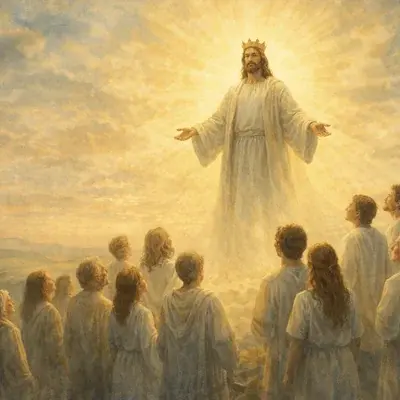
For those who belong to Christ, Scripture describes an immediate presence with the Lord after death, ahead of the final bodily resurrection still to come. Paul writes that believers “prefer rather to be absent from the body and to be at home with the Lord” (2 Corinthians 5:8). Death is not extinction and not an unconscious sleep from which nothing is experienced. It is departure into Christ’s presence, a real but incomplete state that waits for its completion at the resurrection, when the body itself is raised and death’s defeat becomes total rather than partial.
Follow how this theme develops through the Bible.