
Psalm 90
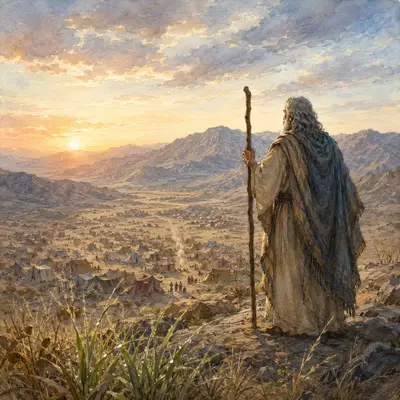
Psalm 90, the prayer of Moses, opens Book Four of the Psalter by setting God's eternity against man's mortality. Moses confesses that death is not decay but God's judgment against sin, and that our secret sins stand exposed before Him. He then prays that Yahweh would teach His people to number their days, satisfy them with covenant lovingkindness, and establish the work of their hands.
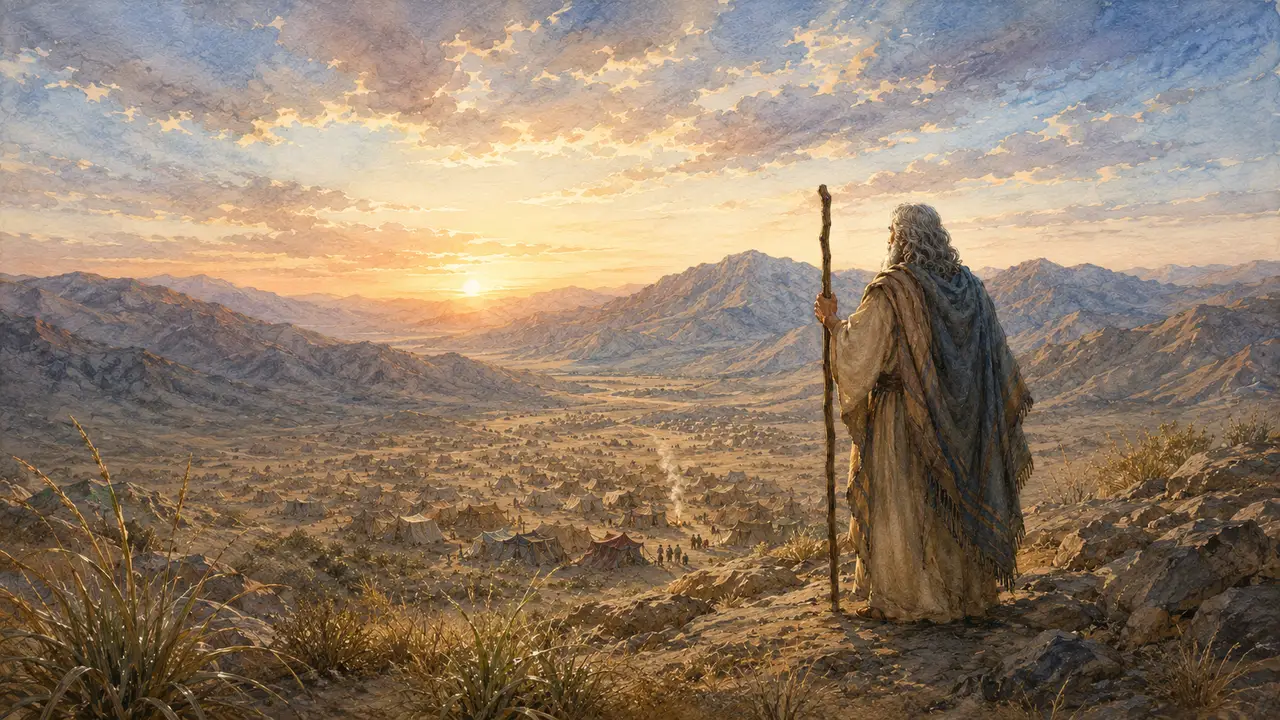
Psalm 90 Explained: Teach Us to Number Our Days
Psalm 90 stands at the beginning of Book Four of the Psalter, and that placement matters. Book Three ended with Psalm 89, where the promises to David seemed to stand under darkness: “Where are Your former lovingkindnesses, O Lord, which You swore to David in Your faithfulness?” Psalm 90 answers that crisis by going back before David, before Israel’s monarchy, before Sinai, before Abraham, and before creation itself. This is “A Prayer of Moses, the man of God,” and that title immediately gives the psalm its weight.
Moses was the prophet through whom Yahweh brought Israel out of Egypt, gave the Law, established the covenant at Sinai, and led the people through the wilderness. He knew the glory of Yahweh, but he also knew the wrath of Yahweh against sin. He had seen a whole generation die in the wilderness because of unbelief. So this psalm is not abstract reflection on the shortness of life. It is covenant prayer, formed in the presence of the eternal God, spoken by a man who knew that sinners cannot live unless God has mercy.
The psalm opens with God Himself as the dwelling place of His people: “Lord, You have been our dwelling place from generation to generation.” Moses does not begin with Israel’s land, tents, tabernacle, or earthly security. He begins with God. That is striking because Moses led a people who had no permanent home in the wilderness. They moved from place to place, and their security could never be found in geography, settled life, or human strength. The Lord Himself had been their dwelling place. A dwelling place is where life is sheltered, preserved, and sustained. Moses is saying that from one generation to another, before Israel possessed the land, and even when Israel wandered under judgment, God remained the refuge of His people.
The title “Lord” in verse 1 is significant. Moses begins by addressing God as Lord, the sovereign Master. He is the One who rules over time, creation, life, death, and covenant history. Then verse 2 reaches back to creation itself: “Before the mountains were born or You brought forth the earth and the world, even from everlasting to everlasting, You are God.” Moses sets mankind’s frailty beside God’s eternity. The mountains look ancient and immovable to us, but they were born. The earth and the world were brought forth. They had a beginning because God brought them into being. God did not have a beginning. Before the created order existed, He was God. After every generation has passed away, He remains God. “From everlasting to everlasting” means that God is not carried along by time as we are. He is the eternal Creator and Lord over all time.
This opening does more than comfort us. It humbles us. Moses does not say that God is everlasting so that mankind can feel important. He says it so that mankind will know the truth. God is eternal; man returns to dust. God is the dwelling place of His people; man has no permanence in himself. God brought forth the earth and the world; man cannot keep himself alive. The first movement of the psalm places the whole human race under the sovereignty of the Creator.
Verse 3 turns from God’s eternity to man’s mortality: “You turn man back into dust and say, ‘Return, O sons of men.’” This reaches back to Genesis 3, where Yahweh judged Adam after his sin: “For you are dust, and to dust you shall return.” Death is not a natural inconvenience. Death is the judgment of God against sin. Moses knows this because Genesis was the history of the world he received and taught. Man was made from the dust of the ground, made in the image of God, made to live before God, but because of sin, God turns man back to dust. The wording is severe: “You turn man back.” Death does not finally happen because the body wears out on its own. God speaks, and the sons of men return.
That phrase “sons of men” places every generation under Adam’s condition. Moses is not speaking only about the wicked nations or only about the wilderness generation. He is speaking about mankind under the curse. All men descend from Adam. All men share Adam’s mortality. Romans 5:12 says, “through one man sin entered into the world, and death through sin, and so death spread to all men, because all sinned.” Psalm 90 teaches the same truth in prayer. Man dies because man is a sinner before God.
Verse 4 presses the contrast further: “For a thousand years in Your sight are like yesterday when it passes by, or as a watch in the night.” A thousand years seems vast to us because our lives are short. To God, it is like yesterday after it has passed, or like one watch in the night, a brief span of hours while others sleep. Moses is not saying time is unreal to God. He is saying God is not mastered by it. We measure life in years because our years are few. God measures nothing by need, weakness, or decay. He is the Lord of time, and the longest human span disappears before Him.
Verses 5 and 6 give two pictures of human life. “You have swept them away like a flood, they fall asleep; in the morning they are like grass which sprouts anew. In the morning it blossoms and sprouts anew; toward evening it withers away and dries up.” The flood image speaks of sudden removal. Men think they stand secure, but God sweeps them away. The sleep image speaks of helplessness. Men fall asleep and do not wake themselves. The grass image speaks of brevity. It sprouts in the morning, blossoms for a moment, and withers by evening. This is not poetic exaggeration. This is the truth about life under the sun. Even a full life is brief when seen before the eternal God.
Moses then names the deeper issue. Human life is short because mankind stands under God’s anger against sin: “For we have been consumed by Your anger and by Your wrath we have been dismayed.” The psalm does not treat death as a fact of life. It treats death as theological reality. God is holy. Man is sinful. God’s anger is not loss of control, irritation, or injustice. It is His settled opposition to sin. His wrath is His righteous judgment against evil. Moses had seen this in the wilderness. The people rebelled, grumbled, committed idolatry, tested Yahweh, and refused to trust His promise. Numbers 14 records Yahweh’s judgment that the unbelieving generation would die in the wilderness. Psalm 90 gives us the prayer of a man who understood that this judgment was righteous.
Verse 8 makes the matter painfully direct: “You have set our iniquities before You, our secret sins in the light of Your presence.” Sin is not hidden from God. Men hide sin from one another. They bury motives, conceal desires, cover actions, and manage appearances. But God sets iniquities before Him. Secret sins stand in the light of His presence. This is one reason the psalm is a psalm of repentance. Moses does not argue that Israel has been treated too severely. He does not plead innocence. He confesses that God sees rightly. What men hide, God exposes. What men excuse, God judges. What men forget, God has already set before His face.
This verse also explains why the fear of God is necessary. We are not dealing with a god who is far off. We stand before the living God, whose presence is light. Hebrews 4:13 says, “there is no creature hidden from His sight, but all things are naked and exposed to the eyes of Him to whom we have an account to give.” Psalm 90 says the same thing in the language of Moses. The holy God sees the sins we try to keep in darkness.
Verses 9 and 10 continue the confession: “For all our days have declined in Your fury; we have finished our years like a sigh. As for the days of our life, they contain seventy years, or if due to might, eighty years, but their pride is but labor and wickedness; for soon it is gone and we fly away.” Moses is not giving a mathematical limit on every human life. He is describing the ordinary brevity of life. Seventy years, or eighty with strength, may seem long when viewed from youth, but from the end it is like a sigh. It passes quickly. Its pride, its strength, achievement, labour, and self-confidence, cannot remove the reality of wickedness and death.
The line “we have finished our years like a sigh” captures the sorrow of a life lived under the curse. Men plan as if they have endless time. They build, boast, gather, defend, and measure themselves against one another. Life passes quickly: the body weakens, the years close, and the breath returns to God who gave it. Moses wants us to confront this reality. Mankind is dust before the eternal God. Every man stands accountable to Him, and death itself bears witness that sin has brought mankind under the judgment of God.
The central question comes in verse 11: “Who knows the power of Your anger and Your fury, according to the fear that is due You?” This question exposes human foolishness. We experience death everywhere, but we rarely understand it rightly. We see graves, illness, decay, and disaster, but we do not naturally measure these things according to the holiness of God. Moses asks who truly knows the power of God’s anger. Who fears Him as He ought to be feared? The answer implied is that we do not know unless God teaches us. Sin makes us foolish. We minimise judgment, flatter ourselves, and live as if God’s patience means He will never call us to account.
Verse 12 gives the first direct petition after the long confession: “So teach us to number our days, that we may present to You a heart of wisdom.” Numbering our days means more than knowing that life is short. It means learning to live before God in the light of death, judgment, and eternity. It is the opposite of pride. It is the opposite of presumption. A man who numbers his days does not treat his life as his own possession. He recognises that every day is received from God and will be accounted for before God.
The goal is “a heart of wisdom.” In Scripture, wisdom begins with the fear of Yahweh. Psalm 111:10 says, “The fear of Yahweh is the beginning of wisdom.” Moses has just asked who knows God’s anger according to the fear due Him. Now he asks God to teach His people to number their days so they may bring Him a wise heart. This is the right response to God’s wrath. We do not answer divine judgment with excuses. We answer with humility, repentance, and teachability. We ask God to make us wise because left to ourselves we waste our brief lives in sin and self-importance.
Then the psalm turns on a covenant cry: “Return, O Yahweh; how long will it be? And be sorry for Your slaves.” This is the first and only use of the covenant name Yahweh in this psalm. That is important. Moses has addressed God as Lord and God, the eternal Creator and sovereign Judge. Now he calls upon Yahweh, the covenant God who revealed His name to Moses and bound Himself to His people. “Return” is also a striking word because verse 3 said God turns man back to dust and says, “Return, O sons of men.” Now Moses says, “Return, O Yahweh.” Man returns to dust under judgment; Moses asks Yahweh to return to His people in mercy.
The cry “how long?” belongs to suffering under God’s chastening. It does not accuse God of wrong. It appeals to Him because only He can end the affliction. Moses calls the people “Your slaves,” which is a humble covenant term. Israel belongs to Yahweh. They are not free agents negotiating with God. They are His servants, dependent on His compassion. The request that God would “be sorry” for His slaves does not mean God has sinned or misjudged. It asks God to relent from judgment and turn toward His people with mercy, as He had revealed Himself to do.
Verse 14 brings the appeal into the language of God’s covenant character: “O satisfy us in the morning with Your lovingkindness, that we may sing for joy and be glad all our days.” The word translated “lovingkindness” is covenant love, Yahweh’s faithful mercy toward His people. This is especially fitting on the lips of Moses. In Exodus 34, after the golden calf, Yahweh proclaimed His name before Moses: “Yahweh, Yahweh God, compassionate and gracious, slow to anger, and abounding in lovingkindness and truth.” Psalm 90 is praying from within that revelation. Moses knows that Israel deserves judgment. He also knows that Yahweh has revealed Himself as abounding in lovingkindness.
The request is not simply that God would make life easier. Moses asks, “satisfy us in the morning with Your lovingkindness.” Earlier, mankind was compared to grass that blossoms in the morning and withers by evening. Now Moses asks for another kind of morning, a morning in which Yahweh’s covenant love satisfies His people. Human life is brief, but God’s lovingkindness is enough to fill the days He gives. The result is song, joy, and gladness. This joy is not grounded in denial of wrath. It comes after confession. It comes from mercy.
Verse 15 continues Moses’ prayer: “Make us glad according to the days You have afflicted us, and the years we have seen evil.” Moses asks God to answer affliction with gladness. He does not deny that God afflicted them. He does not pretend the years of evil were unreal. He asks God to act in a way that matches and overturns the sorrow of judgment. This is a bold prayer, but it is not bold because man has earned anything. It is bold because Yahweh is merciful and faithful to His covenant.
Then Moses asks for God’s work to be seen: “Let Your work appear to Your slaves and Your majesty to their sons.” Earlier in the psalm, the work of man was exposed as labour and wickedness. Now Moses asks for the work of God to appear. That is the only hope of the generations. If all we have is the work of our hands, our lives end like a sigh. But if God reveals His work, if He shows His majesty to the sons who come after us, then our brief lives are gathered into His enduring purpose.
This prayer also looks beyond Moses. The sons need to see the majesty of Yahweh. The next generation must not only inherit stories of judgment in the wilderness. They must see the glory of the God who judges sin and keeps covenant mercy. That is why the psalm moves from death to mercy, from wrath to wisdom, from affliction to gladness, and from human labour to God’s work. Moses is asking God to carry His covenant purpose forward through frail and sinful people.
The final verse returns to the language of the beginning: “Let the favor of the Lord our God be upon us; and establish for us the work of our hands; establish the work of our hands.” The psalm opened, “Lord, You have been our dwelling place.” It closes, “the Lord our God.” The eternal Lord who rules over mankind is the God of His people. The one who turns man back to dust is the one whose favour must rest upon His servants. The psalm begins with God as the dwelling place from generation to generation, and it ends with a prayer that God would establish the work of mortal hands.
This is a remarkable ending because Moses has already said that human life is brief, afflicted, and marked by sin. If that is true, how can the work of our hands be established? The answer is the favour of our gracious and merciful God, flowing from the same lovingkindness Moses has already pleaded for. Without His favour, our work perishes with us. With His favour, our labour is gathered into His enduring purpose. Moses does not ask God to make His people impressive. He asks God to establish the work of His slaves. The repeated line, “establish the work of our hands,” gives the prayer its final weight. Human hands cannot establish themselves, but the Lord can take the labour of His servants and use it for His good purposes.
Psalm 90 therefore teaches us to see life truthfully. The eternal God is our Creator and Judge, and mankind is dust before Him. Death bears witness to the judgment that came through sin, and secret sins stand in the light of God’s presence. Because of this, the fear of Yahweh is wisdom. Our days must be numbered because they are few and accountable. The psalm does not leave us in despair. It teaches us to throw ourselves upon the mercy of Yahweh, the God who judges sin and the God who revealed Himself to Moses as abounding in lovingkindness. The right response to mortality is repentance, fear, prayer, and dependence on Yahweh’s covenant mercy.
Psalm 90 should drive us to Christ. The eternal Son entered the frailty of our days. He took true flesh. He lived under the Law. He bore the wrath due to the sins of His people. At the cross, our iniquities were set before God, and Christ suffered in the place of sinners. He did not remain in the dust of death. God raised Him, and in Him the prayer of Psalm 90 reaches its deepest answer. God’s lovingkindness satisfies His people in the morning because Christ rose in the morning. The favour of the Lord our God rests on us because we are accepted in the Beloved. The work of our hands can be established because our labour in the Lord is not in vain.
So Psalm 90 does not teach us to count our days so that we become anxious. It teaches us to count them so that we become wise, knowing that we are not eternal, not clean before God by nature, and not able to escape death by strength. We need Yahweh to return in mercy. We need His lovingkindness to satisfy us. And we need His favour upon us. And in Christ, God has given the sure answer to Moses’ prayer: the eternal God has become the dwelling place of His people, and through the risen Christ He will establish His work from generation to generation.