
Isaiah 53

Isaiah 53 explains the mystery raised at the end of Isaiah 52: Yahweh's Servant is high and lifted up, yet despised, wounded, crushed, and cut off. The chapter reveals that His suffering is not failure but substitution. He bears griefs, carries sorrows, is pierced for transgressions, and receives the chastening that brings peace. Yet after His death He sees His seed, prolongs His days, justifies the many, and intercedes for transgressors. Isaiah 53 gives one of Scripture's clearest promises of the atoning work fulfilled in Christ.
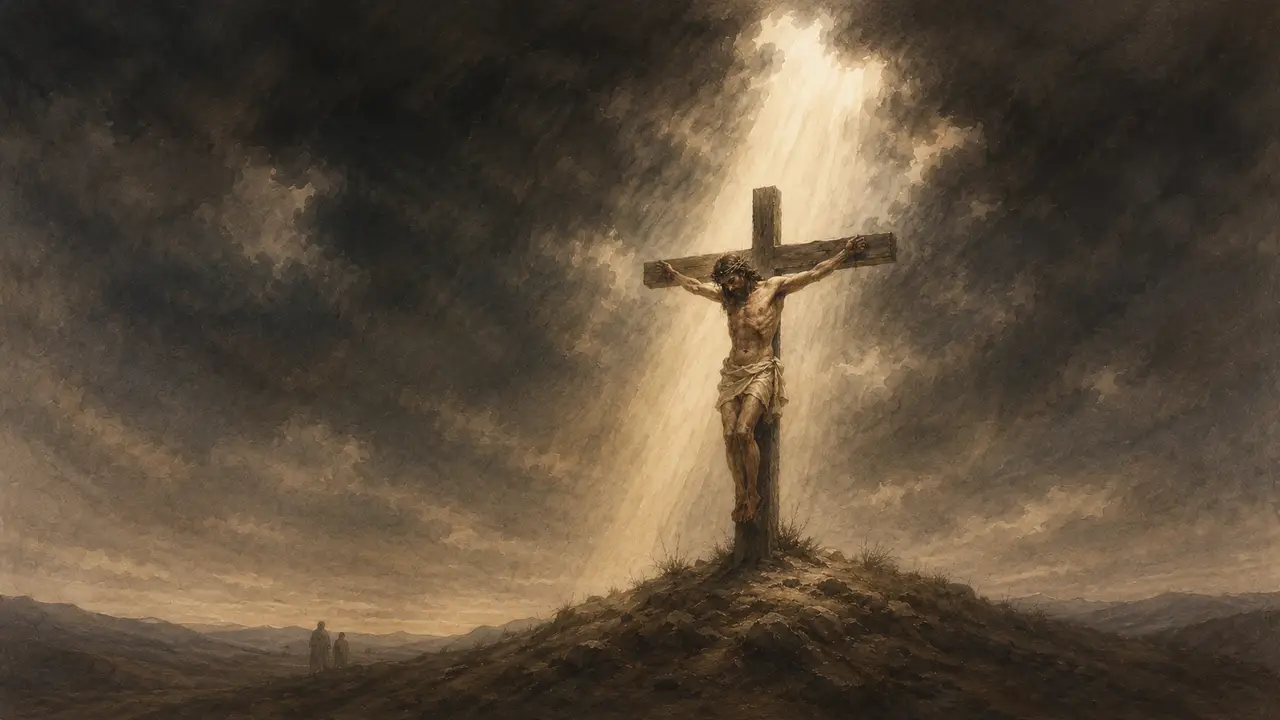
Isaiah 53 Explained: The Suffering Servant
Isaiah 53 continues the final Servant passage that began at the end of Isaiah 52. Yahweh has already said, “Behold, My Servant will prosper, He will be high and lifted up and greatly exalted.” But immediately after that, Isaiah said that many would be appalled at Him because His appearance was marred more than any man. Isaiah 52 left us with an unresolved question: if the Servant is exalted, successful, and central to Yahweh’s salvation, why is He also disfigured, humiliated, and astonishing to those who see Him? Isaiah 53 now explains. The Servant is not marred because His mission failed. He is marred because Yahweh’s salvation comes through His suffering.
The chapter opens with a question: “Who has believed our report? And to whom has the arm of Yahweh been revealed?” The expected answer is that very few have believed. The report has gone out, but it has not been recognised for what it is. This report is not only Isaiah’s private message. Isaiah 52 has already spoken of the messenger who proclaims good news, the watchmen who see Yahweh returning to Zion, and Yahweh baring His holy arm before the nations. The report is the good news of Yahweh’s salvation, now embodied in the Servant. But the arm of Yahweh is revealed in a way men do not expect. Yahweh’s saving power is revealed through one who is despised, wounded, crushed, silent, cut off, and then vindicated.
Verse 2 explains why men do not believe the report: “For He grew up before Him like a tender shoot, and like a root out of parched ground.” The Servant does not appear in the form fallen men naturally admire. He grows up like something fragile, small, and easily overlooked. A tender shoot has life, but it does not look powerful. A root out of parched ground suggests life appearing where no one expected fruitfulness. Isaiah has already used this kind of language in Isaiah 11:1 for the promised Davidic hope: “Then a shoot will spring from the stem of Jesse, and a branch from his roots will bear fruit.” The Servant is not detached from the promises of a coming King. He comes as the promised life from David’s line, but His appearance is humble rather than outwardly impressive.
Isaiah then says, “He has no stately form or majesty that we should look upon Him, nor appearance that we should desire Him.” This does not mean there was something morally deficient in Him. It means He did not come with the visible splendour, royal polish, or worldly power that draws the admiration of men. The human heart often measures greatness by what can be seen: beauty, strength, status, force, and public honour. The Servant does not fit those expectations. Men look upon Him and see nothing special. They do not recognise Yahweh’s arm because Yahweh has clothed His salvation in humility.
Verse 3 takes the rejection further: “He was despised and forsaken of men, a man of sorrows and acquainted with grief.” The Servant is not just ignored. He is despised. Men reject Him, turn away from Him, and treat Him as one unworthy of regard. “A man of sorrows and acquainted with grief” means suffering is not an occasional incident in His life. He knows grief intimately. He is familiar with sorrow, not from a distance, but by experience. Isaiah then says, “And like one from whom men hide their face He was despised, and we did not esteem Him.” Men hide their faces from Him because His suffering repels them. They do not honour Him. They do not value Him. They do not recognise that the one they despise is the very Servant through whom Yahweh will save.
Verse 4 marks the beginning of confession: “Surely our griefs He Himself bore, and our sorrows He carried.” The “we” in the chapter are those who once misjudged Him but now see the truth. They had looked at the Servant and thought His suffering belonged to Him alone. They had thought He was bearing His own shame. But now they confess that He bore “our griefs” and carried “our sorrows.” The Servant takes up what belongs to others. He carries the burden of those who had despised Him.
The second half of verse 4 shows how badly He was misunderstood: “Yet we ourselves esteemed Him stricken, smitten of God, and afflicted.” In one sense, God’s hand truly was upon Him. Isaiah will say that Yahweh was pleased to crush Him. But the people interpreted His suffering wrongly. They thought He was smitten by God for His own sin, His own disgrace, or His own failure. They saw affliction and assumed guilt. Isaiah reveals the opposite. He was stricken by God because He was carrying the griefs, sorrows, transgressions, and iniquities of others.
Verse 5 gives the heart of the chapter: “But He was pierced through for our transgressions, He was crushed for our iniquities.” The violence against the Servant is real. He is pierced. He is crushed. These are severe words. Isaiah does not soften the suffering. But he also gives the reason: “for our transgressions” and “for our iniquities.” A transgression is a rebellion against God’s command. An iniquity is guilt, perversity, and crookedness before Him. The Servant suffers because sinners have sinned. The punishment falls on Him because the guilt belongs to them.
“The chastening for our peace fell upon Him, and by His wounds we are healed.” This is substitution. The chastening that brings peace does not fall on those who deserve it. It falls on the Servant. Peace in Scripture is not merely a calm feeling. It is peace with God, the restoration of what sin has ruined, the ending of hostility through judgment borne and guilt removed. The Servant’s wounds heal because His suffering deals with sin before God. Isaiah is not speaking only about comfort for wounded emotions or general human pain. He is speaking about atonement. The Servant’s wounds bring healing because He bears the judgment against His people.
Verse 6 widens the confession to include all: “All of us like sheep have gone astray, each of us has turned to his own way.” The sheep image is direct and humbling. Sheep go astray. They wander from the shepherd. They follow their own path and expose themselves to danger. Isaiah applies this to sinners. Sin is not only breaking an external rule. It is turning from Yahweh to one’s own way. Each person wants his own path, his own will, his own wisdom, and his own authority. This is the guilt of mankind before God.
Then comes the great covenant act: “But Yahweh has caused the iniquity of us all to fall on Him.” Yahweh is the active subject. The Servant is not merely caught in the machinery of human injustice. Human beings despise Him, oppress Him, judge Him, and kill Him, but Yahweh lays the iniquity of His people on Him. This is not accident. This is not a tragic miscarriage of justice. This is Yahweh’s saving purpose. Yahweh, the covenant God who binds Himself to His people and keeps His word, causes their iniquity to fall upon His Servant.
Verse 7 shows the Servant’s willing submission: “He was oppressed and He was afflicted, yet He did not open His mouth.” The Servant does not protest His innocence in order to avoid the suffering appointed to Him. He does not defend Himself as men would expect. He does not strike back. He does not refuse the path Yahweh has given Him. His silence is not weakness. It is obedience. He knows the work He has come to accomplish.
Isaiah then compares Him to sacrificial animals: “Like a lamb that is led to slaughter, and like a sheep that is silent before its shearers, so He did not open His mouth.” The lamb imagery draws us toward sacrifice. The Servant is innocent, silent, and led toward death. The sheep before shearers adds the image of patient submission under humiliation. The repeated line, “He did not open His mouth,” gives the verse its weight. The Servant suffers deliberately. He yields Himself to the judgment that will save others.
Verse 8 moves to His death: “By oppression and judgment He was taken away.” The Servant is removed through injustice. Human courts and rulers act against Him. He is oppressed, judged, and taken away. Isaiah then asks, “And as for His generation, who considered that He was cut off out of the land of the living?” To be cut off from the land of the living means He dies. His death is not symbolic language for difficulty. The Servant is killed.
The final line of verse 8 explains the reason again: “That for the transgression of my people, striking was due to Him?” The striking that should have fallen because of the people’s transgression falls upon Him. This is the same substitution already stated in verses 5 and 6. The Servant dies under the punishment due to others. Yahweh’s people have sinned, and the Servant receives the blow.
Verse 9 then speaks of His burial: “So His grave was assigned with wicked men, yet He was with a rich man in His death.” He is treated as though He belongs with the wicked. His death places Him among criminals and transgressors in the eyes of men. But the verse also contains a strange reversal: “yet He was with a rich man in His death.” Isaiah gives the details in a way that holds humiliation and honour together. The Servant is rejected and counted with the wicked, but He is not finally abandoned to disgrace.
The reason is clear: “Because He had done no violence, nor was there any deceit in His mouth.” The Servant is innocent. He has not committed violence. He has not lied. He has not practised deceit. This is crucial because the whole chapter depends on His righteousness. If He had sins of His own, He could not bear the sins of others. If He were guilty, His suffering would be His own due. But He is righteous, and therefore His suffering is substitutionary. He suffers for the guilty because He Himself is without guilt.
Verse 10 takes us behind the human injustice to Yahweh’s purpose: “But Yahweh was pleased to crush Him, putting Him to grief.” This verse does not mean Yahweh takes pleasure in cruelty. He is not delighting in evil. Isaiah means that the crushing of the Servant was according to Yahweh’s will and saving purpose. The same Yahweh who caused the iniquity of us all to fall on Him now crushes Him as the appointed means of redemption. The Servant’s suffering is not outside God’s plan. It is the centre of it.
“If You would place His soul as a guilt offering,” Isaiah says. This draws directly from the sacrificial system of the Torah. A guilt offering dealt with guilt before God. It acknowledged that sin creates liability before Yahweh and that atonement is needed. Isaiah is saying that the Servant Himself becomes the offering. His soul is placed as the guilt offering. He does not merely bring a sacrifice. He is the sacrifice. He gives Himself to deal with the guilt of His people.
Then, remarkably, the Servant is alive again: “He will see His seed, He will prolong His days, and the good pleasure of Yahweh will succeed in His hand.” The Servant has been cut off from the land of the living. He has been buried. But now He sees His seed and prolongs His days. Isaiah does not explain the mechanics here, but the logic is clear. Death does not hold the Servant. After His suffering and death, He lives. He sees the fruit of His work. He has a people who come from His atoning death. Yahweh’s good pleasure succeeds in His hand because the Servant is not defeated by the grave.
Verse 11 continues the outcome: “As a result of the anguish of His soul, He will see it and be satisfied.” The anguish was real, but it was not wasted. The Servant sees the result of His suffering and is satisfied. His work accomplishes what Yahweh intended. The suffering gives way to completion, fruitfulness, and satisfaction.
Then Yahweh speaks of Him directly: “By His knowledge the Righteous One, My Servant, will justify the many, as He will bear their iniquities.” The Servant is called “the Righteous One.” To justify means to declare righteous before God. The many are not justified because their sins were small, or because God decided to ignore their iniquities. They are justified because the Righteous Servant takes their iniquities upon Himself. Their guilt is dealt with in Him. His righteousness stands in contrast to their sin, and His suffering becomes the ground of their acceptance.
This verse repeats and deepens the earlier confession. Verse 6 said Yahweh caused the iniquity of us all to fall on Him. Verse 11 says the Servant justifies the many as He bears their iniquities. Justification and substitution belong together. The Servant bears guilt so the many may be declared righteous. Isaiah gives us one of the clearest Old Testament statements of substitutionary atonement: the innocent Servant bears the sins of the guilty, and by His suffering the guilty are brought into peace with God.
Verse 12 concludes with victory: “Therefore, I will divide for Him a portion with the many, and He will divide the spoil with the strong.” This is inheritance and conquest language. The Servant receives a portion. He divides spoil. The language sounds like the aftermath of battle, where victory has been won and the spoils are distributed. But Isaiah has already shown us the nature of the battle. The Servant does not conquer a human army. He conquers death itself.
The reason for His reward is stated clearly: “Because He poured out His soul to death, and was numbered with the transgressors.” He gives Himself fully. He pours out His soul. He is counted among sinners, even though He had done no violence and no deceit was in His mouth. He stands in the place of transgressors, bears their shame, receives their stroke, and dies their death.
The final lines gather the whole chapter: “Yet He Himself bore the sin of many, and interceded for the transgressors.” The Servant bears sin, and He intercedes. He is sacrifice and priest. He carries the guilt of the many, and He pleads for transgressors. His work is not merely past suffering. His priestly work reaches into intercession. Those who went astray like sheep are not only forgiven through His death; they are represented by Him before God.
Isaiah 53 therefore explains the mystery raised at the end of Isaiah 52. The Servant is high and lifted up, but He is also marred. He prospers, but He does so through rejection. He is Yahweh’s righteous Servant, but He is numbered with transgressors. He is cut off from the land of the living, but He sees His seed and prolongs His days. He is crushed by Yahweh, but the good pleasure of Yahweh succeeds in His hand. Every part of the chapter presses the same truth: Yahweh saves sinners through the substitutionary suffering of His Servant.
Isaiah 53 leads us directly to Christ. Jesus was despised and forsaken. He bore griefs and carried sorrows. He was pierced through for transgressions and crushed for iniquities. He was silent before His accusers. He was cut off from the land of the living. He was with a rich man in His death. He had done no violence, and no deceit was in His mouth. He gave Himself as the true guilt offering and rose from the dead. He justifies the many, bears their iniquities, and intercedes for transgressors.
This chapter does not allow us to treat the cross as a general display of love detached from judgment. The Servant suffers because sin requires atonement. He is pierced for transgressions. He is crushed for our iniquities. Yahweh lays guilt upon Him. Peace comes through chastening. Healing comes through wounds. The gospel announced here is severe because sin is severe, and it is full of mercy because Yahweh Himself provides the Servant who bears the sin of many.
Isaiah 53 teaches us to look at the rejected Servant and see the arm of Yahweh revealed. Men despised Him because they judged by outward appearance. But faith sees what Yahweh has done: the righteous Servant has taken the place of sinners, borne their iniquities, died under the stroke due to them, risen to see the fruit of His work, and received the spoil as the victorious Redeemer. This is why the report must be believed. There is no peace with God apart from the wounds of the Servant, and there is no other Servant by whom transgressors are justified.