
Genesis 8
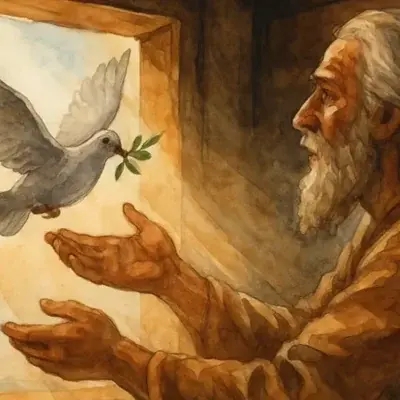
In Genesis 8, the floodwaters begin to recede—but this is no accident of nature. It’s a deliberate act of re-creation. God remembers Noah, not because He forgot, but because He is faithful to His promises. As the ark comes to rest, the world emerges from judgment into mercy.
Mercy and Judgment – God Extends an Olive Branch
In Genesis 6, mankind’s rebellion reaches its peak, twisting God’s design for life, filling the earth with violence and exalting themselves as gods. Yahweh responds with judgment, sending a flood to wipe out all flesh. Yet even in wrath, He shows mercy. He chooses Noah, a man declared righteous by faith, and commands him to build an ark.
In Genesis 7, the flood comes exactly as God said. The ark is sealed. Everyone outside perishes. But inside, God preserves Noah, his family, the animals, and most importantly, the line of the promised seed who will one day crush the serpent’s head. Genesis 8 brings the flood narrative to its turning point.
The judgment begins to recede, but what unfolds is not random or improvised. It follows the same pattern as Genesis 1. What God does here is a deliberate recreation, ordered, purposeful, and full of mercy. This is not just survival. It is restoration. God is reestablishing the world in the face of human sin, and He is doing it on the basis of covenant faithfulness.
The opening line, “Then God remembered Noah,” does not mean God had forgotten. In the Bible, when God remembers, it means He acts on His promises. It is covenant language. Yahweh remembering is the moment mercy moves. And in the structure of the whole flood account, this is the centre. With judgment complete, God now displays the fullness of His mercy. Yahweh is acting to keep the promise He made.
The recreation begins with wind. Just as the Spirit of God hovered over the waters in Genesis 1:2, God now sends a wind over the surface of the deep. The waters are not simply evaporating. They are being pulled back under God’s command, just as He once separated them to make dry land appear.
And notice the sequence. First, the waters are restrained. Then, after 150 days, the ark comes to rest. The word “rested” in verse 4 is deliberately tied to Noah’s name, which means rest or relief. But this is more than physical stillness. It marks the end of judgment. The world is now stable under God’s hand.
What follows is a slow, deliberate unfolding that mirrors the order of creation. After 40 more days, Noah opens the window of the ark. That simple act echoes Genesis 1. In the beginning, God said, “Let there be light.” Now Noah opens the window, and light enters the ark.
Noah sends out a raven first, a scavenger bird known to feed on the dead. It does not return. Then he sends out a dove, a clean bird that we now associate with life and peace. The first time it finds no resting place and returns. The earth is not yet ready. Seven days later, he sends it again, and this time it comes back with a freshly plucked olive leaf. God is restoring His created order. First the waters recede, then dry ground appears, and now vegetation begins to grow. Just as in Genesis 1, the olive leaf confirms that plant life has returned under God’s blessing.
Over time, the olive branch becomes a universal symbol of peace, especially between enemies. It represents reconciliation after hostility, just as God is now showing mercy after judgment. When Noah sends the dove a third time, it does not return. The world is now habitable.
And yet, Noah waits. Even after a full year in the ark, even with clear signs that the danger has passed, he does not act until Yahweh speaks. This stands in deliberate contrast to Adam, who acted without God’s word. Noah walks with Yahweh, not in rebellion against Him. He shows us that obedience means listening to God first. His trust is not in what he sees, but in what God says.
When Yahweh finally speaks, He commands Noah, his family, and all the animals to go out. He tells the animals to swarm and be fruitful and multiply. The language is drawn directly from Genesis 1. God is renewing the same commission. And just like in the original creation, the animals receive this command before mankind. The sequence is deliberate. Waters are pulled back. Dry ground appears. Plants begin to grow. Animals fill the earth. And finally, mankind steps out.
But this time, the world is not innocent. The presence of sin remains, and creation is still under the curse of death. Noah’s first act upon exiting the ark is worship. He builds an altar and offers sacrifices from the clean animals. This is the first altar mentioned in the Bible. The extra clean animals God commanded Noah to bring were not just for food. They were for this moment. God had already made provision for right worship after salvation.
This sets the tone for the covenant that follows. God initiates. God preserves. And God receives worship as the right response.
Yahweh responds to Noah’s offering by making a declaration, not to Noah, but within Himself: “I will never again curse the ground because of man, for the intent of man’s heart is evil from his youth.” God reaffirms the truth of Genesis 6:5. Mankind’s heart is still bent toward evil. The flood did not remove sin.
And yet God chooses not to destroy again, not because people will improve, but because of His own divine patience. The world is preserved not on the basis of merit, but because God is merciful.
The chapter ends with a poetic promise. While all the days of the earth remain, the rhythms of creation, day and night, seedtime and harvest, summer and winter, will not cease. This is not just an observation about nature. It is a divine guarantee. These cycles continue because Yahweh upholds them. He will preserve the world long enough for redemption to unfold.
The covenant of preservation begins here, not because mankind repented, but because God chose to show restraint. And yet, even as Genesis 8 mirrors the original creation, it leaves us in a world still under the power of sin.
This recreation foreshadows a greater one. Everything we have seen, the return of light, the reemergence of plant life, the restating of the creational mandate, points forward to a final recreation, free from the curse. The dove with the olive leaf is not just a sign that the earth is livable again. It foreshadows the peace and rest that will come when God makes all things new.
Genesis 8 looks forward to a world not merely preserved by covenant patience, but made new through covenant fulfilment, when the promised seed of Genesis 3:15 crushes the serpent’s head. Not life spared from death, but death itself undone.