
Genesis 9
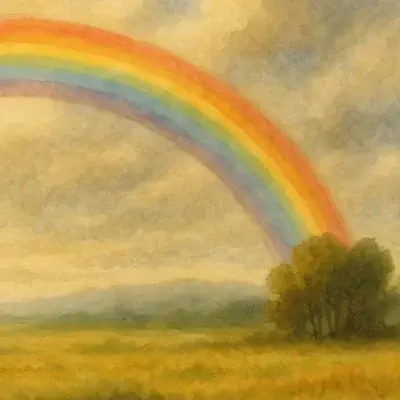
In Genesis 9, the flood is over—but the story of sin and grace is far from finished. God blesses Noah and his sons, repeating the command to be fruitful and multiply. He establishes a covenant with all creation, promising never again to destroy the earth by flood. The rainbow becomes a sign of divine mercy—a visible reminder that judgment is restrained, even though sin remains.
God’s Mercy in the Face of Human Pride
Genesis 9 opens with a deliberate echo of Genesis 1. God blesses Noah and his sons: “Be fruitful and multiply and fill the earth.” This is the same blessing first spoken to Adam, but this time it is spoken into a fallen world. The blessing of creation is not taken away because of sin. Blessing and fruitfulness will continue. In this way, Noah becomes a type of second Adam. He takes on the role given to Adam at the beginning of creation.
Yet things are not as they were. The relationship between man and animals is now marked by fear. This contrasts with Genesis 2, where animals were brought to the man without dread. Man still has dominion, but it is no longer marked by harmony. God now gives man the animals as food: “Every moving thing that is alive shall be food for you. As with the green plant, I give all to you.” This mirrors Genesis 1:29, but extends it. This permission reflects a change in the world after the flood. Life is now sustained not only by plants, but also by animals, something God allows because it is needed for survival in a harsher fallen world.
However, this gift comes with a boundary: “Flesh with its life, that is its blood, you shall not eat.” Blood represents life, which belongs to God. Blood would later become a symbol of atonement, as it already was in Genesis 3. God affirms the sanctity of life through the following principle of justice. He will require lifeblood. Both animals and people will be held accountable for taking human life.
“Whoever sheds man’s blood, by man his blood shall be shed, for in the image of God He made man.” Mankind is still made in God’s image. Human life is sacred because it reflects God’s likeness from the moment of conception. To take innocent life is to reject what God has set apart as holy.
The section ends with a repeated command: “Be fruitful and multiply. Swarm on the earth and multiply in it.” This restates the blessing of Genesis 1. What was once given to Adam is now spoken again to Noah, but this time into a world of sin and death.
God then restates what He declared in the previous chapter as a formal covenant: “I establish My covenant with you and with your seed after you.” This covenant is not only with Noah, but with every generation after him, and even with the animals. It is universal. “All flesh shall never again be cut off by the water of the flood.” God restrains Himself in judgment. Though sin remains in the world, God will not destroy it again by flood. However, the way this is phrased indicates a future judgment, one that will not come by water.
To seal this promise, God gives a sign: “I put My bow in the cloud.” The Hebrew word for bow also refers to a war bow. The imagery is striking. God is hanging up His weapon of war. And whenever the rainbow appears in the sky, He will look upon it and remember the everlasting covenant. The rainbow is a visible sign of divine restraint, a pledge of mercy in response to human rebellion and pride. This covenant ensures the world will continue, making way for redemption. The promise of the seed to crush the serpent’s head in Genesis 3:15 still stands, and the world is preserved for His arrival.
The story continues. Noah plants a vineyard, drinks its wine, and becomes drunk. The narrative does not assign guilt or sin to Noah, nor does it say he intended this outcome. But the result, his uncovered state, becomes a test of how his sons respond.
Ham enters the privacy of his father’s tent while he is asleep, sees his nakedness, and brings shame on Noah by broadcasting this fact to his brothers. Shem and Japheth respond with honour. They walk in backwards and cover their father without looking at him.
When Noah wakes, he knows what has taken place. Noah pronounces a curse, but the curse does not come from personal anger or authority. It is a prophetic announcement of God’s judgment on Canaan’s future. Just as Ham brought shame to his father, so Canaan will bring shame to others.
In contrast, Shem is associated with Yahweh: “Blessed be Yahweh, the God of Shem.” The covenant line will continue through him. Japheth is blessed with growth and is welcomed into Shem’s blessing: “Let him dwell in the tents of Shem.” The ordering here is significant based on what we will read in Genesis 10:1. Shem is probably younger than Japheth, yet Shem receives the blessing.
Scripture repeatedly shows that blessing does not follow birth order. God chooses Isaac over Ishmael, Jacob over Esau, David over his brothers. Election is by grace, not by status. God often chooses the least significant to accomplish His purposes. From Shem will come Abraham, and from Abraham will come the Messiah.
The chapter closes with Noah’s death. He lives 350 years after the flood, dying at 950 years of age. Though Noah was righteous by faith, he was still a sinner subject to death. He was not the one to crush the serpent’s head. His death is a reminder that the curse remains, and mankind still waits for the promised seed of Genesis 3:15.
The Bible continues to point forward to someone greater than Noah, to someone who will bring an end to the serpent, to sin, and to death itself.