
Genesis 7
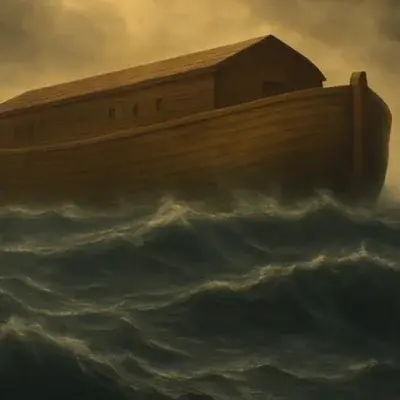
Genesis 7 records the global flood in the days of Noah—where God judges the corrupt world but shows mercy to Noah and his family.
Noah’s Ark, and God’s Judgment and Mercy
In chapter 6, we saw the world descend into deep corruption as mankind turned from God, filling the earth with violence and twisting His design for marriage and life. Rulers exalted themselves as gods, and every intent of man’s heart was only evil continually. Yahweh was grieved, not because He lacked foresight, but because His good creation had become filled with evil. So He declared that He would judge the earth with a flood to wipe out all flesh.
Yet even in wrath, God showed mercy. He chose Noah, a man already declared righteous, and commanded him to build an ark. Through Noah, God preserved the line of the promised seed from Genesis 3:15, the one who would crush the serpent’s head, revealing that Yahweh remains the faithful covenant keeper.
Genesis 7 continues directly from where chapter 6 finished. Noah has completed the ark just as God commanded, and now Yahweh tells him to enter it. But before the flood begins, God repeats the reason Noah is chosen: “For you alone I have seen to be righteous before Me in this generation.” This simply reaffirms what we were already told in Genesis 6:9. Noah was declared righteous before he did anything. His obedience does not earn God’s favour. It flows from faith. He believes and obeys. His work does not make him righteous, but rather it proves that he is.
God also tells Noah to bring animals, seven pairs of every clean kind and two of the unclean. It is interesting to note that Noah already knows the difference between clean and unclean animals. This was not explained until much later in the book of Exodus, which means God had already revealed it. The clean animals will be needed for worship and sacrifice after the flood. This shows that God is not only preserving life through judgment, but preparing Noah to honour Him afterward. He will provide not just protection, but everything Noah needs to worship on the other side.
God gives Noah a precise warning. In seven days, He will send rain for 40 days and 40 nights and will wipe out every living thing. The rain comes exactly as described, and the timing matters. It shows that God’s word is not symbolic or poetic, but exact and unchanging. The seven-day delay highlights His patience. There is time for repentance, though no one responds.
These 40 days and 40 nights will later become a pattern across Scripture, appearing in Israel’s time in the wilderness and in Jesus’ time of testing. What begins here in Genesis becomes a lasting symbol of God’s refining work through judgment and obedience.
Noah is 600 years old when the flood begins. He enters the ark with his wife, his sons, and their wives. The animals come too, male and female, after their kinds, just as God commanded. For seven more days, the ark remains open. It stands as a visible witness. Noah’s faith has been on display for years through his work and his preaching, but no one joins him. The door is open, but no one enters. God has given warning, and now the final chance is over.
The flood begins on the 17th day of the second month in the 600th year of Noah’s life. This level of detail is exactly what we would expect from the record of a real historical event. The fountains of the great deep burst open, and the windows of the heavens are opened. This language reflects a reversal of Genesis 1, where God separated the waters above and below to create a world that could support life. Now those boundaries collapse. The world is being returned to the watery state from which it came.
Noah enters the ark with his family and the animals just as God instructed. Then we read, “And Yahweh closed it behind him.” This marks the turning point. Yahweh Himself shuts the door. Those inside are safe, protected by a divine act of mercy. The ark becomes a picture of those who put their trust in Yahweh. He protects and delivers them from His righteous judgment against evil.
The waters rise for 40 days, lifting the ark above the earth and covering all the dry land which God had previously commanded to appear. But the ark floats. It endures the flood, upheld by the hand of God. Here we see a clear symbol of mercy amidst judgment. God delivers the judgment He promised, but He also delivers Noah and his family from His wrath.
Everything outside the ark perishes, birds, beasts, livestock, and people, all are swept away. This is exactly what God warned. The text emphasises that no one with the breath of life survives. The breath God gave in Genesis 2 is now taken away. No one can save themselves.
This should remind us that there are ultimately only two ways to live and two outcomes that follow. Either you are sealed inside by God, or you fall under judgment. Salvation does not rest on how strong someone is, but on whether they believed God’s warning and entered His provision.
We are told the waters Yahweh sent prevail, that is, peak, at 150 days before they start to subside. In that time, God holds the ark together, preserving the life of Noah and his family.
Genesis 7 shows us that Yahweh’s judgment is real, and so is His mercy. He brings the flood exactly as He said, but He also preserves Noah and his family, keeping alive the hope of the promised seed from Genesis 3:15, the one who will crush the serpent’s head.
This chapter gives us a pattern that runs throughout Scripture. God warns before judgment. He provides mercy in the midst of it, and He protects those who come to Him. This pattern finds its ultimate fulfilment in Christ.