
Exodus 22
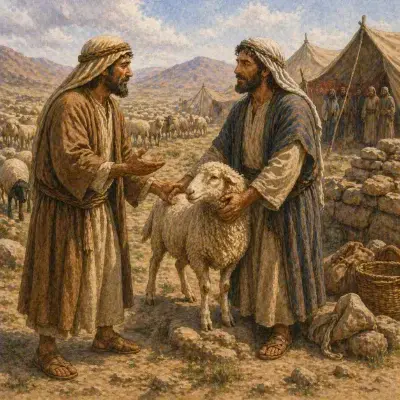
Exodus 22 continues Yahweh’s judgments by showing how His law governs property, responsibility, and trust among His people. Theft, negligence, and dishonesty are addressed with clear restitution, while sexual sin and idolatry are treated with full seriousness because they corrupt both individuals and the community. Yahweh gives special protection to the sojourner, the widow, and the orphan, and warns that He Himself will act when they are oppressed. In all these cases, the law binds actions to consequences and calls Israel to live as a people set apart under His authority.
Exodus 22 Explained: Justice, Restitution, and Covenant Faithfulness in Daily Life
Exodus 22 continues directly from the judgments Yahweh began setting before Israel in the previous chapter. Having established the sanctity of life and the limits of authority in Exodus 21, Yahweh now turns to the way His law governs property, responsibility, trust, and the protection of the vulnerable. These are not theoretical principles. They address real situations that arise in everyday life, where sin often hides within ordinary behaviour and long-standing social customs.
The chapter opens with theft. If a man steals an ox or a sheep and slaughters it or sells it, the loss cannot be undone. The animal is gone, along with the labour, breeding, and future provision it represented. Restitution therefore exceeds simple replacement. Five oxen for an ox, four sheep for a sheep. The penalty reflects the true cost of the sin. Where the animal is found alive, the restitution is reduced. Yahweh ties justice to actual damage, not to anger or revenge. Theft is treated as an attack on a neighbour’s livelihood, not merely on his possessions.
The law then addresses a difficult case. If a thief is struck at night and dies, there is no bloodguilt, because the thief is operating in the dark and the threat is immediate. But if the sun has risen, bloodguilt applies, because the homeowner can see what is going on. Yahweh refuses to allow Israel to justify killing once the danger has passed. Even a guilty man’s life belongs to God. However, the law does not release the thief from responsibility. If he lives, he must repay. If he has nothing, he is sold for his theft. The object of the law here is not to execute or permanently injure the thief, but to require repayment.
From here the law turns to negligence. Animals that graze in another man’s field, fires that spread and consume grain, and damage caused by carelessness all come under judgment. These examples deal with situations where there was no intent to harm. Intent is not the issue. Responsibility is. A man who causes loss must make restitution, even if he did not plan harm. Yahweh does not allow carelessness to be excused as an accident when others bear the cost.
The next section deals with trust. Property placed in a neighbour’s care, animals that die or disappear, and disputed ownership raise situations where there may not be sufficient evidence. In these cases the matter comes before God. An oath before Yahweh settles what witnesses cannot. This places the dispute directly under divine scrutiny. Israel is reminded that Yahweh sees what is hidden and judges what men cannot prove. Falsehood before Him carries its own consequence.
Borrowed and hired animals are treated with the same clarity. If an animal is borrowed and harmed, restitution is required. If the owner is present, the borrower is not held responsible, because the owner has accepted the risk. If the animal is hired, the hire payment already covers the possibility of loss. Yahweh trains Israel to think carefully about accountability rather than collapsing all cases into one outcome.
Verse sixteen shifts from property to people. A man entices an unbetrothed virgin and lies with her. The text does not consider motives or outcomes. She is unmarried and no longer a virgin. In Israel, this loss affected honour, marriage prospects, and future security. Deuteronomy 22 expands this and speaks of violation and dishonour, not because the woman bears guilt, but because something intended for covenant marriage has been taken outside it.
This was not a private sin. Sexual sin disrupted households and the moral order Yahweh had established. It was a crime against the community, not only against the woman involved. The cost fell most heavily on her, not on the man. Yahweh’s law refuses to allow that injustice to stand. The man must take responsibility for what he has done. He is required to pay the bride price and take her as his wife, unless her father refuses. The bride price acknowledged her value and compensated for the loss of marriage-standing.
It functioned as protection by placing obligation on the man rather than control over the woman. He is bound either to lifelong responsibility within marriage or to financial loss without it. The law does not compel the woman into a marriage her father rejects. If the father refuses the marriage, the payment still stands. The man bears the cost regardless of the outcome. He does not get to act and then walk away without consequence.
The chapter then names three offences that strike at the heart of covenant faithfulness. Sorcery seeks power apart from Yahweh. Bestiality collapses the distinction between mankind and animals established at creation. Sacrificing to other gods is open covenant treason. Each act represents a deliberate rejection of Yahweh’s rule and a corruption of the order He has set. The severity of judgment reflects the seriousness of the rebellion.
Yahweh then turns His attention to the vulnerable. Israel must not mistreat the sojourner, the widow, or the orphan. The reason is plain: Israel was once a sojourner in Egypt. Yahweh speaks personally here. If the afflicted cry out, He will hear. His anger will burn and He will act. Injustice is not merely a social failure. It is an offence against God Himself. To exploit those without protection is to provoke Yahweh directly.
This concern governs the laws about lending and pledges. Interest may not be charged to the poor. A cloak taken as collateral must be returned before nightfall. The law refuses to allow legal rights to become instruments of cruelty. A man’s only covering cannot be withheld. Yahweh sides with life over leverage. When the poor cry out, He hears, because He is gracious.
The final commands turn the chapter back toward Yahweh Himself. Israel must not curse God or despise rulers. Offerings must not be delayed. Firstborn sons and animals belong to Him. Even food falls under His authority. Anything torn to pieces in the field must not be eaten. To be holy men is to live visibly under Yahweh’s rule in speech, worship, and conduct. Holiness is obedience within ordinary life.
Exodus 22 shows what covenant faithfulness looks like in an imperfect and sinful world. Yahweh binds responsibility to action. He treats sexual sin as serious because it damages lives. He demands restitution rather than revenge. He cares deeply about injustice, especially when it falls on the weak and the vulnerable. He hears the cry of the oppressed and acts against those who exploit them. He claims His people entirely for Himself.
The chapter teaches Israel how to live as a redeemed people without becoming another Egypt or another Canaan. Yahweh is shaping a community that reflects His justice, His mercy, and His holiness in the ordinary realities of life under His rule.