
Genesis 29
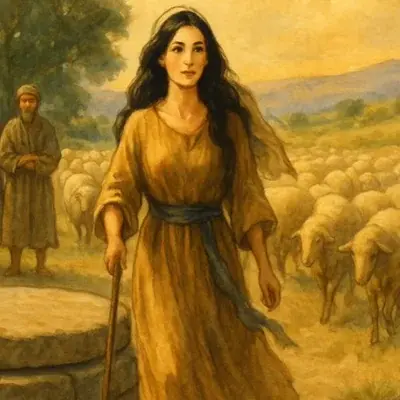
Genesis 29 shows that Yahweh’s purposes do not rely on perfect circumstances or worthy people. Jacob is deceived by Laban, caught in a web of rivalry and pain—but Yahweh remains faithful. Through Leah, the unloved wife, Yahweh begins to form the twelve tribes of Israel and lay the foundation for the royal line and the future King of Israel.
Yahweh’s Faithfulness, the Unloved Wife, and the Covenant Plan
After his divine encounter with Yahweh at Bethel in Genesis 28, Jacob lifts his feet and presses on toward the land of the east. But as he steps into this new chapter, the covenant name of Yahweh seems to disappear from the story. No voice calls from heaven. No angels appear. No miracles are recorded.
Instead, Jacob enters a world of ordinary, everyday moments: shepherds gathered at a well, flocks waiting for water, and men who happen to be from Haran and know his uncle Laban. Jacob has arrived at exactly the right place at exactly the right time. Behind this veil of ordinariness, Yahweh remains faithful to His word, just as He promised at Bethel: “I am with you wherever you go.” It is God, unseen, guiding His covenant promise through the rhythms of regular life.
Just then, Rachel arrives. Her appearance at the well should remind us of Genesis 24, where Abraham’s servant met Rebekah by a spring. But the pattern is deliberately reversed. There, Rebekah offered water to the servant and his camels. Here, Jacob takes the initiative. He rolls away the stone, draws water for Rachel’s sheep, and kisses her.
The Hebrew hints at this reversal through wordplay. Shāqāh, “to water,” sounds almost identical to nāshaq, “to kiss.” What Rebekah did for a servant, Jacob now does for Rachel. There is another striking difference. The servant arrived with gold, silver, and gifts, prompting Laban to run out in welcome. Laban runs again, but this time there are no gifts or bride price. Jacob carries only his staff and Yahweh’s promise.
This reversed pattern is no coincidence. It shows that God is moving His covenant plan forward even when He is not mentioned in the story. In Genesis 24, the servant prayed and Yahweh answered immediately. This time, no prayers are recorded, yet Yahweh’s hand is still at work.
After Jacob has been with Laban a month, Laban raises the issue of wages. Jacob should not work for nothing. When asked to name his price, Jacob speaks plainly: seven years of service for Rachel. Laban agrees, and the years fly by because of his love for her.
But on the wedding night, Laban deceives him. Under cover of darkness, he brings Leah instead. And in the morning, the words cut with irony: “Behold, it was Leah.” That word “behold” echoes Genesis 27, when Jacob deceived his blind father to steal Esau’s blessing. Now the deceiver is deceived, caught in his uncle’s cunning.
Laban shrugs off his betrayal, citing local custom: firstborn daughters marry first. Laban then offers a new deal. Finish Leah’s bridal week, then Jacob can marry Rachel in return for another seven years of service.
Jacob, driven by his desire for the woman he loves, accepts Laban’s deal. He completes the week, weds Rachel, and commits to working for Laban for seven more years.
Yahweh’s name is absent until verse 31. And now He finally appears.
Yahweh saw that Leah was unloved, and He opened her womb. He acts without being asked. While others focus on deals and desires, Yahweh sees the plight of the unloved wife and gives her a son. Rachel remains barren, but Yahweh blesses Leah with children. Blessing comes not from beauty or favour, but from Yahweh alone. Children are His covenant gift.
Leah bears four sons. Each son’s name reflects how Leah sees Yahweh at work. She names her first son Reuben and says, “Because Yahweh has seen my affliction.” His name plays on the Hebrew word rā’āh, “to see,” expressing her desire that Jacob might now see her.
She names her second son Simeon and says, “Because Yahweh has heard that I am unloved.” His name plays on the word shāmaʿ, “to hear,” affirming that Yahweh listens to the overlooked.
She names her third son Levi and says, “Now my husband will be joined to me.” His name draws from lāwâ, “to join,” reflecting Leah’s longing for love.
She names her fourth son Judah and says, “This time I will praise Yahweh.” His name plays on the Hebrew word yādâ, which means “to praise.” This name marks a shift, as Leah turns from seeking Jacob’s affection to praising Yahweh’s faithfulness.
In this entire chapter, Leah is alone in speaking the name of the covenant God. Like Hagar, who called Him the God who sees in Genesis 16:13, Leah sees that Yahweh has blessed her and responds with worship. The royal line will be traced through Judah. It is not through Rachel, but through the unloved wife that Yahweh’s promise will move forward.
Jacob’s household is marked by rivalry, deception, and unmet longing. But Yahweh is present. He guides Jacob to Haran. He brings Rachel to the well. He opens Leah’s womb. His faithfulness runs beneath every twist in the story. His promise advances not through perfect families or flawless plans, but through ordinary people and painful circumstances.
Genesis 29 shows that Yahweh moves quietly through ordinary life. He sees, He hears, and He gives. Even when He appears to be absent, He is near. And He draws praise from the ones whom others fail to love.