Kingdom
What does the Bible say about the kingdom?
The kingdom of God is his sovereign rule over all creation. It is not a geographical territory or a political institution; it is the reign of God, active wherever his will is being done. The kingdom is not something mankind builds; it is something God establishes and gives.
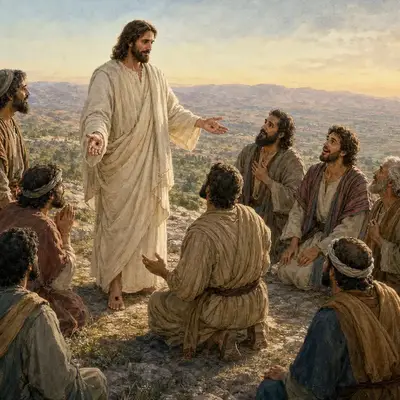
Jesus announces in Mark 1 that “the kingdom of God has come near.” His healings, exorcisms, and authority over nature are demonstrations that the king has arrived and his reign has broken into history. But the kingdom comes in two stages: the king is present in his first coming, but his full reign awaits his return. Christians live in the tension of a kingdom that has already come in Christ and has not yet come in its fullness.
What is the difference between the kingdom of God and the kingdom of heaven?
The two phrases describe the same reality. Matthew’s Gospel, written with a Jewish audience sensitive to using God’s name directly, tends to say “kingdom of heaven” where Mark and Luke say “kingdom of God,” and Matthew himself shows the two are interchangeable within a single conversation: “it is hard for a rich man to enter the kingdom of heaven… it is easier for a camel to go through the eye of a needle, than for a rich man to enter the kingdom of God” (Matthew 19:23-24). There is no separate kingdom in view. “Heaven” here names where God’s throne is, not a different reign from God’s own.
What do the parables teach about the kingdom?
Jesus repeatedly describes the kingdom through ordinary, small beginnings rather than immediate visible triumph: “The kingdom of heaven is like a mustard seed, which a man took and sowed in his field” (Matthew 13:31). The seed is the smallest a farmer would plant, yet it grows into something that shelters others. The kingdom parables consistently teach that God’s reign begins small and hidden in this age, working itself out over time, before it is revealed in its full and unmistakable glory at Christ’s return. Follow how this theme develops through the Bible.