
Galatians 1
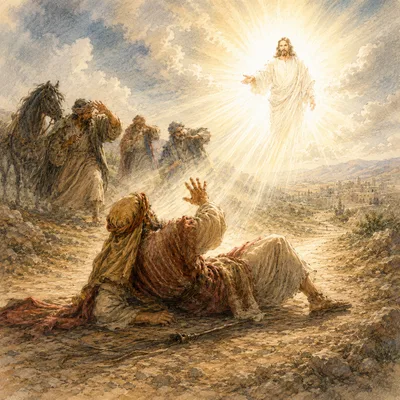
Galatians 1 opens with Paul defending his apostleship and warning the churches against any gospel contrary to the one he received from Christ. The chapter shows that the gospel comes from God, centres on Christ’s death for our sins, and cannot be altered without placing men under the curse of God.
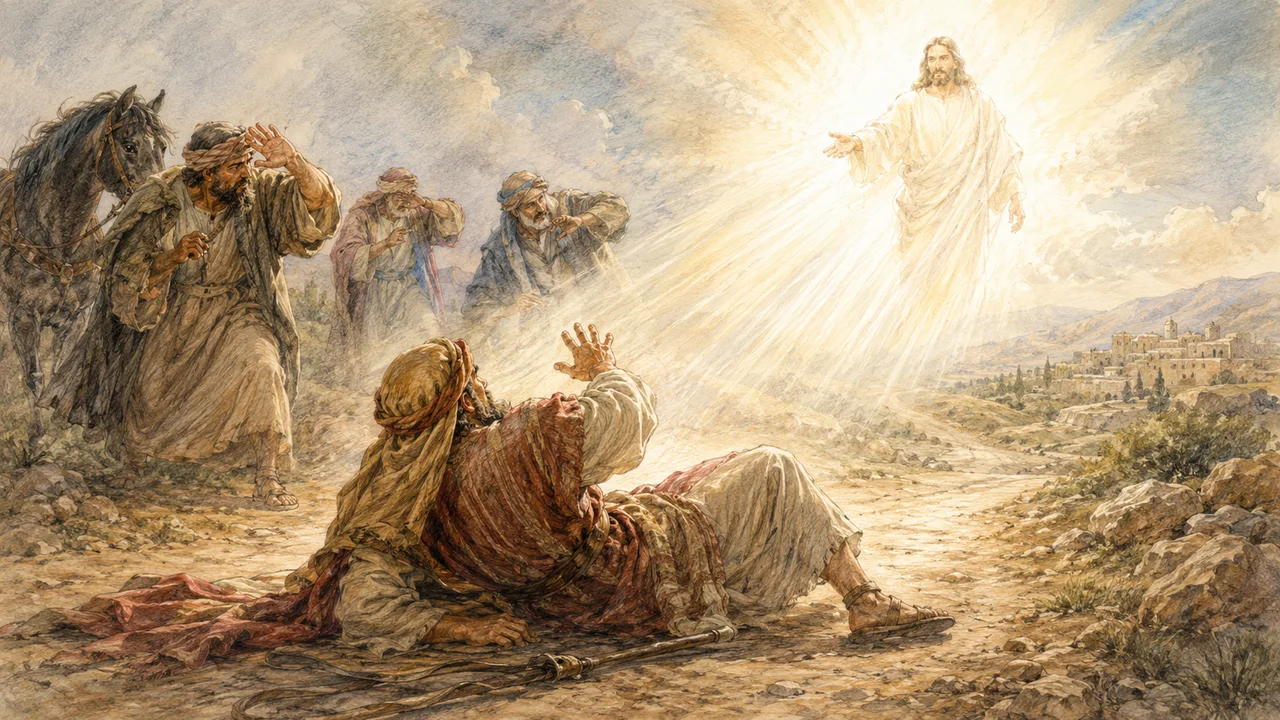
Galatians 1 Explained: No Other Gospel
Paul’s letter to the Galatians opens with urgency because the gospel itself is under attack. The problem in Galatia is not a minor disagreement. What is at stake is the gospel itself. Before Paul rebukes the churches, he establishes who speaks, who sent him, what gospel he preaches, and why that gospel cannot be altered without bringing a man under the curse of God. The chapter moves from Paul’s divine commission, to the gospel of Christ’s saving work, to the danger of deserting God, and then to Paul’s own life as proof that his message did not come from man. God took a persecutor of the church and made him a preacher of Christ among the Gentiles, so that the churches glorified God because of him.
Paul begins by identifying himself as “an apostle”. An apostle is not simply a messenger in a general sense. In the New Testament, the apostles of Christ were men specially chosen and sent by the risen Lord, entrusted with His authoritative message, and appointed to bear witness to Him. That is why Paul immediately adds, “not sent from men nor through man, but through Jesus Christ and God the Father, who raised Him from the dead.” He does not allow the Galatians to think of his apostleship as a human appointment, a ministry granted by other men, or a calling that depends on the approval of Jerusalem. His commission comes through Jesus Christ and God the Father.
That opening statement already presses into the central issue of the letter. Paul names Jesus Christ and God the Father together as the source of his sending, and he identifies the Father as the one “who raised Him from the dead.” The gospel Paul preaches rests on the death and resurrection of Christ, and Paul’s authority as an apostle rests on the risen Christ who appeared to him and sent him. Paul is not defending his own reputation for its own sake. He is defending the message entrusted to him by God.
Paul also writes with “all the brothers” who are with him. God appointed him as an apostle, but he is not standing alone with a message of his own. The brothers stand with Paul in the same gospel. This matters because the churches in Galatia are being disturbed by men who want to distort the gospel of Christ. Paul’s gospel is not his own invention. It is the same gospel proclaimed by the apostles, shared by the brothers, and received by the churches.
The letter is addressed “to the churches of Galatia.” Paul is not writing to one congregation, but to multiple churches in the Galatian region. This means the same problem was not confined to a single local church. Because the same danger was spreading among the churches, each church needed to hear the same warning. The gospel does not belong to one congregation to reshape according to local pressure. The same gospel applies to all the churches of Christ.
Paul’s greeting to the churches of Galatia is brief, but it contains the heart of the gospel: “Grace to you and peace from God our Father and the Lord Jesus Christ, who gave Himself for our sins so that He might rescue us from this present evil age, according to the will of our God and Father, to whom be the glory forever and ever. Amen.” Before Paul confronts the Galatians, he reminds them what they are in danger of abandoning. Grace comes from God. Peace comes from God. Christ gave Himself for our sins. His death is the saving act by which sinners are rescued, and that rescue comes “according to the will of our God and Father.”
This already confronts the distortion that will unfold through the letter. If Christ gave Himself for our sins to rescue us, then circumcision, works of the Law, and the traditions of men cannot be added as the ground of acceptance with God. Sin is the problem. Christ’s self-giving death is the rescue. The Father willed it. The Son accomplished it. The glory belongs to God forever.
That opening blessing prepares the rebuke that follows. In many of Paul’s letters, the greeting leads into thanksgiving for the church. Here Paul moves almost immediately from greeting to astonishment: “I marvel that you are so quickly deserting Him who called you by the grace of Christ for a different gospel, which is really not another, only there are some who are disturbing you and want to distort the gospel of Christ.” That absence of thanksgiving fits the severity of the crisis. Paul has already stated the gospel in concentrated form, so when he says they are deserting God, the seriousness is clear. They are not only confused about a secondary matter. They are deserting “Him who called” them. The gospel is personal because God Himself calls sinners by the grace of Christ. To turn from that gospel is to turn from the God who called them.
Paul is explicit about why there is no other gospel: there is only one saving message. A distorted gospel may still use Christian words. It may still speak of God, Christ, Scripture, obedience, and blessing. It might even use the word gospel. But if it adds works to Christ as the ground of acceptance with God, it ceases to be good news. The men troubling the Galatians are not offering a fuller version of Paul’s message. They are disturbing the churches and distorting the gospel. Their teaching does not complete the gospel. It corrupts it and turns people away from God.
This explains the severity of verses 8 and 9. Paul says, “But even if we, or an angel from heaven, should proclaim to you a gospel contrary to the gospel we have proclaimed to you, let him be accursed!” Then he repeats it: “As we have said before, so I say again now, if any man is proclaiming to you a gospel contrary to what you received, let him be accursed!” Paul does not leave room for rank, reputation, office, charisma, or supernatural appearance to overrule the gospel already preached. Even Paul himself would fall under the curse if he preached a contrary gospel. Even an angel from heaven would be accursed if he announced a different message. The gospel judges the messenger. The messenger does not judge the gospel.
The word “accursed” is severe. Paul is not saying such a teacher should be disagreed with politely and treated as a harmless alternative voice. He is pronouncing God’s curse upon anyone who proclaims a contrary gospel. In other words, a contrary gospel does not leave men safely within grace; it places them under the curse. This is the eternal seriousness of gospel distortion. A false gospel does not rescue sinners from sin. It leaves them under wrath while giving them religious confidence. That is why Paul speaks with such force. To corrupt the gospel is to attack the only message by which sinners are reconciled to God.
Verse 10 shows why Paul can speak this way. “For am I now seeking the favor of men, or of God? Or am I striving to please men? If I were still trying to please men, I would not be a slave of Christ.” Paul knows that his words will not please everyone. His rebuke is too direct for that. His curse against false teachers is too sharp for that. But Paul is not measuring faithfulness by human approval. He belongs to Christ. He calls himself a slave of Christ, meaning that his life, message, and ministry are under the authority of the Lord who bought him.
From there, Paul explains where his gospel came from. “For I make known to you, brothers, that the gospel which I am proclaiming as good news is not according to man. For I neither received it from man, nor was I taught it, but I received it through a revelation of Jesus Christ.” This is the bridge between the opening rebuke and the story of his life that follows. Paul is not simply telling his story. He is proving that the gospel he preached in Galatia did not come from human tradition, human reasoning, or human approval. Christ revealed it to him.
Paul then turns to his former life in Judaism. “For you have heard of my former conduct in Judaism, how I used to persecute the church of God beyond measure and tried to destroy it.” Paul names his sin plainly. He persecuted the church of God. He tried to destroy it. He was not moving towards Christianity by natural sympathy or religious curiosity. He was violently opposed to the people of Christ.
He also says, “And I was advancing in Judaism beyond many of my contemporaries among my countrymen, being far more zealous for the traditions of my fathers.” Paul had not been an outsider to Jewish religious life. He had been deeply committed, highly zealous, and advancing beyond many others. This matters for what Paul will go on to confront in Galatia. Paul had zeal for the traditions of his fathers in abundance, and that zeal did not lead him to Christ. It led him to persecute the church of God. Paul knows that world from the inside. He had more zeal for Jewish tradition than the men troubling Galatia. But zeal did not save him. Tradition did not reconcile him to God. His former life led him to persecute the church.
The turning point in Paul’s life came entirely from God. “But when God, who had set me apart from my mother’s womb and called me through His grace, was pleased to reveal His Son in me so that I might proclaim Him as good news among the Gentiles.” Paul’s conversion was not something he produced in himself. God had set him apart from his mother’s womb. That language reaches back into the Old Testament pattern of prophetic calling. Jeremiah heard Yahweh say, “Before I formed you in the innermost parts I knew you, and before you came out from the womb I set you apart; I have given you as a prophet to the nations.” Isaiah also speaks of Yahweh calling His servant from the womb. Paul sees his apostleship in that same light. His calling began in the purpose of God before Paul knew it, before Paul desired it, and even while Paul was opposing the church.
God “called” him “through His grace.” Grace is not God’s response to Paul’s worthiness. Grace came to a persecutor. Grace came to a man trying to destroy the church of God. Grace came while Paul was zealous for the traditions of his fathers and blind to the glory of Christ. The gospel Paul preaches is the gospel God put on display in his own life. God did not improve Paul’s former religious standing. He revealed His Son in him.
The purpose of that revelation was mission: “so that I might proclaim Him as good news among the Gentiles.” Paul does not say God revealed a system to him first, though doctrine is certainly involved. He says God revealed His Son. Christ Himself is the centre of the gospel. Paul’s message to the Gentiles is not that they must become Jews in order to belong to God’s people. His message is Christ crucified and risen, the Son of God who gave Himself for our sins to rescue us from this present evil age.
Paul then explains what he did not do. “I did not immediately consult with flesh and blood, nor did I go up to Jerusalem to those who were apostles before me, but I went away to Arabia, and returned once more to Damascus.” This is crucial for his argument. Paul is not despising the Jerusalem apostles. He will later show that they recognised the grace given to him. Paul’s point is this: his gospel did not come from them. He did not receive his commission by travelling to Jerusalem and being trained under Peter or James. He did not become an apostle because Peter appointed him. Christ appointed him directly.
Then Paul gives the timeline. “Then three years later I went up to Jerusalem to become acquainted with Cephas, and stayed with him fifteen days. But I did not see any other of the apostles except James, the Lord’s brother.” Three years passed before Paul went to Jerusalem. When he did go, the visit was brief. He met Cephas, that is Peter, and he also saw James, the Lord’s brother. Paul is careful with the details because the truth matters. He even says, “Now in what I am writing to you, I assure you before God that I am not lying!” His defence of the gospel depends on real events. The Galatians would have been aware of these things. It may be ancient history for us, but it was recent history for them, history that could be verified and checked against people who were there and could confirm what Paul was saying.
After that, Paul went “into the regions of Syria and Cilicia.” The churches of Judea did not personally know him by sight. They only heard the report: “He who once persecuted us is now proclaiming the good news of the faith which he once tried to destroy.” That sentence captures the grace of God in Paul’s life. The persecutor became a preacher. The destroyer became a servant. The man who once attacked the faith now proclaimed it as good news.
The chapter ends with the right response: “And they were glorifying God because of me.” They did not glorify Paul as though he had reformed himself. They glorified God because God had acted. This conclusion completes the argument of the chapter. Paul’s apostleship is from God. Paul’s gospel is from Christ. Paul’s transformation is by grace. Paul’s mission to the Gentiles is according to God’s purpose. Therefore the Galatians must not treat a distorted gospel as a legitimate alternative. To leave Paul’s gospel is to leave the God who called them by the grace of Christ.
Galatians 1 teaches that the gospel is not ours to adjust. It comes from God, centres on Christ, rests on His death for our sins, rescues sinners from this present evil age, and brings glory to the Father forever. Any message that changes that gospel places men under the curse rather than under grace. That is why Paul begins so sharply. The churches of Galatia are not being invited into a deeper form of obedience. They are being pulled away from Christ. Paul writes as a slave of Christ to call them back to the only gospel that saves.