
Genesis 31
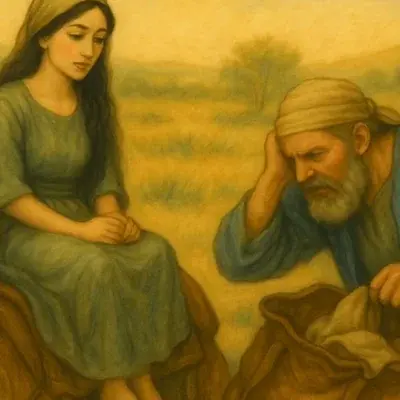
Genesis 31 records Jacob’s departure from Laban’s household. Yahweh tells him to return home. Jacob obeys. But Rachel steals Laban’s household gods, and Laban gives chase.
Jacob’s Escape, Laban’s Pursuit, and God’s Protection
Genesis 31 begins with a rising tension between Jacob and Laban. Jacob hears the accusations of Laban’s sons and sees the change in Laban’s face. The blessing of Yahweh, which was once profitable for Laban, is now resented by Laban and his sons.
Yahweh speaks in the midst of this tension: “Return to the land of your fathers and to your kin, and I will be with you.” The words match the promise first spoken twenty years earlier at Bethel, forming a theological inclusio. Jacob’s exile began under Yahweh’s word, and now it ends with the same word restated and fulfilled. God has been with him all along, just as He said He would be.
So Jacob calls Rachel and Leah into the field, away from the tents, a secret meeting, and explains the change in their father’s attitude. He reminds them of how Laban has cheated him, how his wages were changed ten times, and how God has protected him through it all. Then in verses 10 to 13, he recounts a dream in which the angel of God confirmed Yahweh’s involvement.
We might be tempted to wonder if this was a persuasive speech designed to win their support. But as the chapter unfolds, Laban’s silence affirms Jacob’s account. He is not exaggerating or inventing. Yahweh has indeed been watching, and His intervention is real.
Rachel and Leah respond without hesitation. Their loyalty has shifted. They no longer see Laban as their protector, but as one who sold them and consumed the bride price. They have personally witnessed how God has blessed Jacob and agree to go.
Rachel, however, does not leave empty-handed. As they flee, she steals her father’s household idols. The theft is deliberate, and the implication is obvious. Rachel is not willing to let go of her father’s gods. In a similar way to her use of the mandrakes in the previous chapter, Rachel looks for power in created things rather than trusting Yahweh. She carries her false religion back with her.
Jacob, unaware of the theft, leaves without telling Laban. His fear is real. He expects Laban to stop him or take his family back by force.
Three days later, when he finds out, Laban chases after them. And when he finally catches up, the text says he could have done Jacob harm. But God steps in the night before. Not Yahweh, but Elohim. This is the name used earlier when God warned Abimelech not to touch Sarah. Laban, like Abimelech, is not a recipient of covenantal revelation. He does not hear promises from Yahweh, only a warning from God: “Beware, lest you speak to Jacob, either good or bad.”
The message is not relational, but restraining. When Laban arrives, his speech is filled with performative grief. He talks of songs and farewells, but his actions betray him. He did not come with musicians. He came with men ready to do Jacob harm. He accuses Jacob of theft, and Rachel’s hidden idols give him a foothold.
Still unaware, Jacob pronounces a death sentence on the guilty party, unwittingly placing his beloved Rachel in danger. There is deep irony here. In defending his integrity, he risks the life of the one he cherishes most.
Rachel hides the idols under her saddle and sits on them. Then she claims she cannot stand up, using her monthly impurity as cover. Laban searches everything and finds nothing. The threat passes, and now Jacob speaks.
His words are long and measured. He recounts his twenty years of service, his losses, and his endurance. He makes clear that he did not secure wealth through cunning, but through suffering. “God has seen my affliction and the toil of my hands, so He rendered the decision last night.”
This statement is key. Jacob recognises that everything he has gained has come from God and that God has judged between him and Laban. The result is not merely escape, but vindication. God has protected him, preserved the household, and protected His promise.
Laban offers no counterargument, implying Jacob is being truthful in his defence. He makes one last grasp, laying claim to the daughters, children, and flocks. But he cannot act. He acknowledges as much and instead proposes a covenant.
Jacob agrees. However, the heap of stones they raise is not a celebration of reconciliation. It marks separation. “Yahweh watch between you and me” is a warning that they will not cross the line. The covenant family must be protected, and Yahweh ensures it by placing distance between them.
The chapter closes with a sacrifice and a shared meal. In the morning, Laban kisses his daughters and returns to his place, and the household of promise continues its journey home.
Genesis 31 shows that Yahweh is faithful through long years, unseen opposition, and internal compromise. His providence surrounds Jacob from beginning to end. He gives the increase. He restrains Laban. He affirms the inheritance. And even when Rachel carries idols and Jacob flees in fear, God remains with him, not because Jacob deserves it, but because God is faithful to the promise He made.
This chapter confirms what began at Bethel. The covenant promise rests on Yahweh’s presence. He preserves His people, protects His word, and brings them home.