
Genesis 18
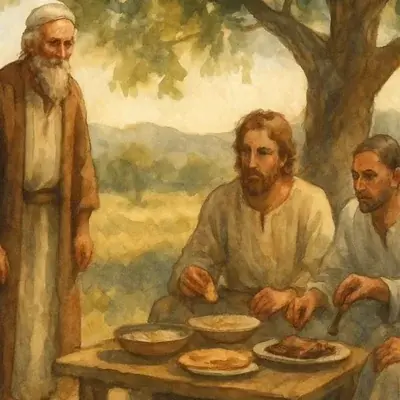
Yahweh appears to Abraham in human form and announces Isaac’s birth within a year. Abraham intercedes for Sodom, appealing to Yahweh’s justice and mercy. The conversation exposes both divine righteousness and patient compassion toward sinners.
Abram’s Faith, His Failure, and God’s Promise
Genesis 18 unveils the character of Yahweh as both merciful and just, drawing near to His covenant people while upholding righteousness.
The chapter opens with a theophany, a personal appearance of Yahweh.
Unlike previous encounters, where God spoke in visions or through His voice, here He comes in physical form, accompanied by two men later revealed to be angels.
This is a striking display of His relational nature. This personal encounter sets the stage for two intertwined truths: Yahweh blesses those who love Him, even when their faith falters, and He judges the wicked with perfect justice.
Abraham’s response to the visitors, his intercession for Sodom, and Yahweh’s reaffirmation of the covenant promise reveal a God who is personally invested in His people and unwavering in His justice.
The chapter’s theological heart lies in verse 19, where Yahweh’s purpose for Abraham, to teach righteousness and justice, shapes a people who reflect His character. This chapter shows both Yahweh’s mercy toward Abraham and Sarah, His justice against Sodom, and His covenant call for His chosen people to live rightly and to know the character of the God they serve.
As Abraham sits at the entrance of his tent, he looks up and sees three men standing before him, and we are drawn into a lengthy display of hospitality from Abraham and Sarah.
He runs to meet them, bows low to the ground, and offers water, rest, and a meal. This reflects the kind of blameless walk Yahweh had called him to in the previous chapter.
Abraham moves quickly and personally, instructing Sarah to prepare fine flour and selecting a choice calf for the meal.
He brings curds and milk, then stands by while the visitors eat.
Everything about the scene highlights humility, generosity, and reverence. These are not empty rituals of welcome. They are a reflection of Abraham’s character. This is especially important considering Abraham probably does not know who the men are at this point.
Abraham’s hospitality reveals a heart shaped by faith in Yahweh. By welcoming strangers, Abraham unknowingly hosts angels, and the God who called him.
His actions embody the “way of Yahweh” later articulated in verse 19: righteousness and justice expressed through love and service. It demonstrates the obedience that Yahweh desires from His covenant people.
This scene sets the stage for Yahweh’s revelation, showing that covenant blessing flows to those who love Him, even imperfectly.
This is demonstrated as one visitor asks, “Where is Sarah your wife?” The question signals divine knowledge. If Abraham did not know who his visitors were up to this point, he certainly does now: “I will surely return to you at this time next year, and behold, Sarah your wife will have a son.”
This reaffirms the covenant promise of Genesis 17:16, now within Sarah’s hearing.
From the tent, she laughs, not in joy, but in disbelief, worn out by years of barrenness and her husband’s age.
Her laughter echoes Abraham’s in Genesis 17:17. Both reveal human weakness in grasping God’s power.
Yahweh responds directly: “Why did Sarah laugh? … Is anything too difficult for Yahweh?”
Yahweh’s power transcends natural barriers, whether barrenness or age, just as it created the world from nothing. And this is evidently the entire point of the waiting. The delay demonstrates Yahweh’s complete power over the promises and the blessing.
Sarah’s denial, “I did not laugh,” is met with gentle truth: “No, but you did laugh.”
Yahweh sees her heart, but is compassionate and does not withdraw the promise. This reveals the grace of God. His blessing rests on His faithfulness, not the strength of human faith.
Yahweh’s personal appearance and words to reaffirm the promise show His commitment to those who love Him, even when their faith falters.
Sarah’s laughter, like Abraham’s before her, reveals the limits of their faith, but Yahweh does not revoke His promise. Instead, He meets their weakness with grace, preparing them for the covenant’s fulfilment through Isaac.
As the visitors prepare to leave, Yahweh draws Abraham into His confidence: “Shall I conceal from Abraham what I am about to do?”
This rhetorical question reveals the depth of the covenant relationship.
Verse 19 reveals its purpose: “For I have known him, so that he may command his children and his household after him, that they keep the way of Yahweh to do righteousness and justice, so that Yahweh may bring upon Abraham what He has spoken about him.”
Here, “known” signifies covenantal election, a relational bond rooted in Yahweh’s choice.
Abraham is not merely a recipient of promises, but a partner in God’s plan to shape a people who reflect His character.
The “way of Yahweh” is defined as righteousness and justice, attributes that govern His actions and must mark His people.
Abraham’s role is to teach these virtues, ensuring that his household lives in covenant obedience.
Abraham’s obedience in hospitality models the faith that trusts Yahweh’s promises and lives out His righteousness.
Verse 19 is the theological heart of Genesis 18, linking personal blessing, Isaac’s birth, to corporate responsibility, teaching justice. It reveals why Yahweh includes Abraham in His plans: to form a people who embody His character, in contrast to the wickedness of the world, as seen in Sodom. This covenant call underscores that Yahweh’s blessings carry the expectation of righteous living.
Yahweh’s purpose for Abraham goes beyond personal blessing. It extends to the nations. In choosing Abraham, Yahweh commits to forming a people who not only walk in His ways, but reveal His character to the world.
The promise of Genesis 12:3, that Abraham will be a blessing to all the families of the earth, is not fulfilled through material prosperity, but through the transmission of divine truth, righteousness, justice, mercy, and love, the fruit of being in relationship with the covenant God.
Abraham’s household is to reflect Yahweh’s own nature, so that the nations might come to know the God who judges with equity and blesses with grace. In this way, Abraham’s life becomes a witness, and his descendants a light, drawing the world toward the God who has made Himself known.
Yahweh is therefore going to provide an object lesson for Abraham that reveals the two ways to live.
As the men turn toward Sodom, Yahweh reveals His intent: “The outcry against Sodom and Gomorrah is great, and their sin is exceedingly grave.”
This echoes Genesis 11:5, where He “came down” to see the tower of Babel. Yahweh says, “I will go down now and see.”
His judgment is never hasty or distant, but deliberate and personal, rooted in full knowledge. Sodom’s wickedness demands justice, and Yahweh’s appearance to Abraham allows him to witness God’s righteous judgment.
Abraham remains before Yahweh as the two angels depart, initiating one of Scripture’s most remarkable prayers.
“Will You indeed sweep away the righteous with the wicked?” he asks, appealing to Yahweh’s character: “Shall not the Judge of all the earth do justice?”
This bold yet humble plea reflects Abraham’s trust in Yahweh’s righteousness.
Starting with fifty righteous people, Abraham intercedes, lowering the number to ten, and each time Yahweh affirms He will spare the city for their sake.
This exchange reveals Yahweh’s patience and justice. He will not destroy the righteous with the wicked.
The dialogue teaches Abraham, and his descendants, that Yahweh’s justice is perfect. He will preserve the righteous, even if only a few remain.
Sodom’s judgment serves as a covenant lesson. Wickedness cannot stand, but Yahweh’s righteousness ensures the godly are not forgotten.
Abraham stops at ten, perhaps because he is focusing on Lot’s family, but the principle is clear. Yahweh’s justice is perfect, never sweeping away the innocent with the guilty.
In summary, Genesis 18 reveals Yahweh as the covenant God who blesses and judges.
In the tent, He reaffirms the promise of a son to Sarah, despite her doubting laughter, showing that His blessings rest on His faithfulness, not human perfection.
On the hill, He reveals Sodom’s judgment, teaching Abraham that righteousness and justice define His character and must mark His people.
Through both mercy and judgment, Abraham learns what it means to follow Yahweh and what awaits those who turn from Him.