
Genesis 10
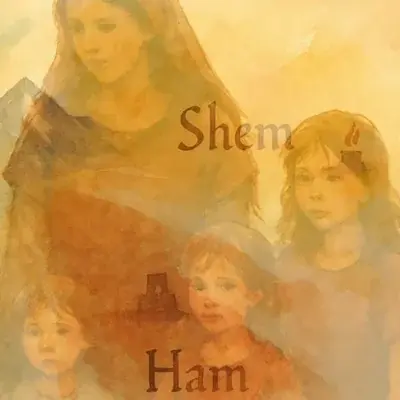
What does Genesis 10 really teach us about the origin of the nations? Often overlooked as a dry genealogy, Genesis 10—also known as the Table of Nations—is a foundational chapter in understanding God's global purpose, the unity of mankind, and the spread of humanity after the flood.
The Table of Nations, God’s Global Purpose, and the Origin of the Nations
Genesis 10 comes after judgment, deliverance, and a new beginning. Mankind has passed through the waters of the flood, and the world has been washed clean of its violence, but not of sin. Noah and his family have stepped out into a renewed earth under God’s blessing, with the same command once given to Adam: “Be fruitful and multiply and fill the earth.”
What follows in this chapter is the outworking of that command. The nations begin to spread. Families grow into peoples. And yet, the story we have been tracing of promise, rebellion, and God’s unfolding plan of redemption continues. This is not a break in the story, but the next movement in it.
At first, Genesis 10 may seem like a dry genealogy, a list of ancient tribes scattered across unfamiliar lands. But every word of Scripture is God-breathed, and this chapter plays a key role in the structure and theology of Genesis 1–11. It is often called the table of nations, and rightly so, for it maps out the peoples descended from Noah’s sons, Japheth, Ham, and Shem, not merely as a historical record, but as a theological statement about the world that God rules and the gospel He is unfolding.
It begins by placing Japheth first, though in later genealogies Shem is given prominence. The sons of Japheth represent the coastlands and the distant peoples, those who would populate the wider world to the north and west. The Greeks come from Javan, the Medes from Madai, and the Cimmerians are the descendants of Gomer, among others. Their names trace the spread of civilisation into what we now know as Europe and parts of Central Asia.
These are not forgotten peoples in God’s purposes, though they remain distant from the central story of redemption until the New Testament. They are part of the world God made, scattered into their lands, everyone according to his tongue, according to their families, into their nations. This detail prepares us for the events of Babel in chapter 11, reminding us that division and dispersion are not accidents of history, but the result of God’s sovereign will.
The sons of Ham in verses 6 to 20 form a more immediately significant group in the biblical narrative, often in tension with God’s people. From Cush and Mizraim come the great civilisations of Africa and Mesopotamia, Egypt, Assyria, and Babel, all of which become symbols of worldly power and rebellion against God.
Nimrod, a son of Cush, is described as a mighty hunter before Yahweh, a phrase that can imply either fame or defiance, or perhaps both. The cities Nimrod establishes will later be judged by God for their pride and violence. Nimrod becomes a prototype of human kingship that exalts itself against divine rule. Mizraim fathers the Philistines, while Canaan’s descendants include the Jebusites, Amorites, and other peoples who will fill the land promised to Abraham.
These genealogies are not merely geographic. They are morally charged. The issue is not ethnicity, but covenant alignment. Those who exalt themselves in pride stand under judgment, while those who fear Yahweh may yet be drawn in. Rebellion against God often becomes generational, as families and nations harden themselves over time. The enemies of God’s people are not random, but trace back to specific people who have turned from Him.
Even so, God is patient. He allows these nations to rise, to build, and to grow. His judgment, when it comes, is never hasty.
The line of Shem in verses 21–31 is given special attention, and rightly so, for this is the line of promise we have traced from Genesis 3. Shem is called the father of all the children of Eber, and Eber is the forefather of Abram, later Abraham. Through Arpachshad, Shelah, and Peleg, the line continues until we reach the family that God will call out of and make a blessing to the nations.
The mention of Peleg, “for in his days the earth was divided,” probably refers to the dispersion at Babel, hinting that the narrative will now return to explain this division more directly. Joktan, Peleg’s brother, fathers many Arabian tribes, including Sheba and Havilah. But the line of redemptive focus narrows through Peleg, as Genesis 11 will show.
Even within Shem’s line, election is at work. Not all who descend from Shem are chosen, but God preserves a thread, a line of faith and promise that will lead to the Messiah.
It is worth noting that this chapter includes exactly 70 names, a detail that is not accidental. Throughout Scripture, the number 70 carries a sense of fullness or symbolic completeness. This is a curated list. We are not meant to think this is every nation that ever existed, but a representative picture of the world as it was known from the vantage point of ancient Israel. It is a theological table, not a census.
We can safely say that peoples who settled further afield, whether in India, East Asia, the Pacific Islands, or the Americas, are not forgotten or excluded. They simply fall outside the immediate scope of this redemptive geography.
The point is not to locate every modern ethnicity in the list, but to affirm that all people descend from the same family and are included in the sweep of God’s sovereign purposes. The gospel, which will come through the line of Shem, is for them too.
This chapter does something profound in the flow of Genesis. It provides the first full theology of nations. All peoples, regardless of geography or culture, descend from a single family. This affirms the essential unity of mankind. There is no room for ethnic pride, racism, or the assumption that God is tribal. The God who created all nations is the God who will one day redeem them.
Genesis 10 reminds us that God’s plan is global from the beginning. The gospel is not a plan B. The scattering of nations anticipates the gathering of nations under Christ.
This chapter also reveals the sovereignty of God. He determines the borders, the migrations, and the languages. The same God who flooded the earth now repopulates it. The world is not out of control. It is unfolding under His hand.
When Paul the Apostle preaches to the Athenians in Acts 17, he is preaching Genesis 10, that God made from one man every nation of mankind, having determined their appointed times and the boundaries of their habitation, that they would seek God. Even the scattering of Babel in chapter 11 will be turned to a redemptive end.
Finally, Genesis 10 looks forward to Revelation 7. John sees a great multitude from every nation, tribe, people, and language gathered around the throne of the Lamb. The names listed here, some known, some obscure, will one day be represented there. Many of these nations become enemies of God, but people from all these nations will be redeemed.
Egypt will one day be called “My people,” says Isaiah 19:25. Assyria will be blessed. The coastlands of Tarshish will send messengers, says Isaiah 66:19. What begins in the scattering of Genesis 10 and the judgment of Babel in Genesis 11 is ultimately reversed in Christ.
So Genesis 10 is not a mere record of ancient peoples. It is a theological map, a declaration that God rules the nations, that He remembers His promises, and that through one chosen line, He will bring salvation to all the families of the earth.