
Genesis 17
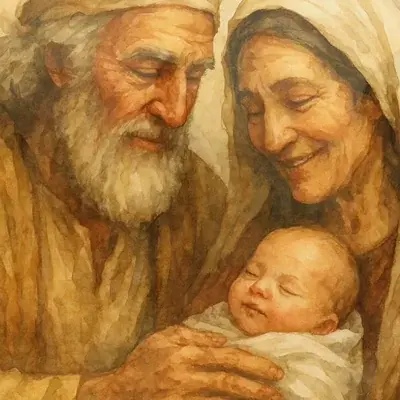
Yahweh renews His covenant with Abram, giving him the name Abraham and instituting circumcision as its sign. The promise narrows to Sarah’s son, Isaac, through whom nations and kings will come. Covenant obedience is sealed with the command to walk before Yahweh and be blameless.
Covenant, Circumcision, Yahweh renames Abram to Abraham
After the failed attempt to produce the promised seed through Hagar in Genesis 16, thirteen years of silence follow before the events of Genesis 17.
Abram is now ninety-nine. Sarai remains barren, and the son born through human striving is not the promised seed.
Chapter 16 was not the fruit of faith, but a turn away from it, a lapse from the trust Abram displayed in Genesis 15:6.
Yahweh had not spoken in thirteen years. Now, with age advanced and all human options closed, Yahweh appears. His words pierce the silence: “I am El Shaddai, God Almighty. Walk before Me and be blameless.”
This is not a new covenant, but a renewal and deepening of the one already given. In Genesis 15, Yahweh had bound Himself by oath to give Abram seed and land.
That covenant was marked by Yahweh alone passing through the torn animals, showing that the fulfilment would rest entirely on His own faithfulness.
The name El Shaddai, used here for the first time, directs Abram’s attention to Yahweh’s power and all-sufficiency. Only Yahweh can bring life from barrenness. The lesson of Genesis 16 must be learned: You cannot force Yahweh’s hand.
Abram is called to live before Yahweh in covenant integrity, not sinless perfection, but sincere, whole-hearted faithfulness. What is being shown here is not a movement from grace to law, but the nature of faith itself, faith that walks, that trusts, and that obeys.
The heart of the chapter is covenant. The word “covenant” appears thirteen times. Yahweh is not renegotiating, but restating, clarifying, and indeed escalating the blessing He promised earlier.
Abram will not merely father a son, but will become the father of a multitude of nations. His name is changed to reflect this: from Abram, “exalted father,” to Abraham, “father of a multitude.”
The renaming signals Yahweh’s authority. As in creation, where Yahweh named light and darkness, so here He names His servant, shaping his identity according to His purpose. The same is true of Sarai, whose name becomes Sarah.
Yahweh makes the change, not Abram, not Sarai, because He alone determines who belongs to the covenant and how His promises will unfold.
The chapter unfolds in three divine speeches. In verses 1–8, Yahweh introduces Himself, commands blamelessness, and reaffirms the covenant with greater scope. Abraham will be exceedingly fruitful, kings will come from him, and the land of Canaan will be an everlasting possession.
The second speech, verses 9–14, introduces the sign of the covenant, circumcision. This forms the structural and theological centre of the chapter.
The third speech, verses 15–21, reaffirms that the promise will come through Sarah and names the child to be born: Isaac.
The chapter closes with Abraham’s immediate response. He obeys that very day.
Circumcision is not the covenant itself, but the sign of the covenant. Yahweh makes this clear in verse 10: “This is My covenant, which you shall keep… every male among you shall be circumcised.”
And again in verse 11: “It shall be the sign of the covenant between Me and you.”
This distinction matters. Circumcision does not initiate the covenant or secure the promise. It is a visible mark placed on the flesh, a sign that this household belongs to Yahweh.
The act itself is fitting. It marks the part of the body through which the promised seed will come.
Every generation is marked to show that it is Yahweh’s blessing by which they continue.
This sign carries weight. In verse 14, Yahweh warns that any uncircumcised male “shall be cut off from his people; he has broken My covenant.”
For the first time, covenant disloyalty is directly tied to exclusion. Circumcision is not optional. To reject it is to reject the covenant itself.
And yet the danger runs both ways. A man may be circumcised outwardly and still be unfaithful. If he does not walk before Yahweh in blamelessness, the sign is empty.
The demand is not mere ritual, but covenant allegiance. Later Scripture puts it plainly: “Circumcise your hearts,” Moses says this in Deuteronomy 10:16 and again in 30:6. The physical sign must match inward devotion.
This tension, between outward belonging and inward faithfulness, runs throughout the chapter. It helps explain why not all who are circumcised are heirs of the promise.
Ishmael is circumcised, but the covenant will not pass through him. Later, Esau will be circumcised, but Jacob will be chosen.
This is why it is so important to connect verses 1 and 11. Yahweh’s covenant belongs to those who walk before Him in faith.
Circumcision is the sign of that relationship, not its cause. To refuse the sign is to reject the covenant, but to bear the sign without living in covenant faithfulness is to nullify its meaning.
The sign cannot be separated from the life it signifies. This becomes even clearer when we remember that Abraham believed God in Genesis 15 and was counted righteous before he was ever circumcised.
Circumcision confirms a promise already given. It does not create it.
There is also a striking irony in how the promises are structured. Yahweh insists that the promised child will come through Sarah, not Hagar, and that the sign of circumcision must extend even to the sons of foreigners and slaves.
Ishmael is included in the covenant sign, but not in the covenant line. Yahweh’s kindness to Hagar’s son remains, but the covenant will pass through Isaac.
The name of this child is given before he is conceived: Isaac, meaning “laughter.”
It is interesting to contrast this chapter with the previous chapter, Genesis 16. There, Sarai took matters into her own hands. Here, Yahweh reasserts control.
He names both Abraham and Sarah, and He names the promised son who is not even conceived yet. He reestablishes His covenant, not based on human initiative, but according to His own will.
Yahweh’s plan moves forward despite the wavering faith of His people. But obedience still matters. Abraham must circumcise every male in his house. He must trust El Shaddai, the God who brings life from a barren womb.
So the chapter ends with action. In faith, Abraham obeys immediately. That very day, he and every male in his household are circumcised. There is no delay. After the stumbling of Genesis 16, we now see covenant obedience. It is not flawless faith, but it is real. Yahweh has spoken, and Abraham responds.
Genesis 17 looks back to the sovereign grace of Genesis 15 and corrects the self-reliance of Genesis 16. It establishes circumcision as the sign of Yahweh’s covenant, not as a work that earns blessing, but as a marker of belonging to the God who gives it.
It points forward to Isaac, the child of promise, who will arrive in fulfilment of Yahweh’s word.
The sign does not guarantee faith. Not all who bear it will prove loyal. But those who walk before El Shaddai, who trust His power, receive His promises, and live as His covenant people, will inherit what He has sworn to give. They are His everlasting possession.