
Genesis 4
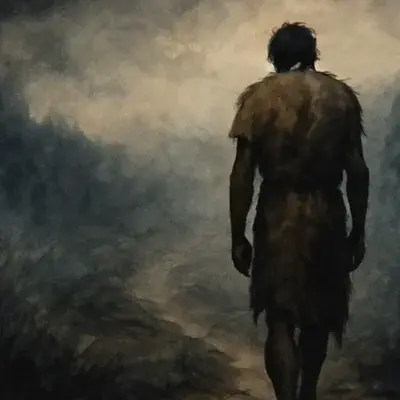
Genesis 4 traces the rapid escalation of evil after the fall. What begins with flawed worship quickly descends into rage, murder, and the birth of a godless civilisation. Cain’s rejection of Yahweh leads to exile, and his descendants multiply not holiness, but violence and pride. Lamech boasts of his brutality. The world is spiralling.
The Escalation of Evil and the Hope of a New Seed
Genesis 4 begins with Adam and Eve living outside the garden. They are under the curse, cast out from Eden, and yet not abandoned by Yahweh. The story continues not with Adam, who, after blaming both God and the woman in chapter 3, is never recorded speaking again, but with Eve. Her voice returns, and this time it is not shaped by confusion or blame, but by faith.
When she gives birth to a son, she says, “I have gotten a man with the help of Yahweh.” Though she had once listened to the serpent, she now acknowledges Yahweh as the giver of life. Even in exile, she recognises His mercy. Eve then gives birth to another son, Abel. His name means vapour or breath, which foreshadows the brevity of his life.
The two sons follow different vocations. Cain works the ground, and Abel keeps flocks. Nothing in the text criticises either of these roles. The difference appears when they bring their offerings to Yahweh. Cain brings an offering from the fruit of the ground. Abel brings the firstborn of his flock and the fat portions, the best and most costly parts. While Cain simply brings something, Abel brings what is truly sacrificial.
There is no mention that Cain’s offering involved first fruits or any deliberate honour. Yahweh regards Abel and his offering, but not Cain and his. The distinction is personal and deliberate. Yahweh sees not only what is offered, but the heart of the one who brings it. Abel offers in faith, trusting and honouring Yahweh, and his worship is accepted. Cain’s offering lacks faith, and Yahweh has no regard for it.
Rather than humbling himself, Cain becomes angry. His face falls, but he makes no attempt to examine his own heart. What could have been a moment of repentance becomes the beginning of a harder path. Yahweh speaks to him with both warning and invitation: “Why are you angry? If you do well, will not your countenance be lifted up?” This is not a demand for personal strength, but a call to return to what is right.
The issue is not simply emotion. It is a refusal to listen to Yahweh. Then comes the warning: “Sin is crouching at the door, and its desire is for you, but you must rule over it.” Sin is pictured like a predator, eager to overpower him. The word desire echoes Genesis 3:16, where it points to relational disorder and the struggle for dominance. But Cain’s struggle is not just with emotion or temptation. It is with the truth. The way forward is not through effort or willpower, but through returning to covenant with Yahweh, the very God who is speaking to him now by name. If Cain had acknowledged that his resentment was evil and turned back to Yahweh in humility, sin would not have mastered him. But instead, he hardens his heart, rejects the truth, and drifts further from the God who warned him.
Then Cain speaks to Abel, leads him into the field, and kills him. Not because of a personal dispute, but because Yahweh had accepted his brother’s worship and rejected his own. Abel dies not for wrongdoing, but for doing what is right. Cain’s hatred is directed not at a competitor, but at a man whose faith exposed his unbelief. Abel becomes the first martyr, killed for worshipping the covenant God in faith.
Yahweh comes to Cain just as He came to Adam and Eve. He asks, “Where is Abel, your brother?” This is not because Yahweh lacks knowledge, but because He is giving Cain a chance to speak the truth. Cain lies: “I do not know.” Then he adds, “Am I my brother’s keeper?” He mocks God and refuses responsibility, but Yahweh already knows. He replies, “The voice of your brother’s blood is crying out to Me from the ground.”
Abel’s death is not silent. It bears witness. Cain tried to bury the evidence, but it cannot be hidden. The ground itself testifies against him. Judgment follows. Yahweh says, “Now you are cursed from the ground.” This is different from what was said to Adam. Adam was told the ground would bring forth thorns, and he would eat by the sweat of his brow. But Cain is told that the ground will no longer yield its strength to him. He will be cut off from productivity altogether. He will be a restless wanderer on the earth. The very thing he depended on, cultivating the ground, is taken from him.
Cain responds not with confession, but with self-pity. He says, “My punishment is too great to bear.” He complains that he will be driven from the face of the ground and from the face of Yahweh, but he does not say, “I have sinned.” He is afraid of being killed, though he himself showed no hesitation in killing his brother. His words are focused entirely on what will happen to him. He shows no grief over Abel, no sorrow for offending Yahweh.
Still, Yahweh is merciful. Even though Cain is unrepentant, Yahweh does not hand him over to vengeance. He places a mark on Cain to protect him. He announces that vengeance will be taken sevenfold against anyone who kills him. This shows that Yahweh values life and does not want the world to be consumed by endless revenge.
Then we are told that Cain went out from the presence of Yahweh. This is not just a change in location. It is a spiritual reality. Cain is alienated from God. He settles in the land of Nod, east of Eden. His physical movement reflects his spiritual condition. He walks away from the presence of the one who gave him life, warned him, and even spared him.
Cain’s descendants multiply. They build cities, raise livestock, develop music, and invent tools of bronze and iron. Culture and technology advance. But these developments are not signs of spiritual progress. There is no mention of Yahweh in the line of Cain. Civilisation grows, but it grows away from God.
Lamech, a descendant of Cain, demonstrates the escalation of sin. He takes two wives, breaking Yahweh’s design of one man and one woman. He boasts to his wives that he has killed a man for wounding him, a boy for striking him. He uses the language Yahweh spoke over Cain and twists it into a personal threat: “If Cain is avenged sevenfold, then Lamech seventy-sevenfold.” Lamech takes God’s mercy to Cain and turns it into a reason to boast about his own violence.
But the chapter does not end in darkness. Adam and Eve have another son, and Eve says, “God has set for me another seed in place of Abel, for Cain killed him.” Seth is Yahweh’s provision. He becomes the one through whom the promise continues. The worship that was lost with Abel is restored through Seth.
With the birth of Enosh, we are told, “Then men began to call upon the name of Yahweh.” This is the covenant name of God. Public worship begins again. In a world where sin and pride are multiplying, a faithful remnant still remembers Yahweh.
Abel dies as the first martyr. He offers what is pleasing to God, and he dies for it. His death is not forgotten. Later Scripture calls him righteous and says his blood still speaks. His story is not about sibling rivalry. It is about true worship, jealousy, violence, and God’s continuing mercy.
Cain rejected the warning of Yahweh, murdered the one who worshipped Him, and left His presence. But Yahweh was not done. Through Seth, a new line begins, one that calls upon the name of Yahweh and carries forward the hope of the promise.