
Genesis 6
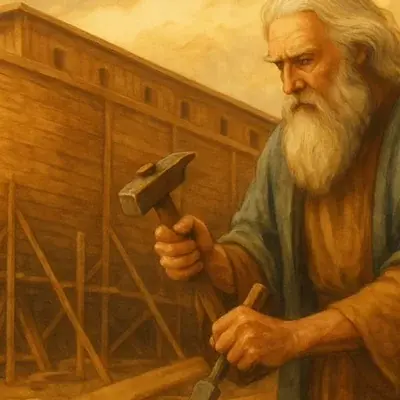
Genesis 6 reveals a world filled with corruption, where men exalt themselves, marriage is defiled, and violence spreads across the earth. But in the midst of judgment, God preserves His purpose. This chapter shows us the depth of mankind’s rebellion and the grief it brings to God. Yet even as He announces the destruction of all flesh, Yahweh sets apart one man—Noah. Not because of merit, but because of grace.
The Rise of Corruption and God’s righteous judgment
Genesis 6 opens with a world turning further from God. As men multiply on the face of the land, so does their corruption. The first example is the breakdown of marriage. Genesis 6:2 says, “The sons of God saw that the daughters of men were good in appearance, and they took wives for themselves, whomever they chose.” This is not a picture of covenant marriage. It is exploitation.
These men take women as they please, with no concern for love, honour, or partnership. The design of one man and one woman is replaced by power and domination. Marriage has become a tool of lust and power. Some people think the sons of God here are fallen angels, but Scripture does not support the idea that angels can reproduce. Jesus says angels do not marry, and Genesis chapter 1 tells us all creatures reproduce according to their kind.
It is better to understand the phrase “sons of God” as referring to rulers, men who claimed divine status, as was common in the ancient world. For example, Egyptian pharaohs were called sons of Ra, and other kings claimed to descend from the gods. These men exalted themselves as gods and placed themselves above others.
The phrase sons of God may also carry an ironic tone. Their actions reflect the serpent’s lie in Genesis 3:5: “You will be like God.” Yahweh speaks: “My Spirit shall not strive with man forever because he indeed is flesh. Nevertheless, his days shall be 120 years.” This may refer to the time remaining before the flood or to a future limit on human life. Either way, God sets a boundary. He will not tolerate rebellion forever. His Spirit has restrained evil, but that restraint will not last.
In verse four, their children are called mighty men of old, men of renown, but the text does not praise them. Their reputation reflects worldly strength, not righteousness. They are remembered for conquest and violence. Their legacy contributes to a world rebelling against its Creator.
This is summed up in the following verse: “Then Yahweh saw that the evil of man was great on the earth and that every intent of the thoughts of his heart was only evil continually.” This is total depravity. Every thought is opposed to God’s will. What was once called very good is now thoroughly corrupt.
In verse 6, we read, “Yahweh regretted that He had made man on the earth, and He was grieved in His heart.” God is not indifferent to sin. He formed man for fellowship, and now His image bearers spread evil, lust, and violence. His response is sorrow, not surprise.
And so God passes judgment: “I will blot out man whom I have created from the face of the land, from man to animals to creeping things and to birds of the sky.” This judgment is not limited to mankind. It affects all creation. What God made in Genesis 1 will now be undone. Just as water covered the world in Genesis 1:2, the earth will return to water.
However, there is a ray of hope. Verse 8 says, “But Noah found favour in the eyes of Yahweh.” This is not a reward for good behaviour. It is the result of God’s kindness. The word favour points to grace. God chooses to preserve life through one man, not because of merit, but because He is faithful to His purpose.
Verse 9 begins a new section: “These are the generations of Noah.” From this point forward, we see how God will act through one man. We are told that Noah was a righteous man, blameless among those in his generations. Noah walked with God. This does not mean he was sinless. It means his life was marked by faith. The phrase “walked with God” echoes Genesis 5, where it described Enoch. It also recalls Eden, where God walked with Adam before the fall. Noah’s obedience flows from trust.
The rest of the world is described in verses 11 and 12 as corrupt before God and filled with violence. God sees a world that has abandoned justice and defiled what He made. Human rebellion is not only against God’s word, but also against the order of creation itself.
In verse 13, God declares His sentence: “The end of all flesh has come before Me.” The violence of mankind has reached its limit. The earth will be judged. But alongside the announcement of judgment, God gives Noah a task that will preserve his life and the life of his family.
God provides the design and the dimensions of the ark. It is to be made of gopher wood and sealed with pitch. Interestingly, the Hebrew word for pitch shares a root with the word for atonement. The pitch will act as a covering to protect Noah and his family from the flood. The ark will be the vessel by which the mercy of Yahweh is seen in the midst of judgment.
In verse 18, God says, “I will establish My covenant with you.” This points back to Genesis 3:15, where God promised that the male offspring of the woman would defeat the serpent. That promise has not been forgotten. God will preserve the line of the seed through Noah and his family.
God tells Noah he must bring two of every kind of animal into the ark. The repeated phrase “after their kind” echoes the language of creation. God is not abandoning the creatures He made. He is preserving them.
The chapter ends with a summary. Genesis 6:22 says, “Thus Noah did according to all that God had commanded him, so he did.” This simple sentence points to Noah’s obedience and trust in God. His actions are not the cause of God’s favour. The faith comes first, then the actions.
As we read through Genesis 6, we should be struck by both God’s sovereign judgment and His mercy. The world is filled with evil, and God has passed judgment on it and will bring it to an end. But the covenant promise of the man who will crush the serpent still stands. Yahweh is the faithful covenant keeper. So the line of the seed must continue. Through Noah, God will preserve life and carry forward His plan to redeem mankind.