
Exodus 18
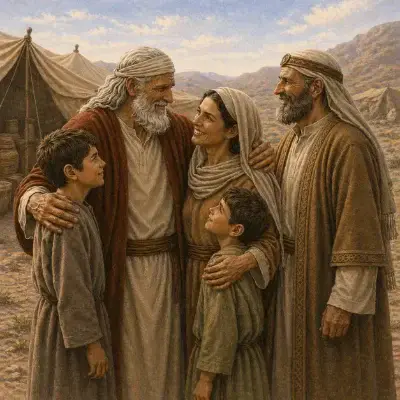
A cursory reading of Exodus 18 might make it seem like little more than a family reunion and a conversation between Moses and his father-in-law. But the chapter is doing far more than that. Before Sinai. Before the law. Before Israel is organised as a nation, the good news of what Yahweh has done goes out beyond Israel and is received with joy by a man from the nations.
Exodus 18 Explained: The Good News of Yahweh’s Salvation Reaches the Nations
Exodus 18 shows us how God’s great rescue of His people doesn’t stop at Israel—it’s meant to reach far beyond them, just as He promised Abraham in Genesis chapter 12.
At the beginning of the chapter, we hear that Jethro, Moses’ father-in-law and a priest from Midian, gets word of everything God has done for Moses and Israel: how the Lord brought His people out of Egypt.
The focus here isn’t on the greatness of Moses. It’s all on what Yahweh has done. This news is spreading from Israel’s camp, into the outside world.
Before we see their reunion, the Bible reminds us of Moses’ two sons and what their names mean.
Gershom means I have been a sojourner in a foreign land: a reminder of Moses’ years as an outsider. Eliezer means the God of my father was my help and delivered me from the sword of Pharaoh: pointing back to God’s faithfulness in saving Moses long ago.
These names aren’t just family details; they show that the same God who kept Moses safe in hiding is the One who has now powerfully delivered the whole nation.
When Jethro arrives at the mountain of God, Moses greets him with respect and affection: he goes out to meet him, bows down, kisses him, and they ask about each other’s well-being.
Then, inside the tent, Moses tells Jethro the full story: God’s judgments on Pharaoh, the struggles along the way, and how Yahweh rescued them at every step. He doesn’t sugarcoat it: the story includes hardship as well as victory, because God’s faithfulness shines in both.
Jethro listens, rejoices in all the good Yahweh has done, and blesses Yahweh’s name, declaring, “Blessed be Yahweh who delivered you from the hand of the Egyptians and from the hand of Pharaoh, and who delivered the people from under the hand of the Egyptians. Now I know that Yahweh is greater than all the gods; for in this matter they acted presumptuously against the people.”
Jethro’s speech isn’t just polite admiration: It’s a confession of faith. Jethro recognizes that Yahweh has shown His supreme power over Egypt’s gods, and those gods have been proven powerless.
This is exactly what Yahweh said He would do. Back at the burning bush, when He first called Moses, Yahweh said He knew the king of Egypt would not let the people go unless compelled by a mighty hand, so He would stretch out His hand and strike Egypt with all the wonders He would do in it, and after that Pharaoh would let them go. You can find that in Exodus chapter 3 verses 19 and 20.
Then, during the plagues, Yahweh told Pharaoh, But for this purpose I have raised you up, to show you My power, so that My name may be proclaimed in all the earth.
That’s in Exodus chapter 9 verse 16.
Long before that, God made a promise to Abraham, saying, I will bless those who bless you, and him who dishonors you I will curse, and in you all the families of the earth shall be blessed. That’s Genesis chapter 12 verse 3.
Here, through Jethro, a man from outside Israel, we see the first clear sign of that promise coming true: a non-Israelite hears of God’s mighty acts, confesses His greatness, and blesses His name.
The Bible is showing us a clear progression in Jethro. He first hears what Yahweh has done. He then rejoices in it. He goes on to confess that Yahweh is greater than all other gods. That confession leads to worship, as he brings sacrifices before Yahweh.
And after this, Jethro speaks with wisdom that strengthens God’s people. Knowledge leads to confession. Confession leads to worship. Worship bears fruit in Godly wisdom and action.
After Jethro’s confession of faith, he brings a burnt offering and sacrifices to God, and then Aaron and all the elders of Israel join him in a meal before Yahweh. This shared meal shows acceptance and fellowship.
A foreign priest is now worshipping Yahweh rightly, and Israel’s leaders recognize it. The nations aren’t being swallowed up into Israel here. Jethro will soon return home, but God’s saving power is already reaching outward, just as He promised.
The next day, the story shifts to everyday life. Jethro watches Moses judging the people’s disputes from morning till evening.
The work is right: Moses is teaching God’s statutes and making His will known, but the load is crushing. People wait all day, Moses grows exhausted, and the system is being pushed to breaking point.
Jethro asks the obvious question: Why are you doing this alone? Moses explains that the people come to seek God, and he shows them God’s laws.
Jethro doesn’t question Moses’ calling; he protects it. He says the thing Moses is doing isn’t good; not because the judgments are wrong, but because one man can’t carry it all. Moses will wear out, and so will the people.
His advice is simple and wise: Moses should keep teaching the people God’s ways, representing them before God, and handling the hardest cases. But capable men should share the load of everyday judging. These men aren’t picked for position or skill alone: they must fear God, be truthful, and hate dishonest gain.
In other words, leaders among God’s people must reflect His own character. Justice and godliness go hand in hand.
Jethro is careful. He says: If you do this thing and God so commands you. He doesn’t claim authority over Moses. He offers counsel, but it only stands if God approves. This shows that all wisdom among God’s people must bow to His will.
Moses listens to his father-in-law and does everything he recommends. He chooses able men and appoints them over groups of thousands, hundreds, fifties, and tens. They handle the people’s cases every day, bringing only the difficult matters to Moses. The burden is shared, the people are served better, and Moses can endure.
Then Moses let his father-in-law depart, and he went his way into his own land.
He returns to his own land having heard what Yahweh has done, confessed His greatness, worshipped Him, and received wisdom shaped by that knowledge.
Exodus 18 shows us the good news of Yahweh’s salvation moving outward and being received with joy. Jethro hears what Yahweh has done, and he responds with joy, confession, and worship. This is what the knowledge of Yahweh is meant to produce. When Yahweh saves, His name is proclaimed. When His name is proclaimed, it calls for faith and worship, even from outside Israel.
This chapter shows that Yahweh’s saving work has always been meant to be spoken, heard, and believed. The rescue from Egypt is not only for those who walked through the sea. It is a message that reaches the nations and calls them to recognise who Yahweh is. Jethro stands as the first clear example of this, a man who hears the report, confesses Yahweh’s greatness, and responds in worship.
At the same time, the chapter shows that true faith does not end with words. Jethro’s worship is followed by wisdom that strengthens God’s people. What Yahweh reveals about Himself bears fruit in how His people live together. Salvation leads to ordered life under God’s rule.
In this way, Exodus 18 prepares us to understand how Yahweh works in the world. He saves by mighty acts. He makes His name known through testimony. That testimony is received by faith. And that faith produces worship and a life shaped by God’s wisdom.
The God who delivered Israel from Egypt is a God who speaks good news, gathers worshippers, and forms a people who live under His rule. And from the beginning, that work was never meant to stop with one nation, but to reach all the families of the earth.