
Exodus 30
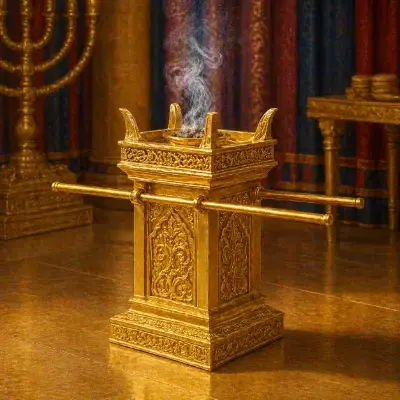
Exodus 30 adds further instructions that define how Israel approaches Yahweh in His dwelling. The altar of incense stands before the veil, continual fragrance rises before Him, and every life is counted with a ransom. The priests must wash before they minister, and everything set apart for Yahweh must be anointed as holy. The chapter gathers these elements into a clear pattern, showing that atonement, cleansing, and consecration are required if sinful people are to draw near to the God who dwells among them.
Exodus 30 Explained: Instructions for The Altar of Incense, Ransom, Washing, and Anointing
Exodus 30 continues the tabernacle instructions. It opens with the word “moreover,” showing that Yahweh is still adding to what He has already commanded. The dwelling place has been described, the priests appointed, and the consecration offerings commanded. Yahweh has declared that He will dwell among the sons of Israel and be their God. This chapter now gives further instructions that show how the people may approach the holy God who dwells in their midst.
The chapter begins with the altar of incense. Yahweh commands Moses to place it before the veil that stands before the ark of the testimony and the mercy seat, where He says, “There I will meet with you.” Aaron must burn fragrant incense on it every morning when he tends the lamps and again at twilight. As long as the lamps give light in the Holy Place, incense must rise continually before Yahweh throughout their generations.
The priest does not pass beyond the veil, but the incense does. Its fragrance rises into the space before Yahweh’s presence. Once a year, on the Day of Atonement, the high priest must put blood on the horns of this altar. Even the altar of incense must be atoned for with blood.
In the ancient world, incense was burned in temples and royal courts as a sign of honour and petition. In Israel, Yahweh strictly controls its use. Only authorised priests may burn it, only on this altar, only with this precise mixture, and never for ordinary purposes. The fragrance that fills Yahweh’s dwelling must not become common. When the smoke rises, it marks this place as Yahweh’s holy dwelling and the place where His priests minister before Him continually.
The chapter will return to the incense at the end and call it “most holy,” forming a frame around everything in between. Inside this frame Yahweh gives three instructions that together define the conditions for approaching Him.
When Moses numbers the sons of Israel, every man twenty years old or more must give a ransom for his life, a half-shekel of silver. The rich must not give more, and the poor must not give less. The point is not the amount but that every life requires a ransom.
This ransom is not a payment for specific sins. It is a covering price for each person’s life. It acknowledges that every Israelite belongs to Yahweh and depends on His mercy. Without this ransom, a plague could break out when the people are counted, recalling the judgment that fell on Egypt.
This echoes the deliverance from Egypt. Just as the blood of the Passover lamb covered the firstborn so that they did not die, this silver now covers each man when Israel is numbered. The payment prevents a plague and reminds Israel that their strength does not come from themselves. Every life must be covered. Every soul, rich or poor, stands equally before Yahweh and needs His protection.
Next, Yahweh commands Moses to make a bronze laver and place it between the altar of burnt offering and the entrance to the tent of meeting. A laver is a large basin filled with water where the priests wash their hands and feet before approaching Yahweh.
Aaron and his sons must wash from it whenever they enter the tent or approach the altar, so that they do not die. Yahweh repeats the warning. The layout teaches the lesson. The altar stands in the courtyard. Between the altar and the tent stands the laver. The priest moves from sacrifice to washing, then to service before Yahweh. He does not approach without cleansing.
Then Yahweh commands Moses to make the holy anointing oil according to a precise formula. It is used to anoint the tent of meeting, the ark, the table, the lampstand, the altar of incense, the altar of burnt offering, the laver, and all their utensils, together with Aaron and his sons. This anointing sets them apart as holy to Yahweh.
The oil itself is most holy. No one may pour it on an ordinary person or make the same mixture for personal use. Anyone who does so will be cut off from the people. The anointing marks what belongs to Yahweh and teaches the distinction between the holy and the common.
The chapter ends by returning to the incense. Moses must mix it from specific spices in equal measures, salted, pure, and most holy. Some of it is placed before the testimony in the tent of meeting, where Yahweh will meet with him.
Like the anointing oil, the incense must not be duplicated for personal use. Anyone who makes it for himself will be cut off. The fragrance that belongs to Yahweh’s presence must remain holy.
The structure of the chapter is deliberate. It opens and closes with incense. Inside that frame are the ransom, the laver, and the anointing oil. Together these instructions answer the central question: how may a sinful people approach the holy God who dwells among them?
The people must be ransomed. The priests must wash. The tabernacle and its servants must be consecrated. Incense must rise continually before Yahweh.
When the tabernacle instructions are viewed as a whole, there is a clear movement. Earlier chapters begin at the centre with the ark and move outward. This chapter moves inward, describing the way of approach. The people are counted and ransomed. Sacrifice is made at the altar. The priests wash at the laver. They enter the Holy Place to tend the lamps and burn incense before the veil. Beyond the veil stands the ark, where Yahweh says, “I will meet with you.”
Exodus 30 gathers the themes of approaching Yahweh. Lives require a ransom so that judgment does not break out. Priests must wash so that they do not die. The tabernacle and its servants must be set apart as holy. Incense rises continually before Yahweh. Through atonement, cleansing, holiness, and mediation, Yahweh shows His people the appointed way to draw near to Him.