Isaiah 52
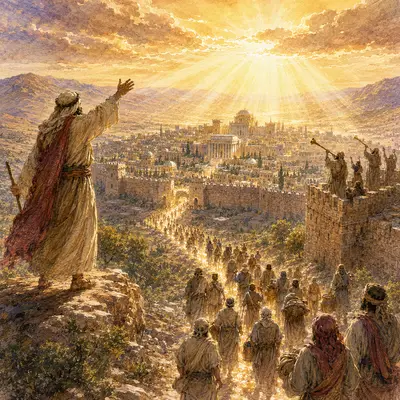
Isaiah 52 announces Zion's redemption, the good news that God reigns, Yahweh's return to His people, and the Servant who is exalted yet marred as He sprinkles many nations.

Old Testament
The book of Isaiah is one of the major prophetic books of Scripture, written in the context of Judah’s sin, political fear, covenant unfaithfulness, and coming judgment. Isaiah ministered in the days of Uzziah, Jotham, Ahaz, and Hezekiah, kings of Judah, during the rise of Assyria and before the later Babylonian exile. His message begins with Yahweh’s accusation against His people: “Sons I have reared and raised up, but they have transgressed against Me” (Isaiah 1:2). Isaiah therefore speaks first to a covenant people who have the temple, sacrifices, and religious language, but whose hearts and hands are defiled by sin.
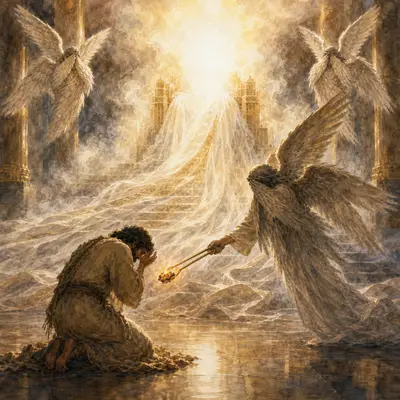
The central vision of the book is the holiness of Yahweh. Isaiah sees “the Lord sitting on a throne, high and lifted up,” while the seraphim cry, “Holy, Holy, Holy, is Yahweh of hosts; the whole earth is full of His glory” (Isaiah 6:1, 3). That vision explains the whole book. Yahweh is the Holy One of Israel, and because He is holy, He will judge the pride of nations and the sin of His own people. But His holiness also means He will cleanse, redeem, and preserve a remnant for Himself. Isaiah’s warnings are severe because sin is severe, but his promises are sure because Yahweh is faithful to His covenant.
Isaiah moves from judgment into comfort and salvation. The first major section exposes Judah’s rebellion, warns against trusting in man, and promises a coming Davidic King whose reign will bring righteousness and peace. Later, Isaiah speaks comfort to Zion and announces a new exodus, where Yahweh will redeem His people and reveal His salvation to the ends of the earth. At the centre of this hope stands Yahweh’s Servant, who is high and lifted up, rejected, pierced through for transgressions, crushed for iniquities, and made a guilt offering for sin. Isaiah shows that redemption will not come through human strength, but through Yahweh’s own saving work.
The book of Isaiah must be read in the light of Christ, because the New Testament repeatedly shows that Isaiah’s promises find their fulfilment in Him. He is Immanuel, the child born for us, the Son given to us, the Davidic King, the light to the nations, and the suffering Servant who bears the sins of the many. Isaiah has rightly been called “the gospel of the Old Testament,” because it declares with unusual clarity the holiness of God, the guilt of sinners, the necessity of substitutionary atonement, the reign of the promised King, the gathering of the nations, and the final hope of new heavens and a new earth.
Isaiah 52 announces Zion's redemption, the good news that God reigns, Yahweh's return to His people, and the Servant who is exalted yet marred as He sprinkles many nations.
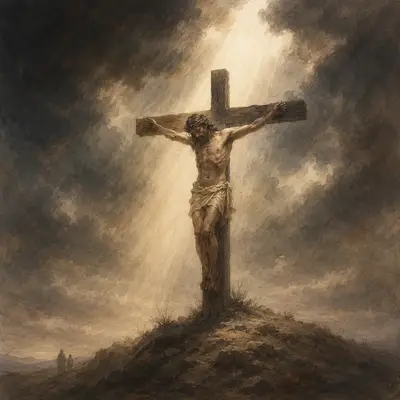
Isaiah 53 reveals the suffering Servant who bears sin, is pierced for transgressions, justifies the many, and intercedes for transgressors.