
Genesis 36
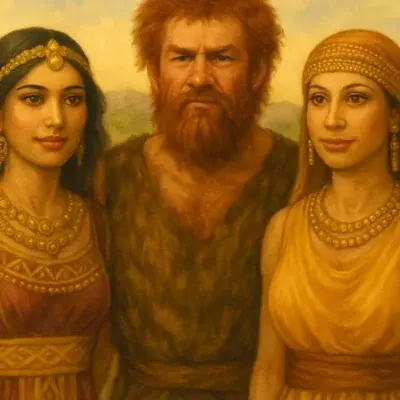
Genesis 36 records the generations of Esau, also called Edom. At first glance this chapter may seem like a long genealogy, but every word matters. Here we see the line of Esau established in the land of Seir, the names of his chiefs, and even the kings who reigned before Israel had a king.
Esau’s Line and God’s Promise of Nations
At first glance, Genesis 36 may look like a long list of names and places, but all Scripture is God-breathed and useful, and this chapter is no exception. When read alongside the earlier promises, this chapter shows that Yahweh’s word always comes true. It brings the story of Esau to its close, sets his nation firmly in place, and prepares the way for the remainder of Genesis to focus on Jacob’s sons.
The chapter begins with Esau’s marriages to the daughters of Canaan, unions that had grieved Isaac and Rebekah. From these wives came the sons who formed the beginnings of Edom. At this point, we should recall Yahweh’s word to Rebekah: “Two nations are in your womb, and two peoples will be separated from your body, and one people shall be stronger than the other, and the older shall serve the younger.” That prophecy now begins to take visible form. Esau and Jacob cannot remain together. Their possessions are too great, and moreover God has chosen one line and not the other.
Jacob remains in the land of promise while Esau departs to the hill country of Seir. The repetition in the chapter highlights this: Esau is Edom. The first part of the prophecy is fulfilled. Two nations have indeed come forth.
The genealogy then unfolds step by step. First the sons of Esau are listed. Then their descendants are traced, and from them chiefs arise. Finally, we read of kings ruling in Edom. The nation is fully established.
Here another promise comes into view, this time Yahweh’s word to Abraham: “I will bless her, and indeed I will give you a son by her. Then I will bless her, and she shall be a mother of nations. Kings of peoples will come from her.” That promise is fulfilled here in Esau. From Sarah’s womb came Isaac. From Isaac came Esau. And from Esau came kings.
The Bible presses the point home by adding, “These are the kings who reigned in the land of Edom before any king of the sons of Israel reigned.” To Israel, it may have looked as if Edom was ahead, but their kings die and are replaced in quick succession. Their reigns are temporary. Israel, still waiting for Yahweh’s appointed king, must learn to measure time by His promise.
The genealogy also pauses to mention the Horites, the original people of Seir. They too had chiefs, and their names are preserved here because Esau’s line absorbed them into Edom. Even the small detail about Anah finding hot springs may strike us as strange, but it grounds the record in real history. These were not unknown figures, but men and women known in their land, remembered for ordinary things.
For Israel, such details confirm that these were real neighbours. For us, they are reminders that Yahweh’s word unfolds in real history.
When the chapter is read in light of the wider promises, its purpose is unmistakable. Yahweh had said to Rebekah that two nations would come from her womb, and here we see that word fulfilled. He had said to Abraham that Sarah would become nations and that kings of peoples would come from her, and here we see that word fulfilled.
The second part of the word to Rebekah, that the older will serve the younger, is not fulfilled yet. But that part of the prophecy would also see its fulfilment in due course. The rise of Edom showed Israel that God’s word was unfolding step by step, and God’s promises can surely be counted on.
The chapter ends with a final list of Edomite chiefs by their dwelling places, closing with the reminder, “Esau is Edom, the father of Edom.” It is the last word on Esau. His line is complete. His sons, chiefs, and kings are named. His land is fixed. His role in the narrative is finished.
Just as the genealogy of Ishmael in Genesis 25 brought his story to an end, so the genealogy of Esau here draws a line under his house. With Esau’s story now concluded, Genesis turns to Jacob’s sons, and especially to Joseph, through whom God will preserve His covenant people.
Genesis 36, then, is not a digression or irrelevant detail. It is a chapter of fulfilled prophecy. Yahweh said nations and kings would come, and they have. He said two peoples would be born, and they are. And if He has so carefully ordered the future of Esau, the line He did not choose, how much more will He bring to pass every word He has spoken over Jacob, the line He has chosen.