
Genesis 3
Genesis 3 marks the moment everything changed. The covenant between God and man is broken. Trust is betrayed, innocence is lost, and creation is fractured. But even as judgment falls, the mercy of God breaks through.
The Broken Covenant and the Mercy of God
Genesis 3, the covenant broken and the first promise given. In Genesis 1 and 2, we saw God create the heavens and the earth, forming and filling a world of order, beauty, and purpose. He shaped mankind in His own image, placed them in a sacred garden, and gave them life, blessing, and responsibility under His rule. Everything was very good. Let’s see what happens next.
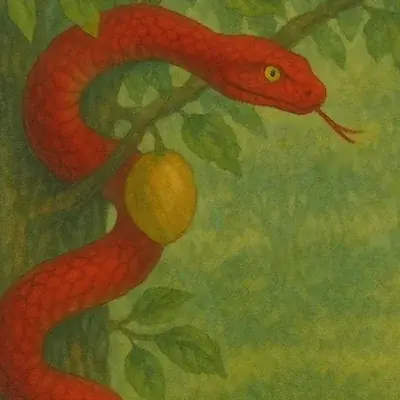
The chapter begins: “Now the serpent was more crafty than any beast of the field which Yahweh God had made.” This is the first clue that something is not right. A creature is speaking, not just any creature, but one that has twisted wisdom and hidden intent. And Yahweh God, the covenant God, is already mentioned. This is not just a story about disobedience. It is the breaking of a covenant relationship.
The serpent addresses the woman, not the man, and casts doubt: “Indeed, has God said, ‘You shall not eat from any tree of the garden?’” It’s a distortion. God had said they could eat freely, with one exception. But the serpent twists the truth to sound restrictive, as if God were withholding something good.
The woman replies, “From the fruit of the trees of the garden we may eat; but from the fruit of the tree which is in the midst of the garden, God said, ‘You shall not eat from it, and you shall not touch it, lest you die.’” The touch clause was never part of God’s word. It may reflect a misunderstanding or an early sign that the command has become burdensome in her mind.
The serpent then lies outright: “You surely will not die,” and gives the motive: “For God knows that in the day you eat from it, your eyes will be opened and you will be like God, knowing good and evil.” Here is the core temptation, to reject Yahweh’s rule and establish their own. The serpent suggests that God is insecure, holding back, afraid of rivals. He questions God’s goodness and motives and offers a new path: autonomy.
Then the woman looks. “The woman saw that the tree was good for food,” that’s appetite, “and that it was a delight to the eyes,” that’s aesthetic longing, “and that the tree was desirable to make one wise,” that’s pride. She takes, eats, and gives to her husband. He is with her. He does not lead. He does not protect. He listens to his wife and eats.
At that moment, they die. Not physically yet, but spiritually. Their relationship with Yahweh is broken. “Then the eyes of both of them were opened, and they knew that they were naked.” Shame replaces innocence. Fear replaces trust. They sewed fig leaves together and made themselves loin coverings. Their first instinct is to hide from each other and from God.
And Yahweh God is still there. The covenant God who walked with them now becomes the one they hide from. “They heard the sound of Yahweh God walking in the garden in the cool of the day, and the man and his wife hid themselves from the presence of Yahweh God.” And He calls to the man, “Where are you?” This is not ignorance. It is pursuit. Yahweh seeks the sinner.
Adam replies not with confession, but with fear: “I was afraid because I was naked, so I hid.” Then comes the cascade of blame. The man blames the woman, and indirectly God Himself: “The woman whom You gave to be with me…” The woman blames the serpent: “The serpent deceived me…” No one accepts responsibility. The covenant has been broken, and the relational fallout is immediate.
So Yahweh God speaks first to the serpent, not with a question, but with a curse: “Because you have done this, cursed are you… on your belly you will go, and dust you will eat all the days of your life.” But within the curse is a promise.
Genesis 3:15 is the first gospel: “And I will put enmity between you and the woman, and between your seed and her seed; He shall bruise you on the head, and you shall bruise him on the heel.” It’s important to note there will be conflict, but the outcome is already determined. The same word is used for both injuries, but the blows are not equal. A bruise to the heel is painful. A bruise to the head is fatal. The serpent will strike, but only wound. The seed of the woman will strike back and crush. A child will be born who suffers, but through that suffering destroys the serpent. This is the beginning of redemptive history. The rest of the Bible flows from this promise.
To the woman Yahweh God speaks: “I will greatly multiply your pain in conception; in pain you will bear children. Your desire will be for your husband, and he will rule over you.” Fruitfulness will continue, but it will be marked by pain. And the partnership between man and woman, designed for harmony and shared responsibility, is no longer balanced. The woman’s desire for her husband signals a new tension in the relationship, and “he will rule over you” introduces an element of domination and struggle. What was once united has been pulled out of alignment. The closest human bond is now marked by frustration, desire, and control.
To the man, Yahweh God says: “Because you have listened to the voice of your wife… cursed is the ground because of you; in pain you will eat of it all the days of your life. Both thorns and thistles it shall grow for you… by the sweat of your face you will eat bread till you return to the ground, for you are dust, and to dust you shall return.” The world Adam ruled is now hostile. Work becomes toil. Dominion becomes survival. Death is now inevitable. This is Yahweh’s covenant curse. Life apart from Him is futility and decay.
And yet grace is not absent. God does not curse the man and woman directly. The serpent and the ground are cursed, but the man and woman are judged within the context of mercy. Adam names his wife Eve, the mother of all the living. This is an act of faith. The seed will come. Life will go on. Yahweh has not abandoned His covenant purpose.
Then we read: “Yahweh God made garments of skin for Adam and his wife, and He clothed them.” Their fig leaves were not enough. Their shame required a covering, and Yahweh provides it. This is the first death in Scripture, the first shedding of blood, the first substitution. A life is taken so that sinners can be clothed. It is a picture of atonement, literally a covering, and it comes from the hand of the covenant God.
Finally, Yahweh God says: “Behold, the man has become like one of Us, to know good and evil; and now, lest he send forth his hand and take also from the tree of life and eat, and live forever…” He does not finish the sentence. The idea is too dreadful to complete.
So he drove the man out and at the east of the garden of Eden, He stationed the cherubim and the flaming sword which turned every direction to guard the way to the tree of life. The covenant presence is now guarded. Cherubim, the same heavenly beings who will later appear in the tabernacle and temple, are stationed to protect the holy place. Not because God is cruel, but because sinful mankind must not eat and live forever in their sin. This is judgment, but also mercy.
It is Yahweh’s act of protection. The way back is not destroyed. It is preserved. The sword still stands. But one day it will fall, not on the sinner, but on the seed.
Genesis 3 is not just the story of how sin entered the world. It is the story of how a covenant was broken and how the covenant God immediately responded with mercy. He promises a redeemer. He sheds the first blood. He provides the first covering. He guards the way to life. And that promise, the seed of the woman, will run through all of Scripture until it reaches its fulfilment in Christ.
He is the one bruised at the cross. He is the one who crushes the serpent’s head. He is the final covering for sin, the one whose righteousness clothes our shame. He is the tree of life reopened through His blood. The chapter ends in exile, but the covenant promise still stands.