
Hebrews 13
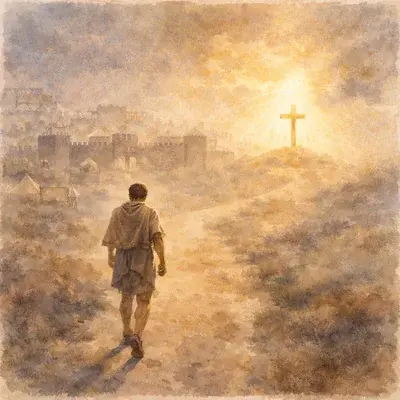
Hebrews 13 brings the teaching of the letter into everyday life. After showing that Christ has secured a better covenant and an unshakable kingdom, the chapter explains how believers are to live in response. Faith that endures produces a life marked by love, holiness, contentment, and steadfast allegiance to Christ. It calls the church to hold fast to the grace found in Him, to reject false sources of security, and to follow Him even outside the camp, bearing His reproach while seeking the city that is to come.
Hebrews 13 Explained: Living in Light of Christ
Hebrews chapter 13 applies the teaching of the letter to daily life. Chapter 12 ended with an unshakable kingdom and the reminder that our God is a consuming fire. Chapter 13 shows what it means to live as people who belong to that kingdom.
The chapter begins with brotherly love. Love is not treated as a feeling but as something that must be practiced continually. These believers have suffered together. They have stood together under persecution. That love must not fade as time passes. Perseverance in faith includes perseverance in love.
The reference to hospitality and entertaining angels recalls Abraham welcoming strangers at Mamre, and later Lot in Sodom. Abraham prepared a meal and offered rest without realising at first that he was serving messengers of God. The point is not that believers should expect angelic visitors. The point is that hospitality matters before God, and He may even have a divine purpose in bringing a stranger across our path that we do not see.
The call to remember prisoners and those who are mistreated continues the same theme. Earlier in the letter, they showed compassion to those in chains and accepted the loss of property. Now they are told to remember those who suffer as though they themselves were bound. We should not be indifferent to the suffering of fellow believers. We should stand with the afflicted.
The instruction about marriage moves into personal holiness. Marriage is to be honoured. The marriage bed is to be kept pure. Sexual immorality and adultery remain subject to God’s judgment. Grace does not cancel holiness. The God who welcomes believers to Zion is still perfectly just and holy. Those who belong to Him must reflect that holiness in their marriages.
The warning about the love of money addresses another place where the heart seeks security. Believers are told to be content with what they have. The reason given is God’s promise that He will never desert or forsake His people. That promise, first spoken to Jacob and repeated to Joshua, also applies to Christians. Contentment flows from our covenant relationship with God. Because the Lord is with us, we should have no fear. Money should not be our security. It cannot provide what God Himself provides.
The church is told to remember its leaders who spoke the word of God. Their authority was tied to that word, and their lives confirmed it. The congregation is to consider how their lives ended and imitate their faith. Faith is not abstract. It produces endurance that can be seen.
The unchanging nature of Jesus Christ grounds this stability. Leaders may pass away or fail us, but Christ remains the same. The One who offered Himself once for all now reigns on high, so our confidence must ultimately rest in Him.
The warning about varied and strange teachings returns to the centre of the letter. The heart is strengthened by grace, not by foods. The issue is not about ordinary eating, but religious eating used as a source of spiritual strength. Believers are strengthened by the grace of Christ, not by ritual meals involving special religious food. Those who depend on such practices gain no spiritual benefit.
Grace strengthens the soul. Grace comes through Christ’s finished sacrifice. Ritual meals, however meaningful they may appear, cannot give life in themselves. Even Christian worship must be understood this way. Grace comes from Christ, not from a ritual meal.
The reference to an altar builds on this. Believers have an altar connected to Christ’s sacrifice. Those who continue serving the tabernacle system have no right to eat from it.
Hebrews recalls how, on the Day of Atonement, the blood of the sin offering was brought into the holy place while the bodies were taken outside the camp and burned. Jesus fulfilled that pattern. He sanctified the people through His own blood by suffering outside the gate.
Because He suffered outside, believers are called to go out to Him. We also must go outside the camp and bear His reproach. The camp represents visible religious security and social acceptance. Christ was rejected and taken outside. To belong to Him means accepting that rejection. It means being prepared to be an outcast in society, especially religious society. It means standing with the crucified Messiah, even if that brings shame.
The reason is that there is no lasting city here. Earthly structures, even sacred ones, do not last. Believers seek the city that is to come, the heavenly Jerusalem already described. Our eyes should be fixed there.
Sacrifice has not disappeared. It has changed. Through Christ, believers continually offer praise to God. Praising His name and confessing Jesus as Lord is the new sacrifice. Doing good and sharing with others are also called sacrifices that please God.
Worship now consists of lips that honour Christ and a life that reflects His mercy.
The instruction to obey and submit to leaders returns to church order. Leaders keep watch over souls and will give account to God. That reality gives weight to both leadership and obedience. When leaders serve with joy, the church benefits. Resistance harms the body.
But even church leaders need prayer. The writer of this letter, a church leader himself, asks for prayer and speaks of a clear conscience. He desires to conduct himself well in all things. Ministry depends on prayer and integrity.
The closing benediction takes the teaching of the letter and turns it into a prayer of blessing. God is the one who raised the great Shepherd of the sheep through the blood of the eternal covenant. Resurrection, covenant, and shepherding care all stand together. The prayer asks that God would equip His people to do His will by working in them what pleases Him through Jesus Christ. Obedience flows from God’s work within His people.
The final appeal asks the readers to bear with this word of exhortation. Greetings are exchanged. Fellowship extends beyond one congregation. And the last word is grace. Not general goodwill, but the grace secured through the blood of the eternal covenant. Grace received through Jesus Christ alone.
Hebrews 13 shows what it means to live in light of Christ’s finished work. Believers are to continue in brotherly love, honour marriage, care for those who suffer, and live free from the love of money because the Lord Himself is with them.
They are to remember the leaders who taught them the word of God and resist strange teachings that claim the heart is strengthened through religious practices, even through eating special religious food, rather than through the grace of Christ.
Instead, believers go out to Christ. Outside the camp, willing to bear His reproach while they seek the city that is to come.
Their worship now consists of praising God, confessing the name of Christ, and offering lives of generosity and mercy. These are the sacrifices that please God.
All of this rests on the work of the risen Shepherd, who equips His people to do His will as they live in the grace secured through Christ.
Hebrews has shown that God has spoken finally in His Son. Jesus Christ is greater than angels, and greater than Moses. He is the eternal High Priest who has offered the once-for-all sacrifice for sins. Through Him believers have access to God, a better covenant, and a kingdom that cannot be shaken. The message of the letter is simple and urgent: trust in Christ alone. Faith receives what He has accomplished and continues looking to Him. Those who believe enter the rest God has promised. However, those who turn away from the Son will not escape when God judges the earth.