
Genesis 43
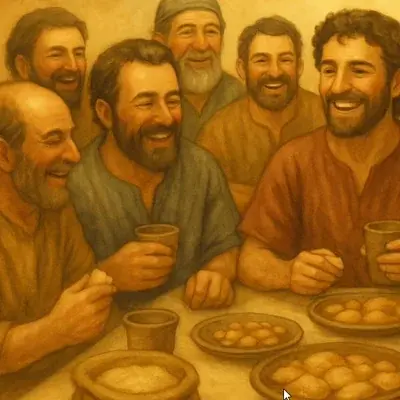
Genesis 43 continues our series through the book of Genesis. The famine Joseph foretold presses hard on the land, and Jacob can no longer refuse to send Benjamin to Egypt. Judah pledges himself as a guarantee for his brother’s safety, and Jacob entrusts Benjamin into the hands of God Almighty.
The Brothers Return to Egypt and Face Joseph’s Test
Genesis 43 opens with the famine that Joseph foretold bearing down on the land, and Jacob’s household again facing the pressure of survival as their food is running dangerously low. At the end of chapter 42, Jacob had refused to let Benjamin go down to Egypt, clinging to the son of Rachel while Simeon remained imprisoned. His words then were absolute: “My son shall not go down with you.” Fear over Benjamin’s safety held him captive, and there was nothing the brothers could say to change his mind.
Now, as they have almost run out of grain, Jacob again urges his sons to return to Egypt. But the brothers know the conditions that were set. They cannot return without Benjamin, and Judah reminds him that the man in Egypt spoke with finality.
As we read on, we find Genesis 43 is full of comparisons to chapter 42. Previously, Reuben had said, “You may put my two sons to death if I do not bring him back to you.” In contrast, Judah offers himself: “I myself will be the guarantee for him.” He does not bargain with the lives of others, but pledges his own. Judah binds himself to the protection of Benjamin.
This is the same Judah who once suggested selling Joseph to the Ishmaelites. Now Judah offers his own life to protect the other son of Rachel. This contrast with Reuben highlights how Reuben is unsuitable for being the head of the house. His promise was rash, offering his children as collateral, while Judah offers himself as a substitute, embodying personal responsibility and leadership.
Judah adds that delay has already cost them dearly. If Jacob had yielded earlier, they might have gone and returned twice by now. Jacob’s fear of losing Benjamin has brought the entire family to the edge of starvation.
At last, Jacob, who always sought to have control over everything, has his hand forced. He is forced to rely on God, unable to keep Benjamin out of the perceived danger. Here, he acts again as much as it depends on him to ensure the success of the mission of his sons. Jacob’s faith and actions show both human prudence and an appeal to divine mercy.
He tells his sons to take from the best of the land, balm, honey, spices, pistachio nuts, and almonds, as a gift to appease the Egyptians. Jacob also commands them to take double silver to restore what had been returned in their sacks. And at the heart of it, he names God Almighty: “May El Shaddai grant you compassion before the man.”
The structure of this moment makes his appeal to God Almighty the hinge. All the careful provisions surround this prayer, showing that Jacob knows the outcome rests not in gifts or silver, but in the covenant God who holds power over the nations. This moment echoes his earlier wrestling with God at Peniel, where he learned to rely on divine strength rather than his own schemes.
Jacob’s surrender, “If I am bereaved, I am bereaved,” is not fatalism, but faith, entrusting Benjamin and the family’s survival to God’s providence. His invocation of El Shaddai recalls the name used with Abraham, signalling his trust in the God who fulfils His promises.
With the plan prepared, the brothers go down to Egypt and stand before Joseph. Joseph sees Benjamin with them and orders the men brought into his house, and we are given a rare glimpse into the thoughts of the men. “It is because of the money that was returned in our sacks the first time that we are being brought in, that he may seek occasion against us and fall upon us and take us for slaves with our donkeys.”
They fear being seized, enslaved, and stripped of their donkeys. It is impossible not to hear the echo of their past. These are the men who sold their brother into slavery. The fear that grips them now is a mirror of their own guilt.
The brothers have already acknowledged their guilt in the previous chapter, confessing among themselves that this hardship is happening to them because of what they did to Joseph. As they said, “We are guilty concerning our brother, in that we saw the distress of his soul when he begged us and we did not listen. That is why this distress has come upon us.”
However, unlike in chapter 42, when they silently discovered the silver in their sacks and trembled among themselves, this time they come forward. They pour out their explanation to Joseph’s steward, insisting that they brought the silver back and that they have additional money to purchase food. This honesty shows a real shift. They are no longer concealing or scheming.
The steward’s reply must have been startling and strange for the brothers: “Your God and the God of your father has given you treasure in your sacks. I received your money.” What he says sounds like a miracle, but it is actually part of Joseph’s test, orchestrated to further probe their hearts.
The brothers have been anxiously trying to explain what they thought was an error, but the steward tells them he received their money. He then restores Simeon to them, provides water for their feet, and fodder for their donkeys. Their anxieties about imprisonment and loss dissolve into unexpected hospitality.
The final paragraph brings the story to its high point. When Joseph comes home, the brothers present their gift and bow before him, repeating the fulfilment of his youthful dreams. Joseph inquires about their father, and they answer that he is still alive.
Then his eyes fall upon his brother Benjamin. He blesses his brother: “May God be gracious to you, my son.” Joseph invokes the mercy of God upon Benjamin even as he keeps his identity hidden.
Joseph orders the meal to be served. Cultural divisions keep the Egyptians separate from the Hebrews, but Joseph arranges his brothers in exact birth order. This detail astonishes them, for they cannot imagine how an Egyptian lord could know the order of their births.
Then Joseph singles out Benjamin with a portion five times larger than the rest. This is a deliberate setup to replicate the envy that once drove them to cast Joseph into a pit. It was because of their father’s favouritism toward Joseph that the brothers had hated him.
Now Joseph recreates that dynamic in a new form. Will they despise Benjamin for his portion as they despised Joseph for his coat? Will jealousy rise again, or will they endure the sight of Rachel’s son favoured above them?
By recreating the conditions of their past sin, Joseph is not only testing their character, but also giving them an opportunity to demonstrate repentance and show they have truly changed. The brothers’ ability to feast with Joseph without apparent jealousy over Benjamin’s portion hints at their growth, setting the stage for further revelation.
The test is not yet complete, but the chapter closes with them letting their guard down, eating and drinking freely with Joseph. Benjamin represents the last link to Rachel, Jacob’s beloved wife, and thus serves as a test of the brothers’ loyalty, not only to their father, but to the family’s unity. Their willingness to protect him contrasts with their betrayal of Joseph, the first son of Rachel, and underscores their transformation.
This is a striking contrast to the previous chapter, which ended in fear. Here they feast together, though the true reconciliation is still to come.
Genesis 43 therefore acts as a middle movement in the larger story. It carries forward the same tensions as chapter 42, fear for Benjamin, the weight of guilt, the matter of the silver, the dread of enslavement, but pushes them further.
Jacob, who in chapter 42 had flatly refused to let Benjamin go and left Simeon bound in Egypt, now moves from outright refusal to a reluctant but decisive surrender, entrusting Benjamin to his brothers and placing the outcome in the hands of El Shaddai.
Judah, who had once callously betrayed Joseph by suggesting they sell him into slavery, now moves to offer himself as a substitute for Benjamin, pledging his own life and bearing personal responsibility for his brother’s safe return.
The brothers, who in chapter 42 had discovered the silver in their sacks and trembled in fearful silence, now move from concealment to confession, openly explaining themselves to Joseph’s steward and showing a readiness to deal honestly rather than scheme in secret.
Joseph continues to test them, deliberately recreating the very conditions that had once exposed their envy by favouring Rachel’s son, now giving Benjamin five times the portion, and watching to see whether jealousy would again divide the family or whether repentance had truly taken root.
The chapter builds toward the ultimate test, preparing the way for the brothers to show whether they have truly changed.