
Genesis 42
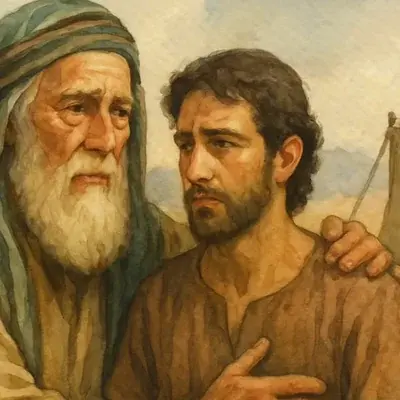
Genesis 42 shows Joseph’s brothers standing before him in Egypt, unaware of his identity. Through testing, their long-buried guilt over selling Joseph resurfaces, and they confess, “Truly we are guilty concerning our brother.” Yahweh uses famine, separation, and Joseph’s stern dealings to bring their sin to light and begin the path toward repentance.
Joseph Tests His Brothers and Their Guilt Awakens
Genesis 42 opens with Jacob still at the head of his household. He sees what his sons cannot, that survival requires action. So he sends ten of his sons to Egypt to buy grain. The Bible stresses that Benjamin does not go, not because of his age, but because Jacob fears losing him. He clings to the last visible son of Rachel and, in doing so, repeats his old pattern of favouritism that he had previously shown to Joseph.
The brothers arrive in Egypt, and the text quickly brings us to the heart of the story. They bow down before Joseph, their faces to the ground. Joseph’s dreams of chapter 37, with his brothers bowing down to him, are fulfilled in that moment. The very dream that provoked their hatred now comes to pass under the providence of God.
Joseph remembers those dreams, and the remembrance becomes the key to all that follows. He knows now with certainty that God’s word has come true, and he acts to test whether his brothers have changed.
At once, he sees Benjamin’s absence, and when he questions them further, he learns that the youngest son is still at home. Joseph therefore creates a test with one singular purpose: will his brothers despise Benjamin as they once despised Joseph himself?
Joseph speaks harshly, accuses them of spying, imprisons them, and then sets the condition that Benjamin must be brought to Egypt. His words and actions seem harsh, but his purpose is not cruelty, but to bring into the open what has been hidden for years.
Joseph’s strategy works. In verses 19 to 21, the brothers begin to speak of their guilt. For the first time, we hear that Joseph pleaded with them in the pit, that they saw the distress of his soul and refused to listen to his cries. Their memory of that day is vivid, and their present distress brings it to the surface.
Reuben recalls his protest and warns that blood is now required because of their guilt. Joseph overhears their words and turns aside to weep. His tears reveal the emotion of the scene. Joseph chooses Simeon to be bound before their eyes.
The text does not explain why, and so it leaves us to weigh the possibilities. Joseph knows that Reuben had tried to save him. Simeon was known for violence, and it may be that he was the chief voice calling for Joseph’s death. So perhaps this is why Joseph singled him out. Or perhaps it is simply because he is the secondborn son.
In either case, what is clear is that Simeon’s detention compels the brothers to return to their father, one son fewer than they had left, not unlike what happened with Joseph in chapter 37.
Joseph secretly restores their silver, and when one discovers it at the lodging place, fear grips them. “What is this that God has done to us?” Their hearts tremble because they see God’s hand in their trouble, but cannot yet understand its purpose.
When they later discover every bundle at home, the weight of fear falls upon Jacob as well. His words are sharp: “You have bereaved me of my children.” He does not only mourn Joseph and Simeon. He charges his sons with the blame.
The recovered money looks like evidence of theft or perhaps even selling Simeon into slavery, and now, if they want more food from Egypt, Benjamin would be under threat.
Reuben offers to take responsibility, pledging the lives of his two sons as collateral. However, this pledge is reckless. If a man can speak so lightly of his children, how can he be trusted with another son? Moreover, he is offering to kill Jacob’s grandsons.
Jacob is resolved: “My son shall not go down with you.” He counts Joseph as lost, Simeon as lost, and Benjamin as the only son left of Rachel. To risk Benjamin would be to risk the only surviving son of the wife he loved.
Genesis 42 ends in tension. Simeon is in prison in Egypt. The silver they brought back with them must have made Jacob deeply suspicious. The brothers’ guilt has been stirred, and Jacob’s refusal leaves the family trapped between famine and fear.
Yet the very pressure that weighs on them is the providence of God. Joseph’s harshness, the return of their money, and Jacob’s resistance all prepare the way for what must come next. Integrity has not yet been proven. Guilt has been exposed, but there has been no repentance shown, and there is no reconciliation yet.
The chapter ends with everything unresolved. However, the test Joseph has set in motion will bring everything into the light.