Deliverance
What does the Bible say about Deliverance?
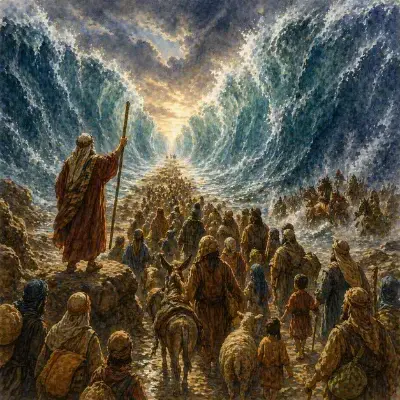
Deliverance in Scripture is Yahweh acting to rescue his people from an enemy they cannot overcome. The model is the Exodus: Israel enslaved in Egypt, unable to free themselves, crying out to Yahweh, who hears and acts with outstretched arm and mighty hand. Every subsequent act of deliverance in the Old Testament is measured against this standard.
What is the recurring pattern of deliverance in Judges?
The deliverances of the judges period follow a recurring pattern: Israel abandons Yahweh, Yahweh gives them over to their enemies, Israel cries out, Yahweh raises up a deliverer, the enemy is overcome, and the land has rest. The pattern is not mechanical; each account has its own texture and theological weight. But the pattern itself is a teaching: the people cannot deliver themselves, and the deliverer is always sent by Yahweh.
How is Christ the ultimate deliverer?
The New Testament presents Christ as the ultimate deliverer: “He rescued us from the domain of darkness and transferred us to the kingdom of His beloved Son” (Colossians 1:13). The enemy from which he delivers is not a foreign army but sin, death, and the power of Satan. The cross is the act of deliverance on which all others depend and from which all others derive their meaning. Follow how this theme develops through the Bible.