Tabernacle
What does the Bible say about the tabernacle?
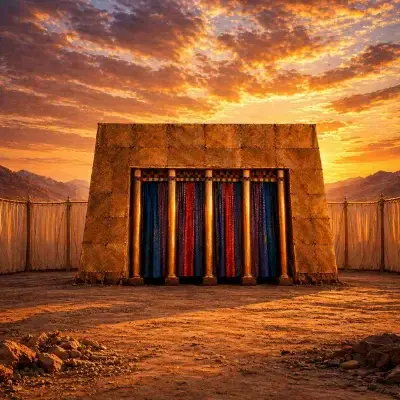
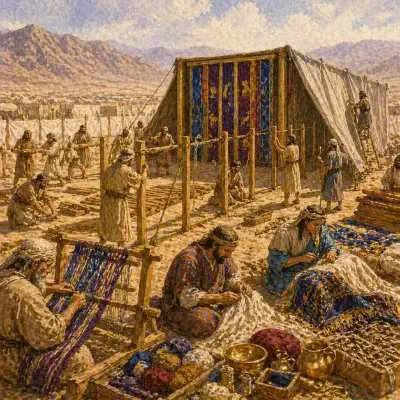
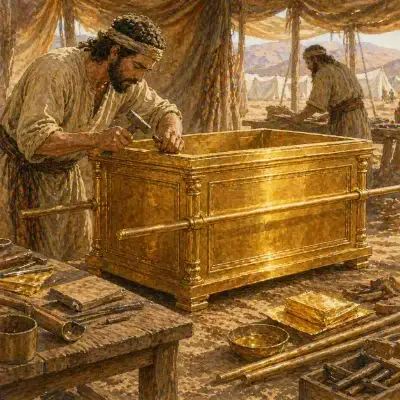
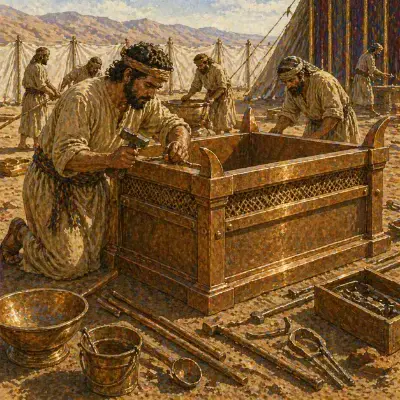
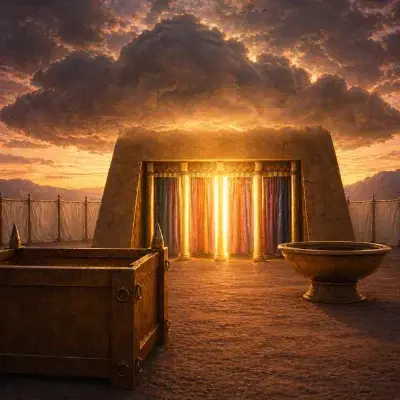
The Tabernacle is Yahweh’s answer to the problem the Sinai narrative creates. If Yahweh is holy and his people are sinful, how can he dwell among them without consuming them? The detailed instructions of Exodus 25-31 and 35-40 are Yahweh’s provision for his own presence: a portable sanctuary built according to his exact specifications, designed to make his dwelling among Israel possible without compromising his holiness.
What did the furniture of the Tabernacle mean?
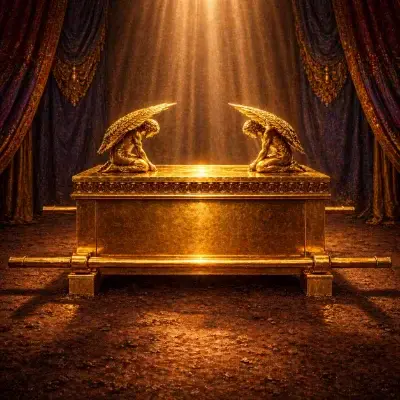
Every element of the Tabernacle is theologically significant. The arrangement of courts moving from outer to inner reflects the graduated holiness of approach to God. The furniture, including the ark of the covenant, the altar of incense, the lampstand, and the table of showbread, speaks of different dimensions of the covenant relationship. The elaborate boundaries around the most holy place are a constant declaration that sinners cannot approach God on their own terms.
How does the Tabernacle point to Christ?
The New Testament declares that the Tabernacle was a copy of heavenly realities, a shadow of what Christ would accomplish (Hebrews 8-9). Jesus is both the true temple, the place where God and man meet, and the great high priest who brings his own blood into the true holy place, securing permanent access to God for all who come through him. Follow how this theme develops through the Bible.