Passover
What does the Bible say about Passover?
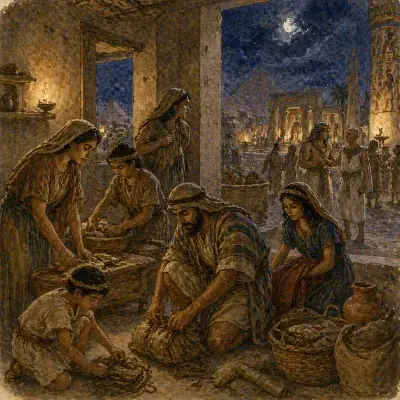
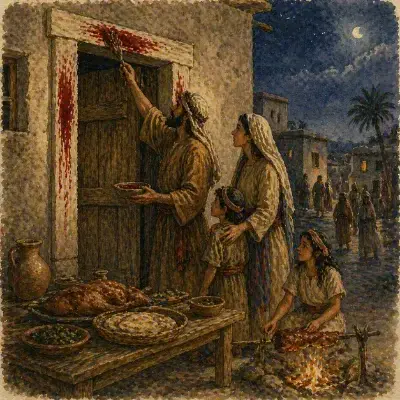
The Passover is the founding event of Israel’s existence as a redeemed nation. On the night Yahweh strikes down every firstborn in Egypt, the Israelites are sheltered by the blood of a lamb applied to their doorposts. The destroyer passes over every household marked by that blood. The theological logic is stated plainly: the blood of the lamb is the ransom of the firstborn. Death falls; it falls on the substitute.
What does the Passover mean for Christians?
The Passover is immediately instituted as a perpetual feast, to be observed every year as a memorial. “When your children ask you, ‘What does this rite mean to you?’ you shall say, ‘It is a Passover sacrifice to Yahweh who passed over the houses of the sons of Israel in Egypt when He struck the Egyptians but spared our homes.’” The feast is not merely a historical commemoration; it is a yearly re-presentation of the covenant logic that governs Israel’s existence: they live because a substitute died.
How is Jesus the Passover lamb?
The New Testament identifies Jesus as the Passover lamb. Paul writes that “Christ our Passover also has been sacrificed” (1 Corinthians 5:7). The Last Supper is set in the context of the Passover, and Jesus gives it new significance: his body broken and his blood shed are the realities toward which the Passover lamb had always been pointing. Follow how this theme develops through the Bible.