Melchizedek
What does the Bible say about Melchizedek?
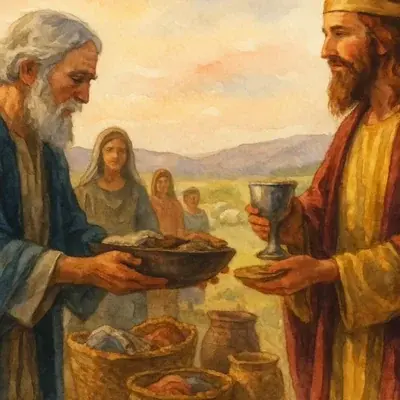
Melchizedek appears suddenly in Genesis 14 and just as suddenly disappears. He is the king of Salem and priest of God Most High who blesses Abraham after his victory over the kings, and to whom Abraham gives a tithe of everything. The passage is brief, the figure is unexplained, and his sudden appearance in the patriarchal narrative without genealogy or background is clearly deliberate.
Who was Melchizedek?
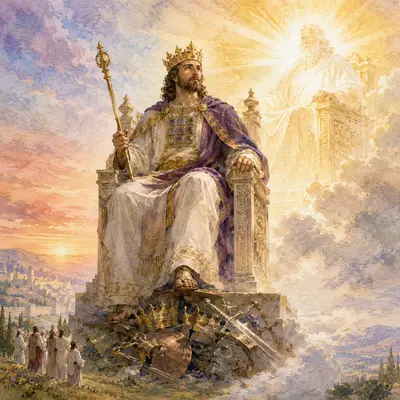
Psalm 110 picks up Melchizedek again, centuries later, in a royal oracle addressed to the Davidic king: “Yahweh has sworn and will not change His mind: You are a priest forever according to the order of Melchizedek.” The combination of kingship and priesthood in a single person was forbidden under the Mosaic order; kings from Judah could not be priests from Levi. The Psalm points to a figure who will hold both offices simultaneously, on the basis of a divine oath, without the limitations of the Levitical system.
How is Melchizedek connected to Jesus?
Hebrews 5-7 develops this at length. The author argues that the priesthood of Christ, like Melchizedek’s, is not based on genealogical descent but on a divine appointment that transcends the Levitical order. Like Melchizedek, Christ is both king and priest. Like Melchizedek’s priesthood in the Genesis text, his priesthood has no recorded beginning or end. The brief Old Testament appearances of this figure were always pointing toward the one in whom they are fulfilled. Follow how this theme develops through the Bible.