Altar
What does the Bible say about the altar?
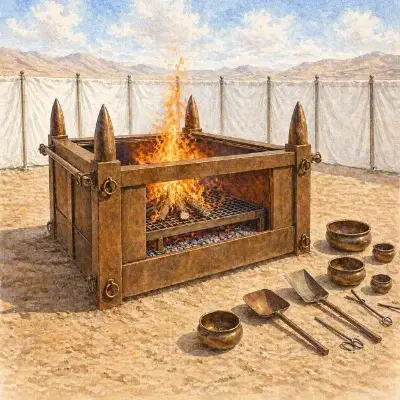
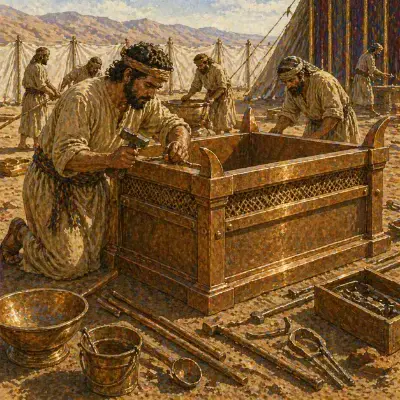
The altar is the place of meeting between Yahweh and his people through sacrifice. From Noah’s offering after the flood to the altars of the patriarchs to the bronze altar of the tabernacle, the altar marks the place where sinful human beings can approach a holy God because a sacrifice has been made. It is not built to impress; it is built to address the problem of sin through blood.
Why did the patriarchs build altars wherever Yahweh spoke to them?
The construction of an altar in Genesis is consistently associated with a theophany or a covenant promise: Yahweh appears and speaks, and the human response is to build an altar. Abraham builds altars at Shechem, Bethel, and Hebron. Isaac builds one at Beersheba. Jacob builds one at Bethel. The pattern is significant: wherever Yahweh makes himself known and speaks his word, the appropriate human response is to approach him through sacrifice. The altar is the infrastructure of covenant relationship.
How is the cross the final altar?
The theology of the altar converges in the New Testament on the cross. Christ himself is both the priest and the sacrifice: “We have an altar from which those who serve the tabernacle have no right to eat” (Hebrews 13:10). The cross is the final altar, and the sacrifice offered there does not need to be repeated. Follow how this theme develops through the Bible.