Resurrection
What does the Bible say about the resurrection?
The resurrection is not a figure of speech for a changed life or a memory that lives on. Scripture speaks of it as a bodily event: God raising the dead, corruptible bodies made incorruptible, mortal bodies clothed with immortality. The ground of this hope is not human longing but the fact that Christ himself has already been raised, in the same body that was laid in the grave.
The Old Testament anticipates this hope before it is fully unveiled. Job, in the middle of his suffering, says, “I know that my Redeemer lives, and at the last he will take his stand on the earth. Even after my skin is destroyed, yet in my flesh I shall see God.” Daniel is told that “many of those who sleep in the dust of the ground will awake, these to everlasting life.” Isaiah promises Israel, “Your dead will live; their corpses will rise. You who lie in the dust, awake and shout for joy.”
Paul makes the resurrection the hinge of the gospel in 1 Corinthians 15. If Christ has not been raised, preaching is empty, faith is worthless, and the dead in Christ have perished. But Christ has been raised, the first fruits of those who have fallen asleep, and his resurrection guarantees the resurrection of everyone who belongs to him.
What is the evidence for the resurrection of Jesus?
Paul does not treat the resurrection as a private conviction but points to a documented chain of eyewitnesses: “Christ died for our sins according to the Scriptures, and that He was buried, and that He was raised on the third day according to the Scriptures, and that He appeared to Cephas, then to the twelve. After that He appeared to more than five hundred brothers at one time, most of whom remain until now, but some have fallen asleep” (1 Corinthians 15:3-6). Writing to a church that could have checked his claim, Paul names a crowd of over five hundred living witnesses. This is presented as verifiable history, not private spiritual experience.
What will the resurrection body be like?
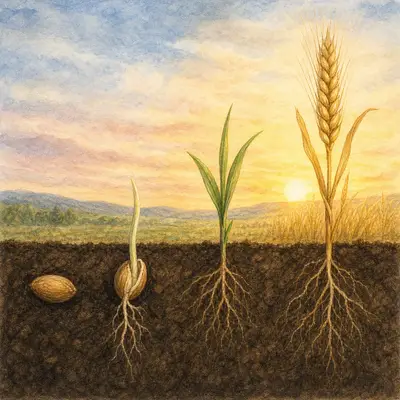
Paul answers this by contrast, describing what changes between burial and resurrection: “So also is the resurrection of the dead. It is sown a corruptible body, it is raised an incorruptible body; it is sown in dishonour, it is raised in glory; it is sown in weakness, it is raised in power; it is sown a natural body, it is raised a spiritual body” (1 Corinthians 15:42-44). The resurrection body is not a replacement for the old one but its transformation: the same body, no longer subject to decay, weakness, or death. Follow how this theme develops through the Bible.