Love
What does the Bible say about Love?
Love in Scripture is not primarily a feeling. It is covenant faithfulness in action: God binding himself to his people and keeping that bond even when they do not deserve it. John states the claim plainly, “God is love,” and then defines it by an event rather than an emotion: “By this the love of God was manifested in us, that God has sent His only begotten Son into the world so that we might live through Him.”
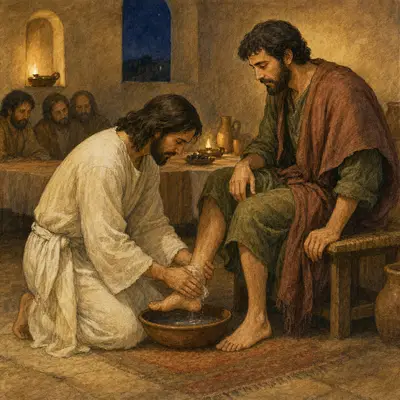
Jesus makes the same connection on the night before his death. He loves his own “to the end,” washing the feet of the men who will abandon him within hours, and then gives them a new commandment: to love one another as he has loved them. The love he commands is not a feeling to summon but a pattern to imitate, humble service and sacrifice that does not stop when it costs something.
Paul traces this love to the cross in Romans 5: “God demonstrates His own love toward us, in that while we were yet sinners, Christ died for us.” God’s love is not a response to what is lovable in its object. It is the cause of it.
What is agape love?
The New Testament word for the love Christians are commanded to have is agape, and Paul describes what it looks like in practice rather than defining it abstractly: “Love is patient, love is kind, is not jealous, does not brag, is not puffed up; it does not act unbecomingly, does not seek its own, is not provoked, does not take into account a wrong suffered; it does not rejoice in unrighteousness, but rejoices with the truth; it bears all things, believes all things, hopes all things, endures all things. Love never fails” (1 Corinthians 13:4-8). Agape is measured by what it does for another person, not by what it feels, and Paul makes clear that this kind of love outlasts every spiritual gift that will eventually pass away.
What does it mean to love your neighbour?
The Law gathers mankind’s duty toward others into one command: “you shall love your neighbor as yourself; I am Yahweh” (Leviticus 19:18). The command ends with the covenant name, because love of neighbour flows from who Yahweh is and from the people he has bound to himself. Jesus places it beside the command to love God with all the heart and says, “On these two commandments hang the whole Law and the Prophets.” When a scholar of the Law asked, “And who is my neighbor?”, trying to find where the obligation stopped, Jesus answered with the Samaritan who showed mercy to a stranger left half dead on the road, and then commanded, “Go and do the same.” Love of neighbour is not measured by who qualifies to receive it, but by mercy shown to whoever God places in our path.
The Law can command this love, but it cannot produce it. Paul calls love the first “fruit of the Spirit” (Galatians 5:22), the life of God himself dwelling within his people and bearing fruit through them. “The love of God has been poured out within our hearts through the Holy Spirit who was given to us” (Romans 5:5). This is what Yahweh promised in the new covenant through Ezekiel: “I will put My Spirit within you and cause you to walk in My statutes.” John makes the same connection: “if we love one another, God abides in us, and His love is perfected in us. By this we know that we abide in Him and He in us, because He has given us of His Spirit.” The love a Christian shows his neighbour therefore does not originate in him. It is God’s own love, given by the Spirit who indwells him, and so Paul can say that “love is the fulfillment of the Law.” What the Law required, the indwelling Spirit produces. “We love, because He first loved us.”
Why did God love the world?
Scripture does not explain God’s love by pointing to something worthy in its object. John records Jesus’s own summary of the gospel: “For God so loved the world, that He gave His only begotten Son, that whoever believes in Him shall not perish, but have eternal life” (John 3:16). The world in view is not a world that earned God’s affection. It is a world under judgment, and God’s love is what moves him to give his Son to rescue it. Follow how this theme develops through the Bible.