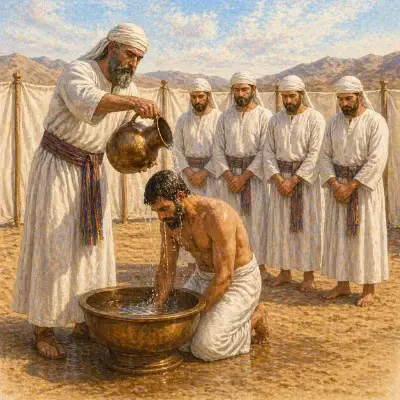
Consecration
What does the Bible say about Consecration?
Consecration means being set apart from ordinary use for Yahweh’s exclusive service. It is not a private feeling of devotion; it is an objective act, commanded and performed, that changes a person’s or object’s standing before God.
How were priests consecrated in the Old Testament?
The consecration of Aaron and his sons shows how deliberate this setting apart was. Yahweh instructs Moses, “this is the thing that you shall do to them to consecrate them to minister as priests to Me” (Exodus 29:1), and the ritual that follows involves washing with water, clothing in priestly garments, anointing with oil, and the application of sacrificial blood to ear, thumb, and toe. Every element declares that the priest no longer belongs to himself; he has been claimed for Yahweh’s service alone.
Why does consecration require blood?
That even the mediator required this elaborate consecration, including atonement, shows how seriously Scripture treats access to a holy God. No one serves before Yahweh on their own standing, however privileged their office. Consecration must be given, not assumed, and it always comes at the cost of blood. Follow how this theme develops through the Bible.