Holy Place
What does the Bible say about the Holy Place?
The Holy Place was the room in the tabernacle where priests ministered daily before Yahweh, standing between the outer courtyard where ordinary Israelites brought their sacrifices and the Most Holy Place where Yahweh’s presence dwelt above the ark. Access to it was restricted to priests alone, and its furnishings were not left to human invention.
Why did every piece of furniture matter?
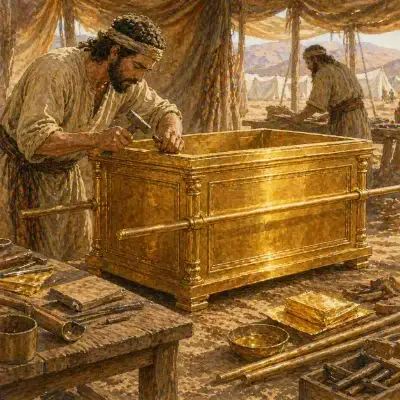
Exodus records the ark, the mercy seat, the table, the lampstand, and the altar of incense being made exactly “just as Yahweh had commanded Moses” (Exodus 39:32), a phrase repeated throughout the account. Every object served a specific function in maintaining Israel’s access to a holy God: the table held bread representing Yahweh’s provision, the lampstand gave light before him, and the altar of incense carried up a fragrant offering toward the veil.
What does the Holy Place teach about access to God?
That every detail was prescribed rather than improvised shows that worship of Yahweh cannot be invented by man. The Holy Place pictured mediated access to God rather than direct access, a limitation the New Testament says has now been removed through Christ, who entered the true sanctuary once for all (Hebrews 9:11-12). Follow how this theme develops through the Bible.