
Daniel 7
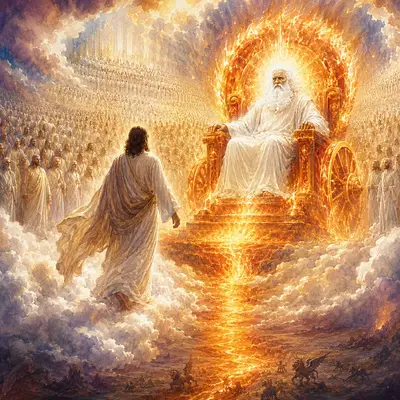
Daniel 7 pulls back the curtain on the empires Daniel has already lived through and shows what stands behind them: four beasts rising from a churning sea, each more violent than the last. A boastful little horn wages war against the saints and seems to be winning. Then the vision breaks open into the courtroom of heaven, where the Ancient of Days takes his seat and one like a Son of Man is given a kingdom that will never be destroyed.
Daniel 7 Explained: The Son of Man Receives the Kingdom
Daniel 7 begins by placing the vision “in the first year of Belshazzar king of Babylon.” That detail matters because it takes us back before the fall of Babylon in Daniel 5. Daniel is no longer the young exile brought from Judah in chapter 1. He has lived through decades of Babylonian rule, served under kings, watched empires boast in their own glory, and seen how fragile human power really is. Now, before Babylon falls, Yahweh gives him a vision that looks beyond Babylon to the whole pattern of beastly kingdoms, violent rule, arrogant kings, suffering saints, divine judgment, and the everlasting kingdom given to one like a Son of Man.
Daniel says, “I was looking in my vision by night, and behold, the four winds of heaven were stirring up the great sea.” The language is symbolic. The sea in Scripture often represents the restless, dangerous, unstable realm from which chaos and threat arise. The four winds of heaven stirring the sea picture the nations in agitation under the sovereign rule of God. The vision does not begin with a calm world slowly improving. It begins with turbulence. The great sea is stirred, and from that disturbed sea come four great beasts, each different from the others. The kingdoms of man are shown as beasts because their power is violent, devouring, and opposed to the people of God.
The first beast is “like a lion and had the wings of an eagle.” Lion and eagle imagery conveys strength, majesty, speed, and imperial power. Many interpreters have seen Babylon here, and that is a reasonable identification because Babylon itself used lion imagery, and because Daniel’s own setting begins under Babylonian rule. But the vision does not explain the first beast immediately. At this point, Daniel is reporting what he saw. Its wings are plucked, it is lifted from the ground, made to stand on two feet like a man, and a man’s heart is given to it. That may recall the humbling of Nebuchadnezzar in Daniel 4, where a proud king who was made beastlike was later restored by God. Even Babylon’s glory can be stripped, humbled, and altered by the God who rules over kings.
The second beast is like a bear, raised up on one side, with three ribs in its mouth, and it is commanded, “Arise, devour much meat!” The image is heavy, lopsided, and predatory. Many identify this beast with Medo-Persia, especially because the empire had an unequal partnership, with Persia becoming dominant over Media. The three ribs may point to conquered peoples or territories, though Daniel does not tell us enough to name them with certainty. What matters in the vision is the appetite of empire. This beast devours because kingdoms built on conquest consume what stands before them.
The third beast is like a leopard, with four wings and four heads, and “dominion was given to it.” A leopard already suggests speed, and wings intensify the image. The four heads suggest divided rule. Many identify this with Greece, especially because Alexander’s conquests were famously swift and because his empire was later divided among his successors. Again, Daniel’s vision uses symbolic imagery first, and interpretation comes later. But the movement is clear: the kingdoms rise, they dominate, and their dominion is given. That last phrase matters. Even when beastly kingdoms rise, they do not possess ultimate authority in themselves. Dominion is granted and withdrawn by God.
The fourth beast receives the greatest attention. It is “fearsome and terrifying and extraordinarily strong,” with large iron teeth. It devours, crushes, and tramples down the remainder with its feet. Daniel cannot compare it neatly to a known animal. It is different from all the beasts before it. It has ten horns, and while Daniel is contemplating the horns, another horn, a little one, comes up among them. Three of the first horns are pulled out by the roots before it, and this little horn has “eyes like the eyes of a man and a mouth speaking great boasts.” The fourth beast is terrifying because it combines power, brutality, arrogance, and blasphemous speech. Many identify it with Rome, especially because Rome followed Greece and ruled with crushing strength. But Daniel’s own interpretation will show that the fourth beast also has a pattern that reaches beyond one political moment: it represents an empire and its kings, with a final arrogant ruler who wages war against the saints.
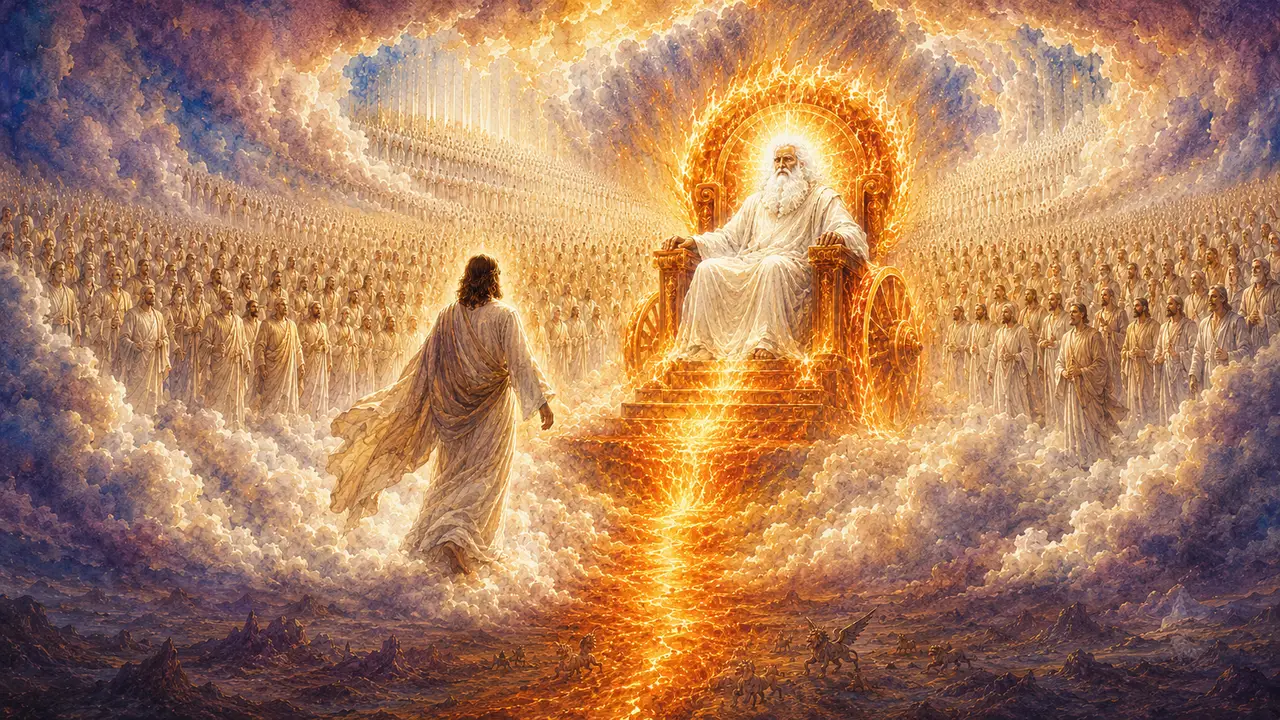
At this point, the vision changes abruptly. Daniel has seen beast after beast rise from the sea, and the little horn continues speaking its great boasts. Then Daniel says, “I kept looking until thrones were set up, and the Ancient of Days was seated.” The centre of the vision is no longer the sea, the beasts, the horns, or the boasting ruler. The centre is the heavenly court. The Ancient of Days is God Himself, the eternal Judge. His clothing is like white snow and the hair of His head like pure wool. The imagery speaks of purity, holiness, wisdom, and eternal majesty. His throne is ablaze with fire, its wheels are a burning fire, and a river of fire flows out from before Him. Fire here belongs to judgment, holiness, and divine authority.
This is the turning point of the chapter. The beasts are terrifying, but they are not ultimate. The little horn boasts, but the court of heaven is seated. The kingdoms of man rage, devour, and trample, but the Ancient of Days presides in complete sovereignty. Daniel sees thousands upon thousands attending Him, and myriads upon myriads standing before Him. This is the courtroom of heaven. “The court sat, and the books were opened.” The books show that judgment is not arbitrary. God knows. God records. God judges truly. No beastly kingdom, no arrogant king, no persecution of the saints, and no boastful word escapes the judgment of God.
Daniel keeps looking because of the sound of the great boastful words spoken by the horn. The blasphemous speech continues while the court is sitting. That is important. The arrogance of evil can continue for a time even while God’s judgment is already certain. Daniel looks until the beast is killed, its body destroyed, and it is given to the burning fire. The rest of the beasts have their dominion taken away, though an extension of life is given to them for an appointed season. The pattern is clear: kingdoms rise, kingdoms devour, kingdoms boast, and then their dominion is removed. Their time is appointed by God. Their authority is temporary. Their end is determined by the Judge of all the earth.
Then Daniel sees the most important figure in the chapter: “One like a Son of Man.” He comes “with the clouds of heaven,” approaches the Ancient of Days, and comes near before Him. The contrast with the beasts is deliberate. The kingdoms rise from the chaotic sea as beasts. This figure comes with the clouds of heaven as one like a Son of Man. He is humanlike, but He is also heavenly. In the Old Testament, riding or coming with the clouds belongs to divine majesty. Yahweh is the one who rides upon the clouds. So this figure is distinct from the Ancient of Days, because He comes before Him, and He shares in divine authority, because He comes with the clouds of heaven and receives universal worshipful service.
Verse 14 describes what is given to Him: “dominion, glory, and a kingdom.” The scope is universal: “all the peoples, nations, and men of every tongue might serve Him.” His dominion is everlasting. It will not be taken away. His kingdom will not be destroyed. This is the answer to the beasts. Their dominion is taken away. His dominion remains. Their kingdoms rise from the sea and fall under judgment. His kingdom is given from heaven and cannot be destroyed. The Son of Man receives what no beastly empire can keep: everlasting dominion, universal glory, and an indestructible kingdom.
Daniel is not emotionally detached from this vision. Verse 15 says, “As for me, Daniel, my spirit was distressed within me, and the visions of my head kept alarming me.” That reaction matters. Daniel does not treat the vision as a puzzle for detached speculation. He is disturbed by what he has seen. The beasts are horrifying. The persecution of the saints is real. The boasting horn is alarming. So Daniel seeks the meaning from one of those standing by, and the interpretation becomes essential for reading the chapter rightly.
The interpretation begins simply: “These great beasts, which are four in number, are four kings who will arise from the earth.” The beasts are kingdoms, or kings representing kingdoms. They arise from the earth, in contrast to the Son of Man who comes with the clouds of heaven. Then verse 18 gives the central hope: “But the saints of the Highest One will receive the kingdom and possess the kingdom forever, for all ages to come.” This is the first great interpretive statement. The vision is not given only to identify empires. It is given to assure the saints that the kingdom will finally belong to them by the judgment and gift of God.
Daniel especially wants to know the meaning of the fourth beast, because it was different from the others, extraordinarily fearsome, with teeth of iron and claws of bronze, devouring, crushing, and trampling. He also asks about the ten horns and the other horn with eyes and a mouth speaking great boasts. Then Daniel adds something not stated earlier in the same way: “that horn was waging war with the saints and overcoming them.” The conflict is not only political. It is spiritual and covenantal. The arrogant king opposes the Most High by attacking the saints of the Highest One. For a time, he overcomes them.
Verse 22 gives the decisive limit: “until the Ancient of Days came and judgment was given in favor of the saints of the Highest One, and the season arrived when the saints took possession of the kingdom.” The saints are overcome for a time, but they are not abandoned. Their suffering is real, but it has a limit set by God. The Ancient of Days gives judgment in their favour. The court of heaven reverses the verdict of beastly power. The kingdom that looked as though it belonged to the violent is given to the saints.
The angel then explains the fourth beast more fully. It is a fourth kingdom on the earth, different from all the other kingdoms, and it will devour the whole earth, tread it down, and crush it. Ten kings arise from this kingdom, and another king arises after them, different from the previous ones, making low three kings. This king speaks words against the Most High, wears down the saints of the Highest One, and intends to make changes in seasons and in law. That last phrase shows a ruler who wants to reorder life under his own authority. He does not only persecute God’s people; he speaks against God and seeks to reshape time, law, and order as though he were sovereign.
“They will be given into his hand for a time, times, and half a time.” This phrase indicates a limited period. The saints are handed over, but the time is measured. The persecuting power does not define the length of its own reign. God does. This becomes important later in Scripture, especially in Revelation, where the same kind of limited period is used to describe the suffering of the people of God under beastly opposition. The saints may be worn down, but the court will sit.
Verse 26 gives the final judgment: “But the court will sit for judgment, and his dominion will be taken away, annihilated and destroyed forever.” The arrogant horn speaks against the Most High, wages war against the saints, and appears to prevail. Then the heavenly court sits, and his dominion is removed forever. This is the same pattern already seen in verses 9–11, now interpreted plainly. The court of heaven determines the end of the beast. The boasting ruler does not fall because history happens to turn against him. He falls because God judges.
Then verse 27 gathers together the great themes of the chapter: “Then the reign, the dominion, and the greatness of all the kingdoms under the whole heaven will be given to the people of the saints of the Highest One; His kingdom will be an everlasting kingdom, and all the dominions will serve and obey Him.” This verse is especially important because it echoes verse 14. In verse 14, dominion, glory, and a kingdom are given to the Son of Man, and all peoples, nations, and tongues serve Him. In verse 27, the reign and dominion are given to the people of the saints of the Highest One, and all dominions serve and obey Him. The kingdom belongs to the Son of Man, and the kingdom is shared with the saints. The victory of the Son of Man becomes the inheritance of His people.
This is where Daniel 7 becomes essential for understanding the New Testament. Jesus repeatedly calls Himself the Son of Man. He does not use that title because it makes Him sound modest or vague. He is taking up the language of Daniel 7. He is the heavenly Son of Man who receives dominion, glory, and an everlasting kingdom. When Jesus stands before the high priest and says that they will see “the Son of Man sitting at the right hand of Power, and coming with the clouds of heaven,” He is drawing directly from Daniel 7 and Psalm 110 together. That is why His words are understood as such a high claim. He is claiming the throne, the clouds, the kingdom, and the divine authority promised in Daniel’s vision.
Paul also draws from this world of thought when he speaks of Christ raised from the dead, seated at God’s right hand, far above every rule and authority and power and dominion, with all things under His feet. Ephesians 1 is not a new idea disconnected from the Old Testament. It is Daniel 7, Psalm 110, and Psalm 8 brought to their fulfilment in the risen Christ. The Son of Man has received dominion. The beastly powers do not have the last word. The saints are joined to the King and will share in His kingdom.
Daniel 7 also prepares us for Revelation. Revelation’s beast imagery grows out of Daniel’s vision. The beast opposes God, speaks blasphemies, persecutes the saints, and exercises authority for a limited time. But Revelation also shows the Lamb enthroned, the saints vindicated, and the kingdoms of the world becoming the kingdom of our Lord and of His Christ. Daniel 7 gives the pattern: beastly rule, suffering saints, heavenly court, divine judgment, Son of Man, everlasting kingdom.
The chapter ends with Daniel still troubled: “As for me, Daniel, my thoughts were greatly alarming me, and the splendor of my face changed, but I kept the matter in my heart.” The interpretation does not make the vision emotionally easy. Daniel has seen too much for that. He has seen the terror of empires, the arrogance of blasphemous rulers, and the suffering of the saints. But he has also seen the Ancient of Days seated in judgment and the Son of Man receiving an everlasting kingdom. So he keeps the matter in his heart. The vision must be remembered, pondered, and carried by the people of God through the rise and fall of kingdoms.
Daniel 7 teaches us to read history from the throne room of God. The kingdoms of man often look powerful, permanent, and unstoppable. God shows Daniel that they are beasts whose dominion can be taken away in a moment. The saints may be worn down for a time, and beastly powers may appear to overcome them, but the court of heaven will sit. Judgment will be given in favour of the saints. The Son of Man will receive the kingdom, and His dominion will never be taken away. In Christ, that kingdom has already been given to the risen Lord, and all who belong to Him will share in the inheritance of His everlasting reign.