
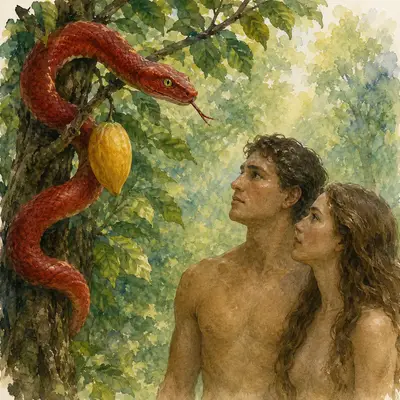
If God knew that Adam and Eve would sin, why did he create them in the first place? And why did he place the tree in the garden? And if he created a world in which sin would certainly happen, how can he still hold mankind guilty?
These questions reach into the goodness of creation, into the reality of sin, and into the purpose of the cross. They might begin as a struggle to understand, but they can quickly turn into something else, because they start to blame God for our own sin. The question of the origin of sin could even suggest that God has acted wrongly, or that he is somehow responsible for evil in a moral sense. This is exactly what the serpent accused God of in the Garden of Eden.
Scripture warns us about this kind of speech. When Job spoke beyond what he understood, God answered him: “Who is this that darkens counsel by words without knowledge?” (Job 38:2). That is a warning to every one of us. We are creatures. God is the Creator. We do not stand above him, and we are in no position to judge him.
To answer this question, we must turn to what the Bible says.
God Is Holy
The Bible says that God is holy. This means he is completely pure. There is no evil in him. He never does wrong and he never approves what is wrong. Habakkuk says that his eyes are too pure to approve evil (Hab. 1:13). James says that God does not tempt anyone (James 1:13). So whatever answer we give to this question, it cannot be that evil comes from God’s character, or that sin belongs to him, or that he delights in wickedness. That option is not available to us.
When God created the world, Genesis says that when he finished, he saw all that he had made and it was very good (Gen. 1:31). Ecclesiastes says that God made man upright. Upright means morally good (Eccl. 7:29). Man was not created with sin already inside him. God did not make Adam evil. God did not place rebellion in his heart. God created a good world, and he created man good within it.
Where Sin Came From
God told Adam that he could eat from every tree in the garden except one. That command tells us that Adam was not created to live by his own wisdom, but in obedience to the word of God. The tree itself was not evil, and God’s command not to eat the fruit was not cruel. It was the clear boundary between faithful obedience and rebellion. Without a command, there is no obedience and no disobedience. Without a clear word from God, there is no meaningful test of whether a man will trust God or reject him.
The Bible tells us that Adam and Eve were created in the image of God. This means they were not forced or programmed. They could obey God or disobey him. That ability is not sin. God gave it and it is good. Sin is not the ability to choose. It is choosing against God.
The Bible tells us they listened to another voice instead of listening to God. They desired what God had forbidden and chose their own way. James later explains the same pattern: a person is drawn away by his own desire, and that desire gives birth to sin (James 1:14-15). Sin begins in the creature. It rises from the heart of the one who turns away from God. Sin is rebellion. Rebellion means refusing God’s rule and choosing self-rule instead.
Sovereignty and Responsibility: Two Truths That Cannot Be Separated
God knows everything. So some people ask: if God knew this would happen, and if he created the world knowing this would happen, doesn’t that make him responsible?
The Bible answers by holding two things together, two truths that we must never pull apart.
The first truth is that God is sovereign. He rules over all things. Nothing happens outside his will and nothing takes him by surprise. Isaiah says he declares the end from the beginning (Isa. 46:10). Ephesians says that he works all things according to the counsel of his will (Eph. 1:11). So the fall was not outside God’s knowledge. It was not an accident that disrupted his plan.
The second truth is that man is responsible for his own actions. Adam sinned willingly and Adam was guilty. God did not accept blameshifting in the garden and he still does not accept it now. Adam could not point the finger at God and say, “The woman you gave me, she gave me the fruit and I ate.” God did not accept this. The sin was Adam’s and the guilt was his. The Bible does not protect God’s rule by removing man’s guilt, and it does not protect man’s guilt by weakening God’s rule.
Joseph and the Cross: Two Intentions in One Event
One of the clearest examples of this is the life of Joseph. Joseph said to his brothers: “You meant evil against me, but God meant it for good” (Gen. 50:20). That sentence matters because it shows two intentions in the same event. The brothers intended evil. Their hearts were wicked and they were guilty. God intended good through that same event. He was not guilty. He was ruling over their evil act without becoming evil himself.
That helps us think rightly about the claim that God created the conditions in which sin would happen. It is true that God created a world in which sin was possible, and more than that, a world in which sin would certainly take place. But that still does not make him the creator of sin. Creating a world in which a creature can rebel is not the same as committing the rebellion. The guilt belongs to the one who sins.
The clearest and strongest example of this is the cross of Christ. Acts says that Jesus was delivered over by the predetermined plan and foreknowledge of God, and yet it also says that lawless men nailed him to the cross (Acts 2:23). The greatest sin ever committed was not outside God’s plan. And yet those who committed it were truly guilty. God planned the event. Jesus turned his face toward Jerusalem and walked down the road knowing what would happen. Wicked men carried out the evil within that event. Their guilt was real. God’s righteousness was untouched.
Colossians then tells us what God was doing through the cross: he disarmed the rulers and authorities and made a public display of them, having triumphed over them in Christ (Col. 2:15). Triumph means victory. The place where evil seemed strongest became the place where God crushed it.
This shows us something vital. The cross was not God trying to repair a plan that had gone wrong. Christ was not an afterthought. Scripture says that Christ was known before the foundation of the world (1 Pet. 1:20). Ephesians says that God’s purpose is to sum up all things in Christ (Eph. 1:10). That means creation, fall, and redemption belong to one purpose. God did not create, then panic, then try to fix things. From the beginning, his purpose was moving toward Christ.
Why God Created a World in Which Sin Would Occur
This helps us answer the deeper question of why God created a world in which sin would occur.
The answer the Bible gives is not that sin is good. It is not. The answer is that God would reveal his glory in the way he deals with sin. Glory means the full display of who God is: his greatness, his beauty, his power, his justice, and his mercy.
At the cross, God shows his love. Romans says, “God demonstrates his own love toward us in that while we were still sinners, Christ died for us” (Rom. 5:8). At the cross, God also shows his justice. He deals with sin rightly. He does not ignore it. He does not pretend it is small. He judges it. Romans says that God displayed Christ publicly so that he would be just and the one who justifies those who have faith in Jesus (Rom. 3:26). God remains righteous himself and he declares sinners righteous through Christ.
The cross also shows God’s wrath and God’s mercy. Wrath means his right and holy anger against sin. Mercy means his kindness toward those who deserve judgment. At the cross, wrath falls on sin and mercy flows to sinners who are in Christ. All of this is seen together there. That is why the cross stands at the centre of history.
Yet we must be careful here, because this is where people often go too far. We must never say that sin is good because God brings good out of it. We must never say that evil becomes acceptable because it serves God’s purpose. Isaiah warns against calling evil good (Isa. 5:20) and Romans rejects the idea that we should continue in sin so that grace may increase (Rom. 6:1).
Does God Allow Bad Things to Happen?
Yes, and Scripture does not pretend otherwise. Jeremiah asks the same question directly: “Is it not from the mouth of the Most High that both calamities and good go forth?” (Lam. 3:38). Nothing happens outside God’s sovereign will, including hardship, loss, and suffering. But allowing something and causing it in a morally culpable sense are not the same thing, which is exactly the distinction Joseph and the cross have already shown us. What Scripture adds is a promise standing over every bad thing a believer faces: “we know that for those who love God all things work together for good, for those who are called according to His purpose” (Rom. 8:28). That promise does not mean every bad thing is secretly good, or that real pain should be denied. It means nothing bad that happens to a Christian falls outside the good purpose God is working through it, a purpose that will not be fully visible until Christ returns and removes bad things from his people forever.
Where the Question Must Stop
When people keep pressing this question of who is ultimately responsible for sin, there comes a point where the issue is no longer humble inquiry but blameshifting. Paul addresses this directly in Romans 9: “Who are you, O man, who answers back to God? The thing moulded will not say to the moulder, ‘Why did you make me like this,’ will it?” (Rom. 9:20).
Job learned the same lesson. After hearing the voice of God, he confessed that he had spoken of things of which he was ignorant. That is where we also need humility. There is a difference between asking what God has revealed and accusing God over what he has not revealed in full. God has told us what we need to know. He has not told us everything. We must not darken his counsel with words without knowledge.
What God Is Ultimately Doing
The Bible is clear on what God is ultimately doing. Revelation says that a day is coming when there will be no more death, no more mourning, no more crying, and no more pain (Rev. 21:4). Sin and death will be destroyed. God will remove them. He will judge them completely. When God renews all things, they will be no more.
That proves that evil is not part of the final good. It is something God overrules in history, defeats through Christ, and ultimately removes forever.
This Question Is Not About Adam and Eve. It Is About Us
The question of evil is not ultimately about Adam and Eve. It is about us. We are not innocent bystanders in all this. Scripture says we have all sinned and fallen short of the glory of God (Rom. 3:23). The problem is not only that sin entered the world long ago. The problem is the sin in us.
For Christians, this must not become a cold argument about God while we ignore our own hearts. We are called to repentance, to turning from sin and turning back to God. We are called to humility, trust, obedience, and worship.
So the answer to this question is not found in accusing God. It is found in humbly bowing before him, receiving what he has revealed, and fixing our eyes on Christ. When this question is asked rightly, it should drive us to the cross. It is at the cross that we see the goodness, justice, and mercy of God. It is at the cross that we see that God has not dealt with sin lightly. Christ took the wrath of God upon himself so that we may be forgiven.
We must submit to God’s word, trusting his wisdom and resting in his Son. And when we reach the limit of what we can understand, we must be willing to be at peace with that. We are not God, and some things are too wonderful for us to understand. We must come back to Christ, to his goodness, to his death, to his resurrection, and to the certainty that the God who did not spare his own Son has not acted wrongly in the history he has made.