
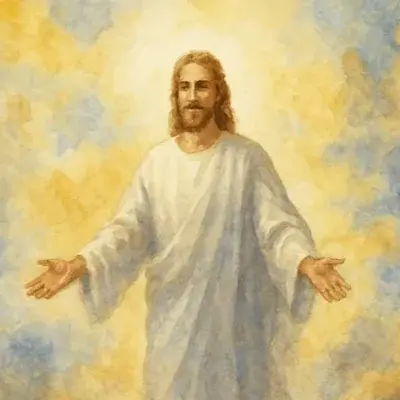
Colossians 1:15 is one of the most contested verses in Scripture. The Jehovah’s Witnesses and others use it to argue that Jesus was the first being God created — that before anything else existed, God made the Son, and the Son then made everything else. The verse reads: “He is the image of the invisible God, the firstborn of all creation.” Those who deny the divinity of Christ focus on the word “firstborn” and assume it refers to origin — something that came into being at a point in time. But this reading misunderstands a key word and ignores the argument Paul is actually making.
The Meaning of “Firstborn”
In ancient Israelite society, the firstborn son held a position of unique honour and authority. Deuteronomy chapter 21 verse 17 establishes the principle: the firstborn received a double portion of the inheritance — twice what any other son received. This was not simply about wealth; it signified that he carried responsibility for the family estate and for the welfare of those under him. The firstborn assumed leadership of the household when the father died. He held authority over the family and was accountable for its wellbeing. Before the establishment of the Levitical priesthood, the firstborn of each family also served in a priestly role, standing before God on behalf of his household.
To call someone “firstborn,” then, was to name them as the one with supreme standing, rightful inheritance, and governing authority. It said nothing necessarily about when they came into existence.
The Old Testament confirms this. In Psalm 89:27, God says of David: “I also shall make him My firstborn, the highest of the kings of the earth.” David was not the firstborn son of Jesse — he was the youngest of eight brothers. Yet God calls him “firstborn” because the word describes rank, not birth order. It is a title of preeminence. When Paul calls Jesus “the firstborn of all creation,” he is using the word in exactly this sense — not to say when Jesus came into being, but to declare His supreme authority over everything that exists.
Creator, Not Created
Paul makes the meaning of “firstborn of all creation” unmistakable by what he writes immediately after it. Colossians 1:16–17 says:
“For by Him all things were created, in heaven and on earth, visible and invisible, whether thrones or dominions or rulers or authorities — all things were created through Him and for Him. And He is before all things, and in Him all things hold together.”
This passage is decisive. All things were created by Him and through Him — which means He cannot be one of the things that was created. The Creator is categorically distinct from the creation. All things were also created for Him, which means He is the goal and heir of all creation, not a participant in it. And He is before all things, which is a statement not of sequence within creation but of eternal pre-existence outside of it.
John’s Gospel makes the same point. John 1:1–3 says: “In the beginning was the Word, and the Word was with God, and the Word was God. He was in the beginning with God. All things were made through Him, and without Him was not anything made that was made.” The Word — identified as Jesus Christ in verse 14 — was not made. He was in the beginning. He made everything that was made. The construction “without Him was not anything made that was made” is deliberately exhaustive. There is no category of created thing that does not owe its existence to Him.
The Logic of Scripture: Jesus Is Yahweh
The Old Testament is equally clear about who the Creator is. Isaiah 40:28 declares: “Have you not known? Have you not heard? Yahweh is the everlasting God, the Creator of the ends of the earth.” Isaiah 45:18 adds: “For thus says Yahweh, who created the heavens — He is God, who formed the earth and made it; He established it; He did not create it empty, He formed it to be inhabited: ‘I am Yahweh, and there is no other.’” Psalm 33:6 says: “By the word of Yahweh the heavens were made, and by the breath of His mouth all their host.” Nehemiah 9:6 states the same truth: Yahweh alone is the Creator of heaven and earth.
Scripture therefore presents two truths side by side: Yahweh is the Creator of heaven and earth, and Jesus is the Creator of heaven and earth. For both to be true, Jesus must be Yahweh.
This conclusion is confirmed by one of the most striking parallels in all of Scripture. In Revelation 1:17–18, the risen Jesus says: “Fear not, I am the first and the last, and the living one. I died, and behold, I am alive forevermore, and I have the keys of Death and Hades.” The title “the first and the last” is not a phrase Jesus coined. In Isaiah 41:4, Yahweh declares: “I, Yahweh, the first, and with the last; I am He.” In Isaiah 44:6: “Thus says Yahweh, the King of Israel and His Redeemer, Yahweh of hosts: ‘I am the first and I am the last; besides Me there is no God.’” In Isaiah 48:12: “I am He; I am the first, and I am the last.”
When Jesus applies this title to Himself in Revelation, He is claiming an identity that belongs exclusively to Yahweh. Not a title He borrows, but one that is His by right.
What Colossians 1:15 Actually Declares
When Paul calls Jesus “the firstborn of all creation,” he is not saying that Jesus was created. He is saying that Jesus holds the position of supreme authority over all creation — that He is its rightful heir, its sovereign ruler, and its sustaining Lord. The very next verses make the claim explicit: He made it all, He precedes it all, and He holds it all together.
Far from diminishing Jesus, Colossians 1:15 sets Him above all things. He is the image of the invisible God — the One in whom the unseen Creator becomes visible. He is eternal, uncreated, and sovereign. He is not part of creation. He is the One who made it, sustains it, and will one day bring it to its appointed end.
Who Does the Bible Say Killed Jesus?
If Jesus is who Colossians 1:15 declares Him to be, the eternal Creator entering His own creation, then who killed Him is not a minor historical footnote. Peter, preaching at Pentecost, refuses to let his hearers place the blame in only one place: “this Man, delivered over by the predetermined plan and foreknowledge of God, you nailed to a cross by the hands of lawless men and put Him to death” (Acts 2:23). Two things are true in the same sentence. Lawless men killed Jesus: the religious leaders who conspired against Him, and the Roman authority that carried out the execution. And God’s own predetermined plan stood behind it, using their guilty actions to accomplish what He had purposed before the world began. Isaiah had already explained why the cross was necessary centuries earlier: “He was pierced through for our transgressions, He was crushed for our iniquities; the chastening for our peace fell upon Him, and by His wounds we are healed” (Isaiah 53:5). The deepest answer to who killed Jesus is not one particular group of first-century people. It is the sin of everyone He came to save, sin that made His death necessary and that He willingly bore.
To trust in Jesus is to trust in Yahweh — the eternal Creator who entered His own creation to redeem it.